
Twogether Updates
Letter To Providers From Twogether Consulting: August 18th, 2026
August 18th, 2026

From Twogether Consulting
Hello Everyone!
Hoping everyone is well. It’s finally here: the AAIDD Texas Chapter 50th Anniversary and Annual Convention is happening this week in Corpus Christi, TX. Unfortunately, due to a family emergency, I was not able to attend this week, and I am so disappointed I will not get to visit with so many great providers and vendors attending. If you are attending the convention this week, please don’t forget to stop by the HHSC information tables and get your answers to your questions and help with issues on site. I also recommend checking out the Person-Centered Training sessions presented by Rachel Hopkins from Molina Care, and there is also a last-minute additional session that was added, “Answers To Frequently Asked Utilization Review Questions” presented by Rob Peak (previously from Utilization Review at HHSC). For a complete copy of the agenda, don’t forget to stop by the registration desk when you get to the convention!
Featured Upcoming September Disability & Inclusion Events Around Texas:
- Date: Tuesday, September 15, 2026
- Time: 11:30 AM – 12:30 PM CDT
- Format: Virtual / Monthly Alliance Meeting
- Friendship Fest
- Date: Saturday, September 12, 2026
- Location: DeLeon City Plaza, Victoria, TX
- Details: Hosted by the Gulf Bend Center, this free family-friendly festival promotes inclusion, awareness, and community connections for people with IDD.
- The Brookwood Way Conference
- Date: September 21–24, 2026
- Location:The Brookwood Community, Brookshire, TX
- Details: An immersive three-day leadership conference focused on purpose-driven models that empower adults with disabilities through meaningful work and community living.
- Transition Fair & Navigating Special Education Conference
- Date & Time: Saturday, September 26, 2026 | 8:30 AM – 12:30 PM (Fair runs 10:00 AM – Noon)
- Venue: Bowie High School, 4103 W Slaughter Ln, Austin, TX 78749
- Description: Hosted by Austin ISD’s Special Education Department and Partners Resource Network. Families can explore resource booths regarding employment, independent living, and local recreation, plus attend info sessions covering parent rights, IEPs, and community resources.
- Cost: Free
- Website: Check the Austin ISD Calendar for complete logistics
Just a few other reminders:
PPAT (Private Providers of Texas) will hold their annual IDD provider conference, “The Power of We: Reaching Higher. Moving Forward. Together” on September 2nd-4th, 2026 at the DoubleTree Hotel in Austin, TX. For more details and registration, please click here
For more information and the PPAT conference agenda at a glance, click here
PACSTX (Provider Alliance of Community Services of Texas) will hold their annual IDD provider conference, “Shaping The Future of Community Living” September 22nd-24th, 2026 at the Embassy Suites- San Marcos, TX. Click here for Registration
This Year’s Topics at PACSTX Conference: Practical leadership strategies for navigating change, strengthening teams, and sustaining quality services; ISS licensure, regulatory expectations, provider operations, and real-world approaches to emerging challenges; Clinical, behavioral, and community-based strategies for supporting individuals with complex needs and HSC updates, legislative priorities, technology innovations, and the future of IDD services in Texas
TWOGETHER CONSULTING TRAINING:
September 2026!
Webinar: September 25th, 2026 (10:00 AM-11:30 AM) “Answers to Frequently Asked Utilization Review Questions: Enquiring Minds Want To Know” presented by Rob Peak 1.5 hrs Topics will include discussion about IPCs, IDRC Renewals & Revisions, LONs, CFC justification requirements, and more. (HCS/TxHmL, some ICF) Cost: $50/person
Webinar: September 28th, 2026 (10:00 AM-11:30 AM) “Common Challenges in Justifying CFC (Community First Choice) Hours to Utilization Review”. Presented by Rob Peak 1.5 hrs (HCS/TxHmL) $50/person
Live In-Person Training: “HCS Care Coordination/Case Management 2-day Training” Location: Down Home Ranch (Elgin, TX) Times: Day 1 (9:30 AM-4:30 PM) Day 2 (9:00 AM-4:00 PM) Date: October 5th and 6th, 2026 Cost: $300/person (includes manual)
All HCS providers are welcome, and there will be an opportunity to possibly book your lodging on-site in some of the DHR cabins if anyone is interested in staying on-site instead of staying at a hotel in town.
Details for all these sessions will be posted within the next week on our home page calendars at: www.twogetherconsulting.com
You can also contact us at info@twogetherconsulting.com if you would like to register for any of the trainings before the info is posted on the site.
Note: Our hourly off-site consultation fee has increased to $90/hr. We do offer discounted rates for current clients. We have updated the website concerning this rate change. Feel free to contact us at info@twogetherconsulting.com to request an appointment for consultation, or you can email our administrative assistant, Meghan Jones, to make an appointment at: meghanjones.tx@gmail.com
Please continue to check our website for webinars and live trainings. We will post them on the website “calendar” page
We have a variety of pre-recorded webinar trainings for program managers (HCS), administrators (ICF & ISS), case managers, QIDPs, nurses, and direct care, so feel free to email us at info@twogetherconsulting.com to inquire. Let us know what areas of training you would like, to help us plan future sessions.
Here are just a few of the recent pre-recorded webinar trainings available for purchase: “Admission, Post-Admission & Other Follow-Up Requirements-HCS Program”, ICAPs/LON’s/IDRC’s-ICF Program” (Also have for HCS program), “Development of The Comprehensive Nursing Assessment & Nursing Service Plan-HCS or ICF”, “Best Practices For HCS Providers: How To Remain In Compliance With TAC Ch 565”, “Role & Responsbilities of The Q”, “Surrogate Decision Making Process, Rights Restrictions & Immediate Jeopardy-ICF Program”, “Licensed ISS Providers: What You Really Need To Know.”,
We also have a pre-recorded 5-part Care Coordination/Case Management series, a 4-part Nursing series for HCS, and a 3-part Nursing series for ICF available. These trainings are epecially important for new providers. All these sessions come with handouts as well as the link to the pre-recorded session
Please contact Meghan Jones at: meghanjones.tx@gmail.com. Most of these pre-recorded sessions run $65-$75/person. We can provide the handouts as well as a link to the recording, once you have paid. Please notify Meghan Jones, for payment and to receive the link to registration for the training on “Gotowebinar” and handouts for the session.
Please see our “Updates” section of the website for the latest news for IDD providers.

LTCR Provider Webinar Training
August 18th, 2026
August and September 2026 LTCR Provider Webinar Training Opportunities
Home and Community Based and Texas Home Living Provider (HCS/TxHmL) Joint Training webinars:
Hurricane Season – Ready or Not! Preparedness for HCS/TxHmL and Individualized Skills and Socialization Providers
Thursday, Aug. 20
1:30–3:30 p.m.
Register for the Aug. 20 webinar.
HCS/TxHmL Certification Standards: An Overview of Changes
Friday, Aug. 28
2:30–3:30 p.m.
Register for the Aug. 28 webinar.
License Types for Individualized Skills and Socialization Providers
Tuesday, Sept. 8
3–4 p.m.
Register for the Sept. 8 webinar.
Plan of Removal for HCS/TxHmL Providers
Thursday, Sept. 10
1–3 p.m.
Register for the Sept. 10 webinar.
Writing Plans of Correction for Individualized Skills and Socialization Providers
Thursday, Sept. 24
1–2:30 p.m.
Register for the Sept. 24 webinar.
Immediate Care Facility (ICF) Joint Training webinars:
Abuse, Neglect and Exploitation: Prevention and Response in Intermediate Care Facilities (ICFs)
Wednesday, Aug. 19
8:30 a.m. to 4:30 p.m.
Austin, TX
Register here for the webinar
Hurricane Season – Ready or Not! Preparedness for Intermediate Care Facilities (ICF)
Monday, Aug. 31
2–3:30 p.m.
Register for the Aug. 31 webinar.
Internal Investigations by Providers for Intermediate Care Facilities (ICF)
Wednesday, Sept. 2
11 a.m. to 12:30 p.m.
Register for the Sept. 2 webinar.
ICF Foundations
Thursday, Sept. 17
10–11:30 a.m.
Register for the Sept. 17 webinar.
Plan of Removal During an Immediate Jeopardy Situation vs Plan of Correction in Intermediate Care Facilities
Wednesday, Sept. 30
1–3 p.m.
Register for the Sept. 30 webinar.
Save The Date For PASRR Virtual Conference Nov. 5th, 2026: Open To IDD Providers
August 15th, 2026

Preadmission Screening and Resident Review (PASRR) Virtual Conference on November 5
Save the date for the 10th annual PASRR Conference. This is a free, one-day conference held virtually on Thursday, November 5, 2026.
What: PASRR Virtual Conference
When: Thursday, November 5, 2026
Where: Online
Registration opens in September.
Audience
Nursing facility staff, IDD providers, local IDD authority staff, local mental health and behavioral health authority staff, hospital social workers, and PASRR program recipients and their families are invited to attend
**More Information
The conference features a keynote by Carol Egele, distinguished public servant and organizational leader. We’ll also have breakout sessions with interactive scenarios and collaborative discussions on enhancing service delivery for people living with mental illness or intellectual and developmental disabilities.
Continuing education units are available.
For more information, view the save the date flyer or email the HHSC PASRR Conference Team
New PASRR Plan of Care Form Available September 1, 2026
The new Preadmission Screening and Resident Review (PASRR) Plan of Care form will be available in the Texas Medicaid & Healthcare Partnership Long-Term Care Online Portal on September 1, 2026. Read the full article.
Provider Letter 2026-13 For ICF Providers: Workplace Violence Program
August 10th, 2026
This document is posted on the HHSC ICF Provider Portal website.
For questions contact LTCRPolicy@hhs.texas.gov.
July 25th, 2026
LTCR has published PL 2026-13, Implementation of Workplace Violence Program for Intermediate Care Facilities (ICF/IID) providers.
This provider letter provides guidance for licensed ICF/IIDs and SSLCs required to implement a workplace violence prevention program introduced by SB 463 from the 89th Legislature, Regular Session (2025). SB 463 became effective September 1, 2025, and the provider letter explains the requirements and informs providers of key deadlines.
This document is posted on the ICF Provider Portal HHSC website.
The facility must establish a workplace violence prevention committee, or assign an existing committee, who will be responsible for developing a plan for preventing workplace violence with representation that includes:
• One registered nurse (RN) who provides direct care to residents of the facility;
• One physician licensed to practice medicine in this state who provides direct care to residents of the facility; and,
• When available, security personnel.
Facilities that operate multiple ICFs may use a single committee, provided a separate prevention plan is maintained for each facility.
State Statute H&SC 331.003(3) requires facilities to adopt, implement, and enforce a written workplace violence prevention policy to protect health care providers and employees from violent behavior and threats of violent behavior occurring in the facility. The policy must require the facility to:
• provide significant consideration of the violence prevention plan recommended by the facility’s committee for the workplace violence prevention plan;
• evaluate any existing workplace violence prevention plan;
• encourage health care professionals and facility employees to share confidential information about workplace violence with the committee;
• include a process that protects health care professionals and facility employees from retaliation for providing information to the committee; and
• ensure compliance with HHSC rules about workplace violence.
The facility must adopt, implement, and enforce a written workplace violence prevention plan to protect health care providers and employees from violent behavior and threats of violent behavior occurring in the facility by a resident and/or staff.
And the facility must respond to these workplace violence incidents by offering immediate services to each health care professional or employee directly involved in or affected by the incident, to including any necessary acute medical care
For questions contact LTCRPolicy@hhs.texas.gov.
Guidance for Providers Related to the Search Engine for Multi-Agency Reportable Conduct (SEMARC)
August 10th, 2026
HHSC LTCR Publishes Revised SEMARC Guidance for Providers (PL 2026-10)
HHSC LTCR has published revised Provider Letter 2026-10, LTCR Provider Responsibilities for the Search Engine for Multi-Agency Reportable Conduct (SEMARC). The letter has been updated to include information on a hold-harmless period from August 3, 2026, to October 5, 2026.
July 3rd, 2026
HHSC Long-Term Care Regulation has published Provider Letter 2026-10, LTCR Provider Responsibilities for the Search Engine for Multi-Agency Reportable Conduct (SEMARC).
The letter informs providers of the implementation of Senate Bill 1849, 88th Legislature, Regular Session, 2023. The bill created Texas Health and Safety Code Chapter 810, Interagency Reportable Conduct Search Engine.
The interagency search engine is formally named the Search Engine for Multi-Agency Reportable Conduct (SEMARC). SEMARC provides a common platform for authorized users to search information across multiple agencies for individuals with reportable conduct.
FYI- NAR (Nurse’s Aid Registry) is a separate search.
TMHP-IAMOnline Update
August 7th, 2026
TMHP Custom Reports Online Portal Application Update
The Texas Medicaid & Healthcare Partnership (TMHP) Custom Reports online portal application will not transition to the TMHP IAMOnline platform as part of Release 3.
TMHP will notify providers in a future article when Custom Reports will transition to TMHP IAMOnline. Read the full article.
August 7th, 2026
TMHP IAMOnline and Medicaid Client Portal Training Materials Update
The Texas Medicaid & Healthcare Partnership (TMHP) has updated training materials for the Medicaid Client Portal (MCP) and My Account to include login steps for TMHP IAMOnline.
The training materials are now available on the TMHP Learning Management System (LMS). Read the full article.
July 30th, 2026
UPDATE: TMHP EDI Connectivity Change Rescheduled for Sept. 1, 2026
The TMHP Electronic Data Interchange (EDI) Connectivity change scheduled for Aug. 1, 2026, has been moved to Sept. 1, 2026.
Note: This change gives batch submitters more time to prepare for the transition from the virtual private network connectivity method to the new Secure File Transfer Protocol (SFTP) method. Providers that fail to complete trading partner testing for their submitter identifications may experience delays in claims reimbursement after SFTP implementation.
Please click on the link below and read the letter from HHSC for complete details:
Bridge Support TEAMS Meeting
Meeting ID: 226 983 848 584 003
Passcode: Bu3hS2T5
Phone conference ID: 320 302 84#
For organizers: Meeting options | Reset dial-in PIN
July 30th, 2026
RESOURCES For TMHP EDI Connectivity Change:
Provider User Guide -> How To Access TMHP Applications Using IAMOnline
Provider Activation Video -> IAMOnline Educational Video Now Available | TMHP
News release on TMHP.com -> New Login Process for All Texas Medicaid Providers Through Texas Medicaid & Healthcare Partnership IAMOnline and Provider Multi-Factor Authentication Registration for Transition Release 3 | TMHP
July 24th, 2026
TMHP’s IAMOnline Educational Video Now Available
The Texas Medicaid & Healthcare Partnership (TMHP) has added a new educational video titled “IAMOnline” to the TMHP YouTube channel and in the TMHP Learning Management System (LMS).
Providers can also refer to the How to Access TMHP Applications Using IAMOnline user guide, which is available on TMHP’s Account Management webpage. Read the full article.
July 15th, 2026
Microsoft Teams meeting
Meeting ID: 225 703 818 818 918
Passcode: 5NV9Zr7Z
July 12th, 2026
Provider User Guide -> How To Access TMHP Applications Using IAMOnline
News release on TMHP.com -> New Login Process for All Texas Medicaid Providers Through TMHP IAMOnline and Provider MFA Registration for Transition Release 2 | TMHP
FYI, 2 main issues have been noted since the deployment of IAMOnline earlier this month:
- Someone (HHSC was not sure who) advised Providers to use their email address as their username when they log into TMHP IAMOnline. This is incorrect as users need to use the same TMHP username they always have been using. Once they use their username, they can successfully login.
- **HHSC determined that the user guide and the recently created video that was being reviewed indicated the incorrect username format. This was being communicated as the user’s email address. The user guide and the video will be updated to accurately reflect that users need to enter their username by itself when logging in.
- Providers that access TexMedConnect for Long Term Care from the MyAccount page on TMHP.com are being incorrectly routed to the TexMedConnect for Acute Care and are receiving an error message of “Unable to Sign In”. HHSC is having Providers login directly into TMHP IAMOnline using the link below and they can access TexMedConnect for LTC using the tile. The vendors were working on this issue to get a resolution tested and deployed ASAP. Hopefully, that has been corrected.
HCS/ TxHmL Quarterly Webinar with HHSC LTCR From July 27th, 2026- Recording Available
August 7th, 2026
Listen to the July 27th HCS and TxHmL Quarterly Webinar recording.
Read the HCS and TxHmL Quarterly Webinar (PDF).
Email LTCR Policy for the transcript.
Responsibility of Maintaining Records
August 6th, 2026
In accordance with 26 TAC §52.113 (relating to Record Retention and Disposition) and the requirements of the Community Services Provider Contract or Provider Agreement, all records must be developed and retained in the form in which they were created until the latest of the following:
- seven (7) years after a claim is submitted;
- seven (7) years after all issues involving the record have been mitigated; or
- the individual about whom the record relates becomes 21 years of age.
If a contract is expiring or being terminated, the provider must adhere to 26 TAC §52.601 (relating to HHSC Review and Contractor Requirements Related to Expiring or Terminated Contract) and 26 TAC §52.113 (relating to Record Retention and Disposition) until the record retention period is satisfied.
Important: Providers are required to report the location of where the records will be stored and provide the name, address, phone number, and e-mail address of a person HHSC may contact to arrange access to the records. This information must be submitted to the assigned HHSC contract manager at the time of expiration, termination, when an update is necessary, or upon request.
Confirmation of TMHP Electronic Data Interchange Transactions Process
August 5th, 2026
From HHSC:
An update to the electronic submission process for Electronic Data Interchange (EDI) transactions is scheduled for Sept. 1, 2026.
As part of this transition, a new connectivity method will be introduced that will affect batch submitters who currently connect using a virtual private network. Read the full alert.
Delays in Processing in TMHP Portal: Portal Request Change Forms
August 3rd, 2026
From HHSC:
Texas Medicaid & Healthcare Partnership (TMHP) is currently experiencing delays in processing Portal Request Change Forms (PRCFs) due to a backlog.
As part of the process, TMHP has implemented an additional security step in the PRCF process to confirm a provider’s identity and obtain permission to make the requested changes. This will be done through a video conference. The verification must be completed during the video conference before the requested changes can be processed. TMHP will reach out to providers to set up video conferences.
ISS Updates & New Rules (HCS/TxHmL)

July 31st, 2026
CLARIFICATION: Staff Training Requirements for Providers of DAHS with ISS Only Licenses
ANE
Emergency Response
Infection Control
Current rules at §559.227(l)(2)(B), §559.227(l)(2)(C), and §559.227(l)(2)(E) specify that staff are to receive training on these topics “at least biannually.” HHSC has received questions regarding the meaning of biannual (twice every year or every two years). HHSC clarified that the training is to occur ‘every two years’ – NOT twice a year.
Note: Providers holding a DAHS or DAHS with ISS license must provide training in accordance with §559.67, Training and §559.79(e) specific to training when hired and annual training on the staff member’s responsibilities under the emergency response plan, and if responsibilities change.
June 28th, 2026
Revised Provider Letter 2023-01 for DAHS-ISS Services.
HHSC has published revised Provider Letter 2023-01, New Regulatory Rules for Long-term Care Regulation (LTCR) DAHS-Individualized Skills and Socialization Services (DAHS-ISS).
Revisions include updated information from the most recently published TAC rules, updated hyperlinks, and non-substantial revisions to provide clarification.
Providers can access this provider letter on the ISS Information and Provider Letters.
For questions contact LTCRPolicy@hhs.texas.gov.
June 28th, 20206
Register for DAHS, ISS Quarterly Webinar
HHSC LTCR is hosting a Day Activity and Health Services (DAHS) and Individualized Skills and Socialization (ISS) providers regarding the latest information from LTCR.
DAHS and Individualized Skills and Socialization providers should attend this and all webinars with HHSC LTCR.
LTCR will provide the latest updates and take questions from participants.
DAHS and Individualized Skills and Socialization Webinar with LTCR
July 30, 2026
11 a.m. to noon
Register for the webinar.
June 26th, 2026
IL 2026-15 Prohibition on Charging Additional Fees for ISS
This letter clarifies that program providers must not charge individuals or their families additional fees for individualized skills and socialization services reimbursed through the Deaf Blind with Multiple Disabilities (DBMD), Home and Community-based Services (HCS), or Texas Home Living (TxHmL) waiver programs.
The individualized skills and socialization provider must provide the service at or below the direct services portion (attendant cost, other direct care cost, and facility cost) of the applicable waiver program rate.
May 14th, 2026
ISS “After-Hour Care” Clarification Update
~ Answer: If the Individualized Skills and Socialization provider is also the program provider, the program provider would not be allowed to charge additional fees outside of the established HCS Waiver Program Payment rates.
April 9th, 2026
If you missed today’s ISS webinar reviewing the TAC updates from new and revised ISS rules from February 2026 that go into effect May 1st, 2026, please see links below:
In addition, FAQ’s and recording will most likely be available later. Check HHSC’s ISS Home page
Scope & Severity Grid- ISS Administrative Penalties
March 30th, 2026
NEW RULES FOR ISS: ENFORCEMENT DATE- MAY 1st, 2026
New Rules came out today March 30th, 2026. Click on link below.
March 25th, 2026
Reminder About New ISS Rules Enforcement Date of 5/1/26 and Webinar on April 30th, 2026
Register Now for April 30 DAHS and Individualized Skills and Socialization Provider Webinar with HHSC LTCR
HHSC Long-term Care Regulation will host a webinar for Day Activity and Health Services (DAHS) and Individualized Skills and Socialization providers on April 30 from 11 a.m. to noon.
DAHS and Individualized Skills and Socialization providers should attend this and all webinars with HHSC LTCR.
LTCR will provide the latest updates and take live questions from participants.
TAC Updates for Individualized Skills and Socialization Providers
Thursday, April 09, 2026
2:30-5 p.m.
Register here for the webinar.
TAC Updates for Individualized Skills and Socialization Providers
Friday, April 17, 2026
1:30-4 p.m.
Register here for the webinar.
Register for the Quarterly ISS Provider webinar on April 30th.
February 25th, 2026
DELAY of Enforcement of New ISS Rules
September 11th, 2025
Employability Status Check (Nurse’s Aide/Misconduct Registry) Update
As of Sept. 11th, 2025
HHSC has moved the Employability Status Check search to the Texas Unified Licensure Information Portal (TULIP).
During this transition, Regulatory staff identified an issue with the Employability Status Check data retrieval process that is causing some difficulty for providers conducting due diligence searches.
HHSC is hoping to resolve the issue by tomorrow. HHSC will provide a workaround if they are unable to resolve it, and providers will be notified. We appreciate your patience.
What you need to do:
- Moving forward, providers will need to check the employability status in TULIP.
- If you access the previous Employability Status Check website, click on the home link to be directed to the new employability searches in TULIP.
- As required by Title 26 of the Texas Administrative Code, Chapter 561, Rule 561.3, providers must search the Employee Misconduct Registry and Nurse Aide Registry to determine if the person applying for employment is listed as unemployable on either registry. With the transition of the Employability Status Check to TULIP, providers are now required to conduct both searches in TULIP.
For questions, email CARE.
September 5th, 2025
ISS FAQ’s Updated Sept. 2nd, 2025
The current revision has added the link to PL 2025-01 (AlertMedia), updated TAC links to the new TAC website, added information about AlertMedia and information for providing information to HHSC during an emergency, and added a response regarding after-hour care and charging families.
In addition, there are comments to some of the questions concerning the revisions made to Emergency Response Plans and Fire Drills, and various sections containing the old TAC links.
August 15th, 2025
Current ISS Rules-July 24th, 2025 edition
August 1st, 2025
HHSC has published the following proposed amendments to the rules governing an ISS program provider. They are currently taking comments until August 25th, 2025. Please notify your provider association that your program is affiliated with for assistance with submitting comments. (PPAT, PACSTX, etc…)
Also provided below are the proposed schedule of administrative penalties for ISS providers and the current schedule of administrative penalties for DAHS providers. As you will see, the DAHS administrative penalties are less than the ISS provider penalties; however, HHSC has no say over the ISS administrative penalties, as they are under DAH’s Enforcement Division.
Proposed Amendments to ISS Rules
ISS Scope & Severity Grid For Penalties
DAHS Scope & Severity Grid For Penalties
July 23rd, 2025
HHSC Publishes Revised PL 2019-24
HHSC has published revised Provider Letter 2019-24, Informal Dispute Resolution Process for Day Activity and Health Services (DAHS), DAHS with Individualized Skills and Socialization, and DAHS with Individualized Skills and Socialization Only providers. Revisions include updated hyperlinks to reflect the new website location for TAC rules, clarification to distinguish the Informal Dispute Resolution (IDR) request process for each provider type, and non-substantial revisions throughout this Provider Letter to enhance clarity.
DAHS and ISS IDR revise process
April 6th, 2025
Register Now for April 24 DAHS and Individualized Skills and Socialization Provider Webinar with HHSC LTCR
HHSC Long-term Care Regulation will host a webinar for Day Activity and Health Services (DAHS) and Individualized Skills and Socialization providers on April 24 from 11 a.m. to noon.
DAHS and Individualized Skills and Socialization providers should attend this and all webinars with HHSC LTCR.
LTCR will provide the latest updates and answer questions from participants.
October 26th, 2024
HHSC Publishes Revised PL 2023-01
HHSC has published revised Provider Letter 2023-01 New Regulatory Rules for Long-term Care Regulation (LTCR) Individualized Skills and Socialization Services.
Revisions include information regarding the issuance of temporary initial licenses to applicants for DAHS-Individualized Skills and Socialization Only licensure, clarification on capacity, LTCR surveys, Form 3613-A requirements, emergency response plan requirements, and updates to contact information for TULIP Support.
September 9th, 2024
HHSC Publishes PL 2024-15: Return To Temporary Licensure for DAH’s ISS Only Providers
HHSC has published Provider Letter 2024-15 Temporary Initial Licensure for DAHS-Individualized Skills and Socialization Only Providers.
Beginning September 9th, 2024, HHSC will resume issuing temporary initial licenses to DAHS-Individualized Skills and Socialization Only providers prior to conducting a health survey.
May 5th, 2024
UPDATED ISS FAQ’S
- Pages 18, 21 & 24
- Pages 32, 33, and 36 thru 39
- Pages 41, 57 & 58,
- Pages 63, 68, 71, 73 and 75 thru 80.
HHSC Long-term Care Regulation updated the Individualized Skills and Socialization frequently asked questions document on May 2, 2024.
April 1st, 2024
ISS Administrative Penalties Scope and Severity Grid
Figure: 26 TAC §559.253(b)
| SCOPE AND SEVERITY GRID FOR ADMINISTRATIVE PENALTIES | |||
| ISOLATED | PATTERN | WIDESPREAD | |
| Immediate threat | Substantial=NRTC | Substantial=NRTC | Substantial=NRTC |
| J | K | L | |
| Initial | $400–$600 | $450–$650 | $500–$700 |
| Repeat | $500–$700 | $550–$750 | $600–$800 |
|
Actual harm |
Substantial=NRTC | Substantial=NRTC | Substantial=NRTC |
| G | H | I | |
| Initial | $250–$450 | $300–$500 | $350–$550 |
| Repeat | $350–$550 | $400–$600 | $450–$650 |
|
No actual harm with a potential for more than minimal harm |
Non-Substantial=RTC | Non-Substantial=RTC | Substantial=NRTC |
| D | E | F | |
| Initial | $100–$300 | $150–$350 | $200–$400 |
| Repeat | $200–$400 | $250–$450 | $300–$500 |
|
No actual harm |
Non-Substantial=RTC | Non-Substantial=RTC | Non-Substantial=RTC |
| A | B | C | |
| Initial | $0–$0 | $0–$0 | $0–$0 |
| Repeat | $0–$0 | $0–$0 | $0–$0 |
March 18th, 2024
New Rules For ISS
PL-2023-01(Revised)
https://www.hhs.texas.gov/sites/default/files/documents/pl2023-01.pdf
March 7th, 2024
HHSC Hold Harmless Period Ending
This “hold harmless” period is ending for ISS providers on March 17, 2024.
Beginning March 18, 2024, HHSC will survey for compliance with all regulatory requirements, including off-site provision of services, and move forward with applicable enforcement actions as outlined in Title 26 Chapter 559, Subchapter H, Division 4 (Survey, Investigations & Enforcement)
Draft Amendments to ISS Licensing Rules
February 14th, 2024
Delays In Receiving ISS Licenses
December 15th, 2023
Clarification on Licensure Renewals
All licensed long-term care providers must submit a renewal application in the Texas Unified Licensure Information Portal (TULIP) before their current license expires. While a re-licensure/recertification survey is part of the renewal process, it doesn’t take the place of submitting a renewal application in TULIP.
HHSC encourages providers to submit the application as soon as possible within the 120 days prior to the expiration of their license, so that if there are issues with TULIP — such as the renewal application not being in the TULIP account — the provider has time to work with TULIP Support prior to their license expiring.
If the provider is waiting on pending documentation — such as a current fire marshal report — it’s better to go ahead and submit the renewal application with the deficiency and upload a letter explaining why they don’t have the required documentation.
***If the application isn’t submitted before the license expires, the provider risks providing services without a license. This is only for licensed LTC providers. Does not include HCS/TxHmL providers as they are contracted, not licensed.
December 14th, 2023
ISS UPDATE WEBINAR DECEMBER of 2023
Please review webinar handout for changes to the Implementation Plan and Person-Directed Plan for ISS.
*PDP’s need to reflect type of ISS (In-Home, On-Site, Off-Site) and activities and schedule.
*IP’s need to also reflect type and objectives for type as well as hourly amount and dollar amount for each type of ISS.
August 18th, 2023
Transition to Individualized Skills and Socialization Survey Deadline Extended
HHSC implemented individualized skills and socialization services in the Home and Community-Based Services (HCS) and Texas Home Living (TxHmL) Medicaid 1915(c) waiver programs, effective Jan. 1, 2023.
HHSC is requesting feedback from HCS and TxHmL program providers only on the impact this change has had on individuals receiving services in the form of a short survey.
Take the survey to provide your feedback.
We thank you for your input. HHSC is extending the deadline to submit responses until Aug. 31, 2023.
All HCS and TxHmL program providers who have not submitted a response must complete the survey by this deadline. Providers who have already completed the survey do not need to submit an additional response.
July 17th, 2023
HHSC Updated the Individualized Skills and Socialization Hold Harmless Period through March 17th, 2024
On Jan. 1, 2023, HHSC implemented the DAHS Individualized Skills and Socialization program and offered an initial hold harmless period from Jan. 1, 2023, through June 30, 2023.
HHSC agreed to extend part of the hold harmless period related to the provision of off-site services.
HHSC will survey for compliance with off-site service delivery but will not move forward with enforcement action.
For all other regulatory requirements, beginning July 1, 2023, HHSC will survey for compliance and move forward with applicable enforcement actions as outlined in Title 26 Chapter 559, Subchapter H, Division 4.
The new hold harmless period related to the provision of off-site Individualized Skills and Socialization services begins July 1, 2023, and ends March 17, 2024.
March 28th, 2023
Host Home Companion Care Providers Concerning ISS & PHE Flexibilities For In-Home ISS
Clarification Concerning Information Letter No. 2023-10 (Replaces IL 2023-06) from February 2023
In-Home Individualized Skills and Socialization Information for Program Providers for COVID-19 PHE
In response to COVID-19 and to provide access to day habilitation services, the Health and Human Services Commission (HHSC) temporarily waived certain requirements in Sections 3710, 4381.3, 4381.7(6) and 4381.7(7) of the HCS Billing Requirements and the TxHmL Billing Requirements. Until the end of the COVID-19 PHE, this flexibility will continue as part of in-home individualized skills and socialization.
Effective May 12, 2023, these flexibilities will no longer be in effect:
The flexibility has allowed HCS and TxHmL program providers to provide in-home individualized skills and socialization to an individual in the individual’s residence, including those residing in their own homes or family homes, without having the required justification outlined below. Program providers and LIDDAs need to have transition plans ready for individuals who receive in-home individualized skills and socialization prior to this end date (before May 12th, 2023).
Beginning May 12th, 2023:
in order to receive in-home individualized skills and socialization, individuals must meet all requirements outlined in the HCS and TxHmL Program Rules, the HCS Billing Requirements, and the TxHmL Billing Requirements, which include:
• A physician has documented that the individual’s medical condition justifies the provision of in-home individualized skills and socialization; or
• A licensed professional or behavioral support service provider has documented that the individual’s behavioral issues justify the provision of in-home individualized skills and socialization; or
• The individual is 55 years of age or older and requests to receive in-home individualized skills and socialization.
In addition, after May 11, 2023, a service provider of host home/companion care will not be permitted to provide in-home individualized skills and socialization to the individual to whom they provide host home/companion care services.
Clarification & Answer to Question From Some of Our Readers:
This letter indicates that HHSC does not appear to prevent a host home provider from becoming an ISS provider, nor does it prevent that licensed ISS provider from providing on-site and/or off-site services to their own individuals living with them. In other words, it would appear they can be a HH/CC provider and licensed ISS provider at the same time and they can provide ISS services to their own individuals they are serving as HH/CC providers. They can not provide their own in-home ISS (anymore) as an HH/CC provider as of May 12th, 2023. The only ISS they can provide after May 11th, is if they are a licensed on-site and/or off-site provider.
March 1st, 2023
Reminder Must Be Licensed As ISS Provider To Bill As Of March 1st, 2023

For HCS/TxHmL Providers, you can’t bill for On-site &/or Off-site ISS as of today March 1st, 2023, if you send someone to an ISS location or have staff providing Off-site services (previously Community DH), if they are not listed as a licensed ISS program.
The directories may be accessed at: https://www.hhs.texas.gov/providers/long-term-care-providers/day-activity-health-services-dahs to find out if the ISS program is licensed.
**You can bill for In-Home ISS as persons providing In-Home ISS do not have to be licensed! No justification is needed for In-Home through May 11th, 2023 I believe. I believe HH/CC providers can still provide In-Home (This was part of the PHE exception prior to March 1st) up through May 11th, 2023, but I am still unclear and will inquire and update everyone when I get some kind of definitive answer.
Previous DH providers & New ISS Provider applicants: If you do not have a temporary ISS license by March 1, 2023, you may not provide or bill HCS, TxHmL, or DBMD providers for on- and off-site ISS services until the temporary license is received. HCS/TxHmL, DBMD Providers who have individuals attending an ISS program may not send persons to the program until they confirm that the operator of the program has received the license. There are no exceptions.
February 21st, 2023
More ISS Training
Very Important: Surveys of ISS Providers With Temporary Licenses
In case this information was overlooked by new ISS providers:
- Once HHSC issues a temporary license, HHSC may conduct a survey at any time.
- HHSC may conduct a survey of any licensed Individualized Skills and Socialization Providers prior to March 1, 2023.
- i.e. if HHSC issues a temporary license on Feb. 21, 2023, HHSC may conduct an initial survey on Feb. 27, 2023.
- HHSC conducts unannounced surveys of ISS Providers.
- For on-site ISS providers, the address on the license must match the address for service provision.
- ISS providers must allow HHSC surveyors access to the on-site location and off-site activity locations.
Please refer to Texas Administrative Code Title 26, Chapter 559 for more info on the LTCR survey process.
February 10th, 2023

How Do I Find A Licensed ISS Provider?
HHSC has now posted directories on the DAHS webpage to help people find a licensed ISS Provider.
The directories may be accessed at: https://www.hhs.texas.gov/providers/long-term-care-providers/day-activity-health-services-dahs
Please note the following:
- There are 2 directories: DAHS with ISS and DAHS-ISS Only.
- The DAHS with ISS Directory is intended to reflect entities licensed as just a DAHS, and entities licensed as DAHS with ISS.
- At this time, this particular directory lists all entities as just having a DAHS license. This is because the commission has yet to approve any DAHS with ISS licenses. The process for approving a DAHS with ISS application takes longer than that of a provider applying as an ISS-only entity. According to HHSC, the entity must undergo an LSC and Health survey before a license is issued to a DAHS with ISS entity. Once these have been approved, they will be listed in this directory as DAHS with ISS.
- Entities listed in the DAHS – ISS Only Directory, currently reflect a 6-month license. This is because these licenses are considered ‘temporary’ at this time. Once the health survey is conducted the entities will receive a one, two or three-year license.
February 5th, 2023
HHSC LTCR Updates the ISS FAQ’s
HHSC Long-term Care Regulation updated the Individualized Skills and Socialization frequently asked questions document on Feb. 01, 2023.
January 27th, 2023
FYI- somehow I missed this alert back in November for Licensed ISS providers. Please be sure to log in and set up your account.
PL 22-32 letter issued 11/28/22 to ISS providers that was sent out concerning Blackboard Connect Emergency System
The purpose of this letter was to inform providers of the emergency communication system called Blackboard Connect, how it will be used, and your responsibility in signing up for the system if you are an ISS provider. This system will be used to send emergency and outreach notifications through email, phone, voice and text if available.
The rules require program providers to assign a designee to enroll in and respond to requests through the system. The designee should be someone who is associated with the licensed building or someone who is responsible for communicating emergency communications. However, you may also have other designees, such as corporate headquarters staff, sign up.
Blackboard Connect sign-up process:
Go to this link and click “Sign Me Up!”
If you have any questions, please contact the Policy and Rules Section by email at LTCRPolicy@hhs.texas.gov or call (512) 438-3161.
Rember, this also applies to HCS, TxHmL and ICF providers among other services.
January 16th, 2023
- The ‘new’ IPC referenced in IL 2022-03 will most likely not be ready until March. They did not have answers as to what providers should do in the interim or even how service logs should be revised until new ones are available. (The letter does indicate that those individuals receiving DH at the time of the switch to ISS (March 1st, 2023) will initially roll over automatically to ISS ).
- After Feb. 28th this would apply to all current clients as far as IPC units are concerned. Persons who don’t have any Day Hab units/days on their plan as of Feb. 28th, 2023 and want ISS hours, will have to do a new PDP and request IPC hours. Providers will have a new IPC form, with ISS on it, before March 1st, 2023.
- To date, no provider has been issued an ISS license.
- Providers can confirm that an entity has an ISS license by checking the DAHS directory on the DAHS webpage: https://www.hhs.texas.gov/providers/long-term-care-providers/day-activity-health-services-dahs
ISS FAQs and Upcoming Webinars:
On January 26, 2023, from 9:00 to 10:30 HHSC will conduct its quarterly LTC webinar which will focus on ISS. To register for the webinar, go to: https://register.gotowebinar.com/register/5204373791714060639
January 12th, 2023
Information Letter No. 2023-03 Individualized Skills and Socialization Automatic Service Authorizations
Effective January 1, 2023, individualized skills and socialization became an available service in the HCS and TxHmL Programs. For the time period of January 1, 2023 to February 28, 2023 both day habilitation and individualized skills and socialization will be allowable program services.
Day habilitation will no longer be a Medicaid-billable service in the HCS or TxHmL Programs for dates of service beginning March 1, 2023, and ongoing.
On January 9, 2023, HHSC will automatically add units of individualized skills and socialization for all individuals with day habilitation (including individuals receiving in-home day habilitation through the COVID-19 flexibility) currently authorized on their individual plan of care (IPC). The units will be available for billing immediately for the provision of on-site, off-site, or in-home individualized skills and socialization and will be visible to program providers in the Medicaid Eligibility Service Authorization Verification (MESAV). The added units will be authorized beginning January 1, 2023 through the end of the individual’s current IPC period. For individuals with an IPC period that must be renewed between January 1, 2023 – April 30, 2023, the added units will be authorized until December 31, 2023.
These units for individualized skills and socialization will not be visible to program providers or service coordinators on the IPC in the Long-term Care Online Portal (LTCOP) on the Texas Medicaid & Healthcare Partnership (TMHP) website nor on the dashboard until a revision or renewal IPC is entered. This automatic service authorization will give service coordinators additional time to meet with the individual’s service planning team (SPT) to update the individual’s person-directed plan (PDP) and for program providers to update the individual’s implementation plan (IP) as this new service takes effect. HHSC is implementing this process to minimize disruption to an individual’s desired services.
Service Plan Revisions
At the individual’s next service planning team meeting to complete a revision or renewal IPC (whichever occurs first) for individuals receiving individualized skills and socialization, service coordinators should update the individual’s PDP to reflect the new individualized skills and socialization service. During the service planning team meeting, any new goals related to the provision of on-site and off-site individualized skills and socialization should be discussed and documented in the new action plan. Until the PDP is updated, the individual’s current day habilitation goals, frequency, and duration should be followed for the individualized skills and socialization service.
Following the update to the PDP, the IPC and IP must be updated in accordance with applicable HCS or TxHmL Program rules with the appropriate units of individualized skills and socialization. HHSC will update the IPC and IP form to add individualized skills and socialization by March 1, 2023.
All individual’s PDPs, IPCs, and IPs must be updated with the appropriate units of individualized skills and socialization in accordance with applicable HCS or TxHmL Program rules by December 31, 2023.
For new enrollees and current enrollees who are not currently receiving day habilitation, individualized skills and socialization will need to be added, once the IPC and IP form have been updated, to the individual’s service plan because units will not be auto-authorized for these individuals. Day habilitation can be added and delivered until February 28, 2023.
To read more, please click on link below, for Information Letter 2023-03 related to ISS automatic service authorizations and EVV
January 3rd, 2023
Easier Format For ISS Licensing Rules effective Jan. 1, 2023
The link below provides a format that is easier to read and understand the newly adopted licensing rules rather than those when published as adopted in the Texas Register
Effective Jan. 1, 2023, HHSC adopts new Individualized Skills and Socialization rules for providers who want to deliver individualized skills and socialization services. New rules provide guidance regarding:
- applying for an Individualized Skills and Socialization license;
- provider requirements; and
- HHSC survey and enforcement actions.
Read the new rules in Title 26 of the Texas Administrative Code, Chapter 559, Subchapter H.
HHSC also published Provider Letter 2023-01 New Regulatory Rules for Long-term Care Regulation (LTCR) Individualized Skills and Socialization Services. This PL provides guidance to Individualized Skills and Socialization providers about the new rules.
Read PL 2023-01.
December 23rd, 2022
NEW RULES FOR ISS & ISS LICENSE
HHSC Adds Individualized Skills and Socialization to Email and Text Updates
HHSC added an option to the HHSC email and text update GovDelivery system that subscribers can select to receive updates related to the Individualized Skills and Socialization services program. Users can select to receive Individualized Skills and Socialization program alerts from the “Provider Alerts” drop-down menu.
To sign up for updates, select this link Texas Health and Human Services Commission (govdelivery.com).
For questions about Individualized Skills and Socialization, please email LTCRPolicy@hhs.texas.
November 28th, 2022
Webinar for New Licensing Process Nov. 30th, 2022 Extended to 2 hrs
All providers interested in the new licensing process for the Day Activity Health Services Individualized Skills and Socialization program are invited to a 2-hour webinar on Nov. 30. Originally it was a 1 hr session but has now been extended to have enough time for questions and explanations.
HHSC Long-Term Regulation staff will discuss how to navigate TULIP, the licensing system, explain the license application process and provide an overview of the survey process. There will also be a Q&A session as time allows.
Register for the webinar: Licensing Process Webinar
November 19th, 2022
DAHS ISS Licensing Application Available!
On Dec. 1, 2022, HHSC will launch the Day Activity Health Services (DAHS) Individualized Skills and Socialization License Application in the Texas Unified Licensure Information Portal (TULIP).
Link to TULIP: https://txhhs.force.com/TULIP/s/
Email TULIP_Support@hhsc.state.tx.us with questions related to TULIP functionality or if you have issues gaining access.
Email LTC_NF_DAHS_Licensing@hhs.texas.gov with questions related to the DAHS Individualized Skills and Socialization licensing application
October 13th, 2022
Licensing Application Process For ISS:
October 2nd, 2022
Register for Individualized Skills and Socialization Provider Portal Trainings
Individualized Skills and Socialization Provider applicants are required to complete HHSC Individualized Skills and Socialization Provider Trainings. Below are two computer-based trainings, which will assist Individualized Skills and Socialization Providers with applying for a license and preparing for an inspection.
- Prelicensure Training for Individualized Skills and Socialization Providers
This training was designed for providers who wish to offer individualized skills and socialization services. Prior to surveys or inspection, an entity must submit an application for a Day Activity and Health Services license. Information about the requirements to obtain a license will be shared. Register for the training. - Preparing for an Inspection
This training was designed to assist Individualized Skills and Socialization Providers to prepare for an inspection. In this course, information about the inspection process and licensure rules will be shared. Register for the training.
September 24th, 2022
HHSC Moved The Individualized Skills and Socialization Webpage
The Individualized Skills and Socialization webpage moved from the Resources webpage to the main Long-term Care Providers webpage. This was done so its location is consistent with other Long-term Care Regulation programs and is easier to find.
Individualized Skills and Socialization can be found under the “Community-based Programs” heading.
August 23rd, 2022
No Public Hearing on ISS Licensing Rules
Comments must be submitted no later than 31 days after the date the rules were published in the Texas Register; i.e., 31 days after August 12, 2022.. Comments must be (1) postmarked or shipped before the last day of the comment period; (2) hand-delivered before 5:00 p.m. on the last working day of the comment period; or (3) emailed before midnight on the last day of the comment period. If the last day to submit comments falls on a holiday, comments must be postmarked, shipped, or emailed before midnight on the following business day to be accepted. When emailing comments, please indicate “Comments on Proposed Rule 22R050” in the subject line.
Public Hearing on ISS Program Rules
HHSC will conduct a public hearing on the proposed HCS, TxHmL and DBMD ISS program rules on September 7, 2022 from 8:00 am. until Noon. To register for the virtual hearing, go to: https://attendee.gotowebinar.com/register/927810115195515152
For a copy of the proposed ISS license rules or go to: https://www.hhs.texas.gov/regulations/policies-rules/health-human-services-rulemaking/comment-proposed-draft-rules
August 13th, 2022
Texas HHSC has developed the Individualized Skills and Socialization Provider Portal, an online source of information for providers of individualized skills and socialization.
The Individualized Skills and Socialization Provider Portal will allow providers to:
- Complete and review trainings on the Individualized Skills and Socialization service.
- Find and review provider letters and other information and releases related to Individualized Skills Socialization.
- Link to rules and other services related to Individualized Skills and Socialization.
Provider Communications
- PL 2021-42 – This Provider Letter offers a brief introduction to the new individualized skills and socialization service and what providers can expect as HHSC implements the service.
- Individualized Skills and Socialization Services webinar – This helpful webinar provides an introduction and overview to Individualized Skills and Socialization
- Individualized Skills and Socialization FAQs – revised April 26, 2022
- July 2022 – Individualized Skills and Socialization Provider Webinar – This webinar covers the service description, ratio requirements, and licensing information based on HHSC’s draft individualized skills and socialization rules.
August 6th, 2022
See Draft/Proposed Rules for ISS in HCS and TxHmL below:
Proposed ISS Rules (Main portion of rules start on page 13-52)
- The anticipated adoption date is October, 2022 with an effective date of November 2022. These dates also apply to the proposed rules for the DBMD waiver program.
- Very few changes were made from comments HHSC received during the informal comment period earlier this year. Though we had been apprised of such before this positing, know that any comments you submitted during the informal comment period will need to be resubmitted.
- Carefully review the introduction to the HCS and TxHmL rules on pages 1 -4, including the sections on Issues and Alternatives and Stakeholder Involvement on page 3.
- Carefully review the preamble to the rules before reading the actual rules and pay attention to the sections on Impact to Small Businesses.
- The proposed HCS and TxHmL rules are included in one document. To help you navigate the document, the following is offered:
DAHS & ISS Quarterly Webinar
July 31st, 2026
If you missed the quarterly ISS webinar on 7/30/26, the recording and handout will be posted in the near future, but they are not available yet.
July 13th, 2026
Register for DAHS/ISS Quarterly Webinar
HHSC Long-Term Care Regulation will host a webinar for Day Activity and Health Services (DAHS) and Individualized Skills and Socialization providers regarding the latest information from LTCR.
DAHS and Individualized Skills and Socialization providers should attend this and all webinars with HHSC LTCR.
LTCR will provide the latest updates and take questions from participants.
DAHS and Individualized Skills and Socialization Webinar with LTCR
July 30, 2026
11 a.m. to noon
Register for the webinar.
DAHS With ISS Only: Emergency Preparedness Plans & Fire Safety Plan Requirements
July 27th, 2026
These Items Need To Be In Your ER Preparedness Plans.
See the rule below with information and please take note of the “8 Core Functions” of your ER Preparedness Plan & what contents must be in your Fire Safety Plan
Title 26 Part I Ch 559
Subchapter D
Ch 559.79
(a) Definitions. The following words and terms, when used in this section, have the following meanings, unless the context clearly indicates otherwise.
(1) Designated emergency contact–A person whom a client, or a client’s representative, identifies in writing for the facility to contact in the event of a disaster or emergency.
(2) Disaster or emergency–An impending, emerging, or actual situation that:
(A) interferes with normal activities of a facility or its clients;
(B) may:
(i) cause injury or death to a client or staff member of the facility; or
(ii) cause damage to facility property;
(C) requires the facility to respond immediately to mitigate or avoid the injury, death, damage, or interference; and
(D) does not include a situation that arises from the medical condition of a client such as cardiac arrest, obstructed airway, cerebrovascular accident.
(3) Emergency management coordinator (EMC)–The person appointed by the local mayor or county judge to plan, coordinate, and implement public health emergency preparedness planning and response within the local jurisdiction.
(4) Emergency preparedness coordinator (EPC)–The facility staff person with the responsibility and authority to direct, control, and manage the facility’s response to a disaster or emergency.
(5) Plan–A facility’s emergency preparedness and response plan.
(6) Risk assessment–The process of evaluating, documenting, and examining potential disasters or emergencies that pose the highest risk to the facility and assessing their foreseeable impacts based on the facility’s geographical location, structural conditions, client needs and characteristics, and other influencing factors, to develop an effective emergency preparedness and response plan.
(b) Administration. A facility must:
(1) develop and implement a written plan as described in subsection (c) of this section;
(2) maintain a current printed copy of the plan that is accessible to all staff, clients, and client representatives at all times;
(3) evaluate and revise the plan as necessary:
(A) within 30 days after an emergency situation;
(B) as soon as possible after the remodeling or construction of an addition to the facility; and
(C) at least annually; and
(4) revise the plan within 30 days after information included in the plan changes.
(c) Emergency preparedness and response plan. A facility’s plan must:
(1) include a risk assessment of all potential internal and external emergency situations relevant to the facility operations and geographical area, such as a fire, failure of heating and cooling systems, a power outage, an explosion, a hurricane, a tornado, a flood, extreme snow and ice for the area, a wildfire, terrorism, or a hazardous materials accident;
(2) include a description of the facility’s client population;
(3) include a description of the services and assistance needed by the clients in an emergency situation;
(4) include a section for each core function of emergency management, as described in subsection (d) of this section, that is based on a facility’s decision to either shelter-in-place or evacuate during an emergency; and
(5) include a fire safety plan that complies with subsection (f) of this section.
(d) Plan requirements regarding eight core functions of emergency management.
(1) Direction and control. A facility’s plan must contain a section for direction and control that:
(A) designates by name or title the emergency preparedness coordinator (EPC) who is the facility staff person with the authority to manage the facility’s response to an emergency situation in accordance with the plan;
(B) designates by name or title the alternate EPC who is the facility staff person with the authority to act as the EPC if the EPC is unable to serve in that capacity;
(C) documents the name and contact information for the local EMC for the area where the facility is located, as identified by the office of the local mayor or county judge; and
(D) documents coordination with the local EMC as required by the local EMC’s guidelines relating to emergency situations.
(2) Warning. A facility’s plan must contain a section for warning that:
(A) describes how the EPC will be notified of an emergency situation;
(B) identifies who the EPC will notify of an emergency situation and when the notification will occur; and
(C) ensures monitoring of local news and weather reports.
(3) Communication. A facility’s plan must contain a section for communication that:
(A) identifies the facility’s primary mode of communication and alternate mode of communication to be used in the event of power failure or the loss of the facility’s primary mode of communication in an emergency situation;
(B) includes procedures for maintaining a current list of telephone numbers for clients and responsible parties;
(C) includes procedures for maintaining a current list of telephone numbers for the facility’s staff that also identifies the facility’s EPC;
(D) identifies the location of the lists described in subparagraphs (B) and (C) of this paragraph where facility staff can obtain the lists quickly;
(E) includes procedures to notify:
(i) facility staff about an emergency situation;
(ii) the alternate location about an impending or actual evacuation of clients; and
(iii) clients, legally authorized representatives and other persons about an emergency situation;
(F) describes how the facility will provide, during an emergency situation, general information to the public, such as the change in the facility’s location and hours, or that the facility is closed due to the emergency situation;
(G) includes procedures for the facility to maintain communication with:
(i) facility staff during an emergency situation;
(ii) an alternate location if applicable; and
(iii) facility staff who will transport clients to a secure location during an evacuation in a facility vehicle;
(H) includes procedures for reporting to HHSC an emergency situation that caused the death or serious injury of a client:
(i) by telephone, at 1-800-458-9858, within 24 hours after the death or serious injury; and
(ii) electronically via the online portal on the HHSC form titled HHSC Provider Investigation Report, within five working days after the facility makes the telephone report required by clause (i) of this subparagraph.
(4) Sheltering-in-place. A facility’s plan must contain a section that includes procedures to shelter clients in place during an emergency situation.
(5) Evacuation. A facility’s plan must contain a section for evacuation that:
(A) requires posting building evacuation routes prominently throughout the facility, except in small, one-story buildings where all exits are obvious;
(B) includes procedures for evacuating clients to a pre-arranged location in an emergency situation, if applicable;
(C) includes an agreement with an alternate location which must specify the arrangements for receiving clients in the event of an evacuation;
(D) identifies primary and alternate evacuation destinations and routes, and includes a map that shows the destination and routes;
(E) includes procedures for:
(i) ensuring facility staff accompany evacuating clients;
(ii) ensuring that all persons present in the building have been evacuated;
(iii) accounting for clients and staff after they have been evacuated;
(iv) accounting for clients who are absent from the facility at the time of the evacuation;
(v) contacting the local EMC, if required by the local EMC guidelines, to find out if it is safe to return to the geographical area; and
(vi) determining if it is safe to re-enter and occupy the building after an evacuation;
(F) includes procedures for notifying the local EMC regarding an evacuation of the facility, if required by the local EMC guidelines;
(G) includes procedures for notifying HHSC by telephone, at 1-800-458-9858, within 24 hours after an evacuation that clients have been evacuated;
(H) includes procedures for notifying the HHSC Regulatory Services Regional Office for the area in which the facility is located, by telephone, as soon as safely possible after a decision to evacuate is made; and
(I) includes procedures for notifying the HHSC Regulatory Services Regional Office for the area in which the facility is located, by telephone, that clients have returned to the facility after an evacuation, within 48 hours after their return.
(6) Transportation. A facility’s plan must contain a section for transportation that:
(A) provides for a sufficient number of vehicles that are safe and suitable for any special needs of the clients or requires that the facility maintain a contract for transporting clients during an evacuation;
(B) identifies facility staff authorized to drive a vehicle during an evacuation;
(C) establishes alternate transportation arrangements if the vehicles or contracted transportation described in subparagraph (A) of this paragraph are not available;
(D) includes procedures for safely transporting oxygen tanks currently being used by clients and any extra oxygen tanks that may be needed during an evacuation; and
(E) includes procedures that will ensure:
(i) safe transport of records, food, water, equipment, and supplies needed during an evacuation; and
(ii) that the records, food, water, equipment, and supplies, described in clause (i) of this subparagraph, arrive at the alternate location at the same time as the clients.
(7) Health and medical needs. A facility’s plan must contain a section for client health and special needs that:
(A) identifies all the facility’s special needs clients including clients with conditions requiring assistance during an evacuation; and
(B) ensures the needs of those clients are met during an emergency.
(8) Resource management. A facility’s plan must contain a section for resource management that:
(A) includes procedures for accessing medications, records, food, water, equipment and supplies needed during an emergency;
(B) identifies facility staff who are assigned to locate and ensure the transportation of items described in subparagraph (A) of this paragraph during an emergency situation; and
(C) includes procedures to ensure medications are secure and stored at the proper temperatures during an emergency situation.
(e) Training. A facility must:
(1) train all staff on their responsibilities under the plan when hired in accordance with §559.67 of this subchapter (relating to Training);
(2) retrain staff at least annually on the staff member’s responsibilities under the plan and when the staff member’s responsibilities under the plan change; and
(3) conduct unannounced drills with facility staff for severe weather and other emergency situations identified by the facility as likely to occur, based on the results of the risk assessment required by subsection (c)(1) of this section.
(f) Fire safety plan. A facility’s fire safety plan must:
(1) include the provisions described in the Operating Features section of the NFPA 101 Life Safety Code, 2000 Edition, Chapter 16 (relating to New Day-Care Occupancies) and Chapter 17 (relating to Existing Day-Care Occupancies), concerning:
(A) use of alarms;
(B) transmission of alarms to the fire department;
(C) response to alarms;
(D) isolation of fire;
(E) evacuation of immediate area;
(F) evacuation of smoke compartment;
(G) preparation of floors and building for evacuation; and
(H) fire extinguishment;
(2) include procedures to contact HHSC by telephone, at 1-800-458-9858, within 24-hours after a fire in accordance with §559.42 of this chapter (relating to Safety); and
(3) include procedures to submit to HHSC, within 15 days after the fire, the form Fire Report for Long Term Care Facilities;
(4) include in the fire safety plan the provisions described in the Operating Features section of the NFPA 101 Life Safety Code, 2000 Edition, Chapter 16 and Chapter 17 concerning drills and inspections, except as superseded by this section; and
(5) establish procedures to:
(A) perform a monthly fire drill with all occupants of the building at expected and unexpected times and under varying conditions;
(B) relocate, during the monthly fire drill, all occupants of the building to a predetermined location where participants must remain until a recall or dismissal signal is given;
(C) complete the HHSC Fire Drill Report Form for each required fire drill;
(D) conduct a monthly fire prevention inspection performed by a trained and senior member of the facility and prepare a report of the inspection results;
(E) maintain copies of the fire prevention inspection report, described in subparagraph (D) of this paragraph, that were prepared by the facility within the last 12 months; and
(F) post a copy of the most recent fire prevention inspection report, described in subparagraph (D) of this paragraph, in a conspicuous place in the facility.
(g) Emergency Response System.
(1) The facility director and designee must enroll in an emergency communication system in accordance with instructions from HHSC.
(2) The facility must respond to requests for information received through the emergency communication system in the format established by HHSC.
ISS Training Requirements For DAHS With ISS Only
July 27th, 2026
For Those Not Aware of DAHS With ISS Training Requirements:
Some of these items may need to be updated in your ISS policies and procedures since initial requirements may have been different or are clarified in current rules
Title 26 Part I Ch 559 Subchapter D
Rule §559.67(a)
Initial training.
(1) A facility must provide direct service staff with training in its fire, disaster, and evacuation procedures within three workdays after the start of employment and document the training in the facility records.
(2) A facility must provide direct service staff a minimum of 18 hours of training during the first three months after the start of employment and document the training in the facility records.
(3) The training provided in accordance with paragraph (2) of this subsection must include:
(A) a nationally or locally recognized adult cardiopulmonary resuscitation (CPR) course or certification;
(B) first aid;
(C) orientation to health care delivery, including:
(i) safe body function and mechanics;
(ii) personal care techniques and procedures; and
(iii) overview of the population served at the facility;
(D) identification and reporting of abuse, neglect, or exploitation; and
(E) basic infection prevention and control measures.
(b) Continuing training.
(1) A facility must provide at least three hours of continuing training to direct service staff quarterly and document the training in the facility records. Training may include:
(A) assisting clients with personal care services;
(B) health conditions and diagnoses of clients in the facility and how they may affect provision of care;
(C) safety measures to prevent accidents and injuries;
(D) emergency first aid procedures, such as the Heimlich maneuver and actions to take when a client falls, suffers a laceration, or is experiencing a sudden change in physical or cognitive status;
(E) managing dysfunctional, disruptive, or maladaptive behavior and de-escalation techniques;
(F) client rights;
(G) communication techniques for working with clients with hearing, visual, or cognitive impairment;
(H) basic infection prevention and control measures; and
(I) fall prevention.
(2) A facility must practice evacuation procedures with staff and individuals at least once a month and document evacuation results in the facility records.
(3) The facility must ensure that direct service staff maintain current certification in CPR.
(c) Policy for clients with Alzheimer’s disease or a related disorder. A facility must adopt, implement, and enforce a written policy that:
(1) requires direct service staff who provide care at the facility to a client with Alzheimer’s disease or a related disorder to successfully complete training in the provision of care to clients with Alzheimer’s disease or related disorders;
(2) ensures the care and services provided by direct service staff to a client with Alzheimer’s disease or a related disorder meet the specific identified needs of the client relating to the diagnosis of Alzheimer’s disease or a related disorder; and
(3) ensures the training required for direct service staff under paragraph (1) of this subsection includes information about:
(A) symptoms and treatment of dementia;
(B) stages of Alzheimer’s disease;
(C) person-centered behavioral interventions; and
(D) communication with a client with Alzheimer’s disease or a related disorder.
HHSC Publishes Fiscal Year 2025 Financial Compliance Reports PEC List on the STEPS Website
July 25th, 2026

Primary Entity Contacts List
Texas Health and Human Services Commission (HHSC) has transitioned to a new web-based software application to collect information from providers for Medicaid and non-Medicaid financial compliance reports. The new system, the State of Texas Electronic Provider System (STEPS), will update and simplify financial compliance reporting.
On July 20, 2026, HHSC will begin collecting fiscal year 2025 Financial Compliance Reports.
HHSC has published a list of the identified Primary Entity Contacts (PECs) on the HHSC STEPS website for each of the requested Financial Compliance Reports.
The PEC is identified based on the entity’s approved primary email address associated with the entity’s National Provider Identifiers in the Texas Medicaid and Healthcare Partnership (TMHP) Provider Enrollment and Management System (PEMS).
The PEC is responsible for assigning Financial Contacts (FCs), assigning Financial Compliance Report Preparers, and certifying the Financial Compliance Report, along with other responsibilities.
HHSC encourages PECs, FCs, and Financial Compliance Report Preparers to acquire STEPS system access as soon as possible.
Updating the Primary Entity Contact (PEC) in the Provider Enrollment and Management System (PEMS)
The Financial Compliance Reports will not populate in STEPS unless the PEC’s email address in PEMS matches the email address used to register in STEPS. HHSC cannot update a PEC designation on behalf of a provider in PEMS or in STEPS. For instructions on updating the PEC in PEMS, please follow Step 5 on page 10 of the STEPS User Guide.
STEPS Resources and Updates
For questions about STEPS functionality or issues within the application, contact HHSC using one of the following:
- Live Support Line 1-737-86-STEPS (78377)
- Submit a ticket in STEPS
- Email the costinformationpfd@hhs.texas.gov
Please see the STEPS webpage for major announcements and resources. Updates regarding STEPS are posted regularly.
ICF/IID Updates

July 25th, 2026
July 15 ICF/IID Quarterly Webinar with HHSC LTCR Recording Available
The July 15 recording of the Intermediate Care Facilities (ICF/IID) Quarterly Webinar with Long-term Care Regulation is available.
Listen to the ICF/IID Quarterly Webinar recording.
Read the Quarterly Webinar (PDF).
Email LTCR Policy for the transcript.
July 15th, 2026
ICF/IID Quarterly Webinar with HHSC LTCR: July 15th, 2026
HHSC Long-Term Care Regulation will host a webinar for the ICF/IID program regarding the latest information from LTCR.
ICF/IID Quarterly Webinar
July 15, 2026
2–3 p.m.
Email LTCR Policy to request agenda items or for questions related to this webinar.
Future Webinar Dates
Oct. 15, 2026
April 14th, 2026
ICF Quarterly Webinar with HHSC LTCR
HHSC Long-term Care Regulation will host a webinar for ICF and IID providers regarding the latest information from LTCR.
April 15, 2026
2–3 p.m.
Email LTCR Policy to request agenda items or for questions related to this webinar.
The next webinar will be July 15, 2026.
April 9th, 2026
Immediate Care Facility (ICF) Joint Training webinars:
Reporting Abuse, Neglect, and Exploitation Changes and Self-Reporting Incidents (ICF)
Wednesday, April 8
1–2:30 p.m.
Register here for the webinar.
Internal Investigations by Providers for Intermediate Care Facilities
Thursday, April 9
11 a.m. to 12:30 p.m.
Register here for the webinar.
ICF Foundations
Wednesday, April 22
10–11:30 a.m.
Register here for the webinar.
Plan of Removal (POR) During Immediate Jeopardy (IJ) Situations vs Plan of Corrections for Intermediate Care Facilities
Friday, April 24
10 a.m. to noon
Register here for the webinar.
February 14th, 2026
ICF Abuse, Neglect, and Exploitation Poster Revised
HHSC LTCR has updated the Abuse, Neglect, and Exploitation (ANE) Poster for the Intermediate Care Facilities for Individuals with an Intellectual Disability or Related Conditions program (ICF/IID). The poster was updated to include the TUILP link for reporting ANE. New posters will be mailed out to all licensed ICFs and State Supported Living Center providers.
The new posters are posted on the ICF Provider Portal HHSC website.
For questions contact LTCRPolicy@hhs.texas.gov.
December 11th, 2025
ICF Quarterly Webinar with HHSC LTCR
For ICF Providers, and will discuss the latest information from LTCR.
Those using Internet Explorer may have difficulties registering for the webinar. If so, try using another browser, such as Google Chrome or Microsoft Edge.
ICF Provider Webinar with LTCR
Jan. 14, 2026
2–3 p.m.
Email LTCR Policy to request agenda items or for questions related to this webinar.
November 15th, 2025
UPL (Upper Payment Limit) Supplemental Payment Program FFY 2026 Eligibility List Published
The HHSC Provider Finance Department has published the eligibility list for the federal fiscal year (FFY) 2026 Intermediate Care Facilities for Individuals with an Intellectual Disability or Related Conditions (ICF/IID) Upper Payment Limit (UPL) supplemental payment program on the program webpage.
Per Title 1 of the Texas Administrative Code, Section 355.458, non-state government-owned ICF/IID providers are eligible for this supplemental payment program.
Under this program, a participating non-state government entity would contribute the “state share” of the supplemental payment in the form of inter-governmental transfers (IGTs). The state will claim matching funds and will make a supplemental payment to the ICF/IID facility based on the supplemental amount calculated by the state and the IGT amount transferred by the entity.
Enrollment for the FFY 2026 program will open on Dec. 1, 2025, and will last for 30 days.
To increase transparency with the program we are sharing additional information to include a list of facilities we deemed eligible to participate in the voluntary program based on the eligibility criteria. This includes the eligibility list, which reflects which facilities are not eligible and which facilities are eligible. If a facility has a question related to our initial eligibility assessment, they can contact Provider Finance. “
FFY 2026 ICF UPL Supplemental Payment Program Eligibility List (.xlsx)
ICF/IID UPL Supplemental Payment Program FFY 2026 Eligibility List Published
The HHSC Provider Finance Department has published the eligibility list for the federal fiscal year (FFY) 2026 Intermediate Care Facilities for Individuals with an Intellectual Disability or Related Conditions (ICF/IID) Upper Payment Limit (UPL) supplemental payment program on the program webpage.
Per Title 1 of the Texas Administrative Code, Section 355.458, non-state government-owned ICF/IID providers are eligible for this supplemental payment program. Under this program, a participating non-state government entity would contribute the “state share” of the supplemental payment in the form of inter-governmental transfers (IGTs). The state will claim matching funds and will make a supplemental payment to the ICF/IID facility based on the supplemental amount calculated by the state and the IGT amount transferred by the entity.
Enrollment for the FFY 2026 program will open on Dec. 1, 2025, and will last for 30 days. HHSC will publish both a link to the enrollment portal and a GovDelivery alert when the enrollment period opens.
**HHSC will publish both a link to the enrollment portal and a GovDelivery alert when the enrollment period opens.
September 15th, 2025
Updated ICF/IID Services Payment Rates
HHSC has published updated fee schedules for Intermediate Care Facilities for Individuals with an Intellectual Disability or Related Conditions (ICF/IID) regarding the approved payment rates for services.
The HHSC Provider Finance Department (PFD) webpage has more information about the approved payment rates.
If you have further questions, email HHSC PFD, Long-term Services and Supports (LTSS), Center for Information and Training, or call us at (737) 867-7817.
June 26th, 2025
HHSC Publishes Revised Process for Reporting Incidents, Complaints and HHSC Investigations of Abuse, Neglect, and Exploitation (PL 2025-02) for ICF
HHSC Long-Term Care Regulation updated Provider Letter (PL) 2025-02 Process for Reporting Incidents, Complaints and HHSC Investigations of Abuse, Neglect, and Exploitation for Intermediate Care Facilities for Individuals with an Intellectual Disability (ICF/IID) to include the facility must report the alleged abuse, neglect, and exploitation (ANE) to HHSC Complaint and Incident Intake within one hour of suspecting or learning of the allegation. This includes instances in which the facility learns of the alleged ANE when the surveyor enters the ICF on the complaint investigation and informs the provider of the allegation. This PL replaces PL 2024-04.
For questions contact LTCRPolicy@hhs.texas.gov.
April 8th, 2025
April & May Trainings for ICF
Reporting Abuse, Neglect, Exploitation Changes and Self-Reporting Incidents for Intermediate Care Facilities
Wednesday, April 9
10 – 11 a.m.
Register here for the webinar.
Reporting Abuse, Neglect, Exploitation Changes and Self-Reporting Incidents for Intermediate Care Facilities
Thursday, May 22
2 – 3 p.m.
Register here for the webinar.
Hurricane Season – Ready or Not! Preparedness for Intermediate Care Facilities (ICF)
Wednesday, May 28
10 a.m. – noon
Register here for the webinar.
February 22nd, 2025
HHSC LTCR Updates Tag Crosswalks for Intermediate Care Facilities
LTCR has updated the ICF federal, licensure and state standards of participation tag crosswalks to the most current version.
Each crosswalk provides a detailed table that identifies the applicable tag numbers, title, Code of Federal Regulations and Texas Administrative Codes for providers to reference.
These documents are posted on the ICF Provider Portal HHSC website.
For questions, email LTCRPolicy@hhs.texas.gov.
November 13th, 2024
HHSC Rescinds PL 2024-20 Requirements for Tuberculosis Screening and Testing
HHSC rescinded PL 2024-20 Requirements for Tuberculosis Screening and Testing. Additional guidance regarding tuberculosis screening and testing will be forthcoming.
In the interim, providers should follow their program regulations and internal communicable disease and infection control policies and procedures to address tuberculosis screening and testing.
Providers may use recommendations from the Centers for Disease Control and the Texas Department of State Health Services to inform their policies.
For more information, follow the links below:
Frequently Asked Questions About TB | Texas DSHS
Tuberculosis Screening for Adults in Various Settings (PDF)
August 12th, 2024
PL 24-04 –Changes & Guidance To ICF/IID Provider Reporting Processes and HHSC Investigating Processes- Effective March 1, 2024.
As the ICF/IID rules to implement HB 4696 applies to the 6-13 bed facilities and is not yet adopted, yet the provisions in the bills became effective 9/1/2023. We are unclear if or how HHSC is monitoring for compliance as the only guidance released to date is PL 24-04 . And, this PL only addresses the provider reporting processes and HHSC investigating processes which became effective March 1, 2024. The PL does not provide guidance or address compliance related to the directives in the bill which, as of September 1, 2023, is now law.
In response to inquiries from providers and provider associations, HHSC has now stated that “at this time ICF/IID surveyors are surveying for compliance with the current regulations located in 26 TAC 551 and guidance issued in PL 2024-04.“
NOTE: HCS/TxHmL: It’s anticipated the rules to implement HB 1009 in HCS/TxHmL will be posted for ‘informal’ comment this fall. Rules to implement HB 4696 are postponed until after the 89th Session.
March 10th, 2024
ICF/IID ANE Webinar- Very Important!
Thursday, March 21
2–3:30 p.m.
Register here for webinar.
HHSC Long-term Care Regulation has published Provider Letter 2024-04 Revised (Replaces PL 17-02 and 17-03) Revised Process for Reporting and HHSC Investigations of Abuse, Neglect, and Exploitation for Intermediate Care Facilities for Individuals with an Intellectual Disability (ICF/IID). Don’t forget, as of March 1st, 2024, this replaces the previous ANE Reporting & Investigations process. Reporting is now done to (CII) Complaint & Incident Intake.
February 25th, 2024
New Reporting Process for ANE Reporting & Investigations for ICF/IID Program
HHSC has released a new letter of guidance regarding the revised ANE reporting process to CII and the ANE investigation process for ICF/IID. Here is the published provider letter (PL) 2024-04
Beginning March 1, 2024, reporting of investigations for allegations of abuse, neglect, and exploitation (ANE) for Medicaid consumers served by an Intermediate Care Facility for Intellectual and Developmental Disabilities (ICF/IDD) will transition from the Department of Family and Protective Services Statewide Intake (DFPS SWI) to HHSC Regulatory Services Complaint and Incident Intake (CII).
Additionally, processes related to investigations of ANE of ICF/IDD will change as of March 1, 2024.
For questions contact LTCRPolicy@hhs.texas.gov.
January 20th, 2024
Surrogate Decision-Making Program (SDMP)
Randy Rowley, Manager, SDMP, HHSC, provided an overview of the surrogate decision-making program to the workgroup. Click here for link to ppt
HHSC December 27, 2023 Bulletin:
The legislatively mandated Surrogate Decision-making Program (SDMP) authorizes Surrogate Consent Committees (SCCs), comprised of trained volunteers, to provide written informed consent for individuals residing in community-based ICFs/IID who have been assessed to lack the capacity to make certain treatment decisions for themselves and have no legal guardian or actively involved family members serving as Surrogate Decision Makers (SDMs) or the treatment decisions are beyond the scope of the SDMs.
The SDMP facilitates compliance with Code of Federal Regulations (CFR) Title 42 and state ICF/IID rules regarding protection of individuals rights.
For the list of treatment decisions that a SCC can make see the HHS SDMP webpage.
Watch for upcoming training event announcements.
For questions about SCCs, or if you want to volunteer to serve on a SCC, email SDMP Manager Randy Rowley or call 512-438-4306.
ICF Rules-TAC Code Draft Title 26 Part I Ch 551
Personal Needs Allowance Information Letter
Personal Needs Allowance (PNA): PNA of individuals residing in a nursing home or ICF/IID from $60/month to $75/month, and for couples from $120/month to $150/month effective January 1, 2024. HHSC posted an information letter regarding this change:
IL 2023-45 Personal Needs Allowance (PNA) Adjustment (Replaces IL 2022-16) (texas.gov).
June 15th, 2023
Personal Needs Allowance Increase Bill passed during 88th legislature session
December 15th, 2022
ICF Resources
These resources can also be found on the ICF Provider Portal page.
September 25th, 2022
HHSC Publishes Updated Guidance on the Amelioration of Administrative Penalties for ALF, ICF/IID, and NF Providers
HHSC Long-term Care Regulation has published Provider Letter 2022-24 – Amelioration of Administrative Penalties (replaces PL 2013-18).
The letter provides guidelines to assisted living facilities,
intermediate care facilities for individuals with an intellectual
disability or related conditions, and nursing facilities about
the amelioration of administrative penalties assessed for state licensure
violations.
Read the provider letter details.
June 12th, 2022
ICF COVID-19 Vaccination Reporting Emergency Rules Expired June 6!!
Emergency rules for Intermediate Care Facilities for Individuals with an Intellectual Disability or Related Conditions that require COVID-19 vaccination reporting expired June 6.
This means that effective June 7, ICFs no longer have to report COVID-19 vaccination data for staff and individuals to HHSC.
The following rules expired June 6:
- 26 TAC §551.48 – ICF/IID Provider COVID-19 Vaccination Data Reporting Requirement.
Here is a copy of the previous rule that expired:
551.48.ICF/IID Provider COVID-19 Vaccination Data Reporting Requirement.
(a) An intermediate care facility administrator and one additional designee must enroll in an emergency communication system in accordance with instructions from Texas Health and Human Services Commission (HHSC).
(b) An intermediate care facility must respond to requests for information received through the emergency communication system in the format established by HHSC.
(c) Within 24 hours of becoming aware of a staff or resident’s COVID-19 vaccination, an intermediate care facility must accurately report COVID-19 vaccination data for staff and individuals in the format established by HHSC.
(d) Subsection (c) of this section does not apply to state supported living centers.
The agency certifies that legal counsel has reviewed the emergency adoption and found it to be within the state agency’s legal authority to adopt.
Filed with the Office of the Secretary of State on August 10, 2021.
Email questions to LTCR Policy.
April 29th, 2022
ICF Visitation Rules Update
An alert went out to remind providers that all visitation must be allowed. Essential caregiver and end-of-life visits must be allowed for all individuals with any COVID-19 status. A facility may be cited if visitation is not allowed.
Review ICF/IID visitation rules from April 4th, 2022, for additional information.
April 10th, 2022
COVID-19 ICF Mitigation, Response Rule Revised Effective April 6
HHSC Long-term Care Regulation has published a revised Intermediate Care Facilities for Individuals with an Intellectual Disability or Related Conditions COVID-19 Mitigation and Response Emergency Rule. It is effective April 6, 2022.
The revised rule:
- Removes the requirements to have plans for obtaining and maintaining a two-week supply of full PPE.
- Clarifies that a facility does not have to provide the name of the person who tested positive for COVID-19 when reporting to CII.
April 10th, 2022
HHSC Publishes Description of Key Changes to 26 TAC 551, ICF/IID (PL 2022-07)
HHSC has published Provider Letter 2022-07, Description of Key Changes to 26 TAC 551, Intermediate Care Facilities for Individuals with an Intellectual Disability or Related Conditions, for ICF/IID providers. This letter describes the key changes to Title 26 of the Texas Administrative Code, Chapter 551, that were effective on Feb. 24.
Throughout the rule, HHSC updated citations, agency names, and terminology; corrected minor grammatical and punctuation errors; and revised sentence structures to make the chapter easier to read. In addition, the following items are addressed in this letter:
– New Requirements for Infection Prevention and Control Policies and Procedures
-HHSC included a state rule that refers to each Centers for Medicare & Medicaid Services (CMS) Condition of Participation (CoP). Additions to 26 TAC 551 include • Governing Body • Client Protections • Facility Staffing • Active Treatment • Client Behavior and Facility Practices • Health Care Services • Physical Environment • Emergency Preparedness • Dietetic Services.
– transition from paper applications to the use of the online licensure portal, called the Texas Unified Licensure Information Portal (TULIP) (Disclose information when applying for “relocation” and application information must be submitted through portal in “TULIP” system)
-Now require evaluation of the emergency preparedness and response plan at least every two years, instead of annually.
-ANE & Incident definitions
-Administrative penalties for each visit are limited to the cap amount, regardless of the number or duration of violations as of Sept. 1st, 2021
****If you have any questions about this letter, please contact the Policy and Rules Section by email at LTCRPolicy@hhs.texas.gov or call (512) 438-3161
April 6th, 2022

COVID Screening in ICF’s
ICF COVID-19 Mitigation and Provider Response emergency rules require an intermediate care facility must screen individuals according to HHSC guidance
.ICFs must screen individuals:
•upon admission or readmission to the facility; and
•at least once a day.
ICFs must screen each employee or contractor for the following criteria (listed below) before entering the facility at the start of their shift.
•Staff screenings must be documented in a log kept at the facility entrance and must include the name of each person screened, the date and time of the evaluation, and the results of the evaluation.
**Staff who meet any of the criteria must not be permitted to enter the facility.
As per ICF/IID Expansion of Reopening Visitation Emergency rules, ICFs are required to screen all visitors for signs or symptoms of COVID-19.
*Visitor screenings must be documented in a log kept at the entrance to the facility, which must include the name of each person screened, the date and time of the screening, and the results of the screening. The visitor screening log may contain protected health information and must be protected in accordance with applicable state and federal law .
*A visitor may not participate in a visit if the visitor has signs and symptoms of COVID-19 or active COVID-19 infection.
Screening Criteria:
•fever, defined as a temperature of 100.4 Fahrenheit and above, or
signs or symptoms of a respiratory infection, such as cough, shortness of breath, or sore throat;
•other signs or symptoms of COVID-19, including
-chills,
-new or worsening cough,
-shortness of breath or difficulty breathing,
-fatigue,
-muscle or body aches,
-headache,
-new loss of taste or smell,
-sore throat,
-congestion or runny nose,
-nausea or vomiting,
-or diarrhea;
•any other signs and symptoms as outlined by the CDC in Symptoms or Coronavirus at cdc.gov;
•contact in the last 14 days with someone who has a confirmed diagnosis of COVID-19, is under investigation for COVID-19, or is ill with a respiratory illness, regardless of whether the person is fully vaccinated, unless the person is entering the facility to provide critical assistance; or
•testing positive for COVID-19 in the last 10 days.
April 6th, 2022
Reporting Confirmed Case of COVID-19 in ICF/IID
A facility must notify the Texas Health and Human Services Commission (HHSC) Complaint and Incident Intake of COVID-19 activity as described below.
(1) A facility must notify HHSC of the first confirmed case of COVID-19 in staff or individuals, and the first confirmed case of COVID-19 after a facility has been without cases for 14 days or more, at HHSC Complaint and Incident Intake (CII) through TULIP, or by calling 1-800-458-9858, within 24 hours of the positive confirmation.
(2) A facility must submit a Form 3613-A Provider Investigation Report, minus the name of the person who tested positive for COVID-19, to HHSC Complaint and Incident Intake, through TULIP, by email at ciiprovider@hhs.texas.gov, or by fax at 877-438-5827, within five working days from the day a confirmed case is reported to CII.
April 6th, 2022
COVID-19 Mitigation and Response Emergency Rule Updated
HHSC Long-term Care Regulation has published a revised Intermediate Care Facilities for Individuals with an Intellectual Disability or Related Conditions COVID-19 Mitigation and Response Emergency Rule.
It became effective April 6, 2022.
The revised rule:
•Points to guidance from the Texas Department of State Health Services and HHSC rather than the CDC.
•Removes the requirements to have plans for obtaining and maintaining a two-week supply of full PPE.
•Removes the requirement to have spaces to don and doff PPE
•Clarifies that a facility does not have to provide the name of the person who tested positive for COVID-19 when reporting to CII.
February 27th, 2022
HHSC Adopts Revised ICF/IID Rules – Effective Feb. 24th, 2022
HHSC Long-term Care Regulation has adopted updates to the Intermediate Care Facilities for Individuals with an Intellectual Disability (ICF/IID) or Related Conditions program rules. The revised rules are in the Texas Administrative Code Title 26, Chapter 551. They are effective Feb. 24, 2022.
Key changes to the rule are to:
- Implement House Bill 1848 from the 86th Legislature, Regular Session, 2019 which requires new infection control policies and procedures in long-term living facilities.
- Implement House Bill 3720 from the 87th Legislature, Regular Session, 2021 which limits the total amount of an administrative penalty assessed against an ICF/IID.
- Reintegrate the conditions of participation from the Code of Federal Regulations.
- Corrects legacy agency terms, update rule citations, and edit for clarity and consistency.
COVID-19 ICF/IID Webinar Recording from Feb. 14 Available
A recording of the Feb. 14 Intermediate Care Facilities for Individuals with an Intellectual Disability or Related Conditions COVID-19 Q&A with HHSC Long-term Care Regulation and DSHS is available for those who could not attend.
There have been changes made to the PowerPoint based on the information provided by DSHS during the webinar.
Listen to the webinar recording.
Email LTCR Policy for the transcript.
February. 20th, 2022
Mar. 07 ICF COVID-19 Webinar with HHSC LTCR
Long-term Care Regulation and the Department of State Health Services will provide the latest information on the COVID-19 pandemic and take live questions from participants in this intermediate care facilities provider webinar.
Provider attendance is critical to staying current with COVID-19 requirements and guidance. ICF/IID providers are strongly encouraged to attend all COVID-19 webinars with LTCR and DSHS.
Those using Internet Explorer may have difficulties registering for the webinar. If so, try using another browser, such as Google Chrome or Microsoft Edge.
March 7, 2022
11 a.m.–12 p.m.
Register for the COVID-19 Webinar.
February 13th, 2022
HHSC is not currently assessing compliance with CMS’s Omnibus COVID-19 Health Care Staff Vaccination rules, published in the Federal Register on November 5, 2021.
ICF COVID-19 Vaccination Data Reporting and Emergency Communication System – Feb 7
HHSC Long-term Care Regulation has published a revised ICF/IID Provider COVID-19 Vaccination Data Reporting Rule (PDF). It became effective February 7, 2022 and includes Emergency Communication System Enrollment for Intermediate Care Facilities for Individuals with an Intellectual Disability or Related Conditions providers.
The rule requires ICF/IIDs to:
- Report COVID-19 vaccine data within 24 hours
- Enroll in an emergency communication system
January 7th, 2022
ICF COVID-19 Response Plan and FAQ Updated – Jan. 7
Document Version Date Change Comments
Version 3.5 1/5/2022 Changes to pages 6, 31, 38, 39, 40, 51, 72 71, and Changes made to reflect the most updated CDC guidance.
Version 3.4 12/07/2021 Changes to pages 15, 16, 25, 26, 31, 35 Edited to include revised ICF COVID-19 Provider Response Mitigation Rules for ICFs/IID
For changes made previous to 12/07/2021, please read the Table of Changes starting with page 7 of 19 of the Response Plan.
Update your Infection Control Policies and other related policies accordingly.
HHSC has revised the ICF COVID-19 Response Plan and Frequently Asked Questions document in response to the most recent CDC guidance.
November 21st, 2021
HHSC Publishes PL 2021-38 Medicaid Bed Reallocation
HHSC published Provider Letter 2021-38 Medicaid Bed Reallocation which explains the process to request reallocated ICF/IID Medicaid beds from HHSC. This letter replaces Provider Letter 2019-21.
November 4th, 2021
Updated ICF/IID COVID-19 FAQ and COVID-19 Response Plan Revised
HHSC has revised the Frequently Asked Questions for ICF/IIDs about COVID-19 (PDF) and the ICF/IID COVID-19 Response Plan (PDF) in response to the revised COVID-19 Expansion of Reopening Visitation for ICF Providers rules.
October 24th, 2021
New PL 2021-21 COVID-19 – Expansion of Reopening Visitation for ICF Providers
Super important!!!!
HHSC has published Provider Letter 2021-21, COVID-19 Response – Expansion of Reopening Visitation (PDF) for ICF/IID providers. This letter replaces Provider Letter 2021-10. This letter describes the criteria for expanded visitation as well as address changes in response to Executive Order No. GA-38(link is external) and updated CDC guidance.

Updated COVID-19 Expansion of Reopening Visitation Emergency Rules for ICF Providers
HHSC Long-term Care Regulation has published revised COVID-19 Expansion of Reopening Visitation Emergency Rules for Intermediate Care Facilities for Individuals with Intellectual Disabilities (ICFs/IID) or Related Conditions (PDF). The rules address changes in response to Executive Order No. GA-38 (PDF)(link is external) and updated CDC guidance.The rules became effective on October 20, 2021.

September 15th, 2021
HHSC Publishes Amended Statutory Cap Regarding Administrative Penalties for ICFs: (PL 21-34)
HHSC published Provider Letter 21-34 Amended Statutory Cap Regarding Administrative Penalties for Intermediate Care Facilities. PL 21-34 notifies providers of changes to how HHSC determines and imposes administrative penalties based on changes made by House Bill 3720 (87th Legislature, Regular Session, 2021).
September 5th, 2021
Guidance for Providers Regarding Entry into LTC Facilities (PL 2021-33)
HHSC Long-term Care Regulation has published Provider Letter 2021-33, Authority to Enter Long-term Care Facilities (PDF), for ALF, HCS, ICF/IID and NF providers. This letter reminds providers that they must allow persons providing critical assistance and providers of essential services to enter the facility if they pass the facility’s COVID-19 screening.
September 5th, 2021
ICF/IID Leave During COVID-19 Rule Reinstated
HHSC has published IL 2021-42 ICF/IID Services During COVID-19 (PDF), which replaces IL 2020-43.
A resident must be discharged from the Intermediate Care Facility for Individuals with an Intellectual Disability or Related Conditions, with or without a contract to hold the resident’s placement in accordance with 26 TAC Section 261.227(j), if the resident is absent from the ICF/IID for one full day or more and the absence is not during leave described in 26 TAC Section 261.226.
August 1st, 2021
HHSC Publishes Updated COVID-19 Response Plan and Frequently Asked Questions for ICF Providers
HHSC Long-term Care Regulation updated the ICF COVID-19 Response Plan and FAQ document on July 29, 2021.
Read the updated ICF COVID-19 Response Plan (PDF).
Read the updated ICF FAQs (PDF).
March 24th, 2021
HHSC Adopts New Expansion of Reopening Visitation Emergency Rules for ICF Providers!!!
HHSC has adopted new Expansion of Reopening Visitation (PDF) emergency rules that establish criteria for expanded indoor and outdoor visitation as well as essential caregiver visits. These rules are effective March 24, 2021.
HHSC Publishes COVID-19 Response – Expansion of Reopening Visitation for ICF Providers (PL 2021-10)
HHSC has published Provider Letter 2021-10, COVID-19 Response – Expansion of Reopening Visitation (PDF) for ICF/IID providers. This letter replaces Provider Letter 2020-43. This letter describes the criteria for expanded indoor and outdoor visitation as well as essential caregiver visits.
March 22nd, 2021
ICF COVID-19 March 22 Webinar Recording Available
A recording of the March 22, 2021, ICF/IID COVID-19 Q&A with HHSC LTC Regulation and DSHS is available for those who could not attend.
Listen to the COVID-19 Q&A recording.
March 11th, 2021
Recording of ICF COVID-19 March 8 Provider Webinar Available
A recording of the March 8, 2021 ICF/IID COVID-19 Q&A with HHSC LTC Regulation and DSHS is available for those who could not attend.
Listen to the COVID-19 Q&A recording.
February 8th, 2021
Draft ICF/IID Rule Changes
- Draft ICF/IID Rule Changes- See link: https://documentcloud.adobe.com/link/track?uri=urn:aaid:scds:US:cf5ea154-04b4-4c75-8aec-7e230c3cfda0
- High Level Summary of Proposed Changes See link: https://documentcloud.adobe.com/link/track?uri=urn:aaid:scds:US:2aa689d6-3018-4ab9-8d75-04578f4c922d
February 7th, 2021
Feb. 8- ICF/IID Provider Bed Hold Payments Webinar &
Reminder to Provide Letter to Families
IL 2020-43, ICF/IID Services During COVID-19 directed program providers to give a copy of the letter attached to that IL to each resident who was:
- Absent from an ICF/IID
- Not on leave
- Was not discharged from the ICF/IID
If you have not provided the letter to residents who meet that criteria, do so immediately. It was to be complete by Oct. 5, 2020. You must assist residents in deciding to do only one of the following:
- Return to the facility.
- Continue to be absent from the facility, be discharged, but enter into an agreement with the ICF/IID to hold your place at the facility.
- Continue to be absent from the facility and be discharged.
HHSC Medicaid and CHIP Services will issue instructions to providers about entering COVID-19 therapeutic leave for days a resident was away from an ICF/IID to reduce the risk of COVID-19 transmission. Register for the following webinar to review the emergency rules authorizing this leave and the instructions for entering it.
ICF/IID Provider Bed Hold Payments Webinar
Friday, Feb. 5
9:30-11 a.m.
Register for the Bed Hold Payment Webinar.
The emergency rule authorizing payment for COVID-19 therapeutic leave (PDF) is effective Jan. 29, 2021.
January 19th, 2021
HHSC Updates the ICF COVID-19 Response Plan and FAQ Document
Please be sure to update your infection control and other related policies based on the updated Response Plan!!!
Let us know if we can help. We will be working on some of these addendums in the next few weeks.
HHSC Long-term Care Regulation updated the ICF COVID-19 Response Plan and FAQ document on Jan. 12, 2021.
Read the updated ICF COVID-19 Response Plan (PDF).
Read the updated ICF FAQs (PDF).
Jan. 25 ICF Provider COVID-19 Webinar with HHSC LTC Regulation
Long-term Care Regulation and the Department of State Health Services provide the latest information on the COVID-19 pandemic and take live questions from participants in this ICF provider webinar. Provider attendance is critical to staying current with COVID-19 requirements and guidance.
ICF/IID providers are strongly encouraged to attend this and all biweekly COVID-19 webinars with LTCR and DSHS.
Those using Internet Explorer may have difficulties registering for the webinar. Please try another browser such as Google Chrome or Microsoft Edge.
ICF Provider Webinar
Jan. 25, 2021
11 a.m. – 12:30 p.m.
Register for the COVID-19 Webinar.
Recording of ICF COVID-19 Jan. 11 Provider Webinar Available
A recording of the January 11, 2021 ICF/IID COVID-19 Q&A with HHSC LTC Regulation and DSHS is available for those who could not attend.
Listen to the COVID-19 Q&A recording.
January 10th, 2021
Informal Comments on Draft Rules for ICF/IID or Related Conditions
HHSC is accepting informal comments from stakeholders on the following draft rules, which are now posted on the HHS Rulemaking page. The comment period ends Jan. 19, 2021.
This project implements two bills from the 86th Legislature, Regular Session, 2019. House Bill (H.B.) 1848 contains required elements for infection prevention and control. H.B. 3803 limits the daily amount of an administrative penalty assessed against an ICF/IID. The project will also update rule references and agency names, amend rules to align with Centers for Medicare & Medicaid Services conditions of participation in the ICF/IID program, and edit the rules for clarity and consistency.
HHSC Publishes Revised Reporting Guidance for Long-Term Care Providers
(PL 20-37)
HHSC has published a revised version of Provider Letter 20-37, Reporting Guidance for Long-Term Care Providers (PDF). The revision includes information for ALF and ICF providers offering point-of-care testing for COVID-19 and clarifies reporting requirements for NF providers.
November 22nd, 2020

November 30 ICF Provider COVID-19 Webinar with HHSC LTC Regulation
LTCR and DSHS provide the latest information on the COVID-19 pandemic and take live questions from participants in this ICF provider webinar. Provider attendance is critical to staying current with COVID-19 requirements and guidance.
ICF/IID providers are strongly encouraged to attend this and all biweekly COVID-19 webinars with HHSC Long-term Care Regulation and the Department of State Health Services.
Those using Internet Explorer may have difficulties registering for the webinar. Please try another browser such as Google Chrome or Microsoft Edge.
ICF Provider Webinar
November 30, 2020
11 a.m. – 12:30 p.m.
Register for the COVID-19 webinar.
Recording of November 16 ICF COVID-19 Q&A Provider Webinar Available
A recording of the November 16, 2020 ICF/IID COVID-19 Q&A with HHSC LTC Regulation and DSHS is available for those who could not attend.
View the COVID-19 Q&A recording.
10/16/20

Important Information!
LTCR FORM 2195: Expansion of Reopening Visitation Status Attestation and Letter PL 20-43 (for ICF Only)
Note: to receive an approved general visitation designation, a small ICF/IID that cannot provide separate areas, units, wings, halls, or buildings for individuals who are COVID-19 positive, COVID-19 negative or unknown COVID-19 status, based on the status of the entire facility, must:
- have no facility-acquired COVID-19 cases in individuals for at least 14 consecutive days; and
- have no COVID-19 cases in staff.
An ICF/IID must provide instructional signage throughout the facility and proper visitor education regarding
- signs and symptoms of COVID-19;
- infection control precautions; and
- other applicable facility practices (e.g., the use of facemasks or other appropriate PPE, specified entries and exits, routes to designated visitation areas, and hand hygiene).
An ICF/IID that does not meet the criteria for a visitation designation must permit closed window visits and end-of-life visits for individuals regardless of their COVID-19 status, as well as essential caregiver visits for individuals with COVID-19 negative or unknown COVID-19 status.
Such an ICF/IID must also develop and implement a plan to meet the visitation criteria and submit the plan to the regional director in the Long-term Care Regulation (LTCR) region where the ICF/IID is located within five days of submitting the new 2195 Expansion of Reopening Visitation Status Attestation Form,
or
within five days of receiving notification from HHSC that the ICF/IID was not approved for general visitation designation.
LTCR Form 2195
Each ICF/IID must submit LTCR Form 2195 to the Regional Director in the LTCR region where the facility is located and must provide information about whether the ICF/IID meets or does not meet the criteria for expanded general visitation.
Each ICF/IID must submit a completed form 2195 to the Regional Director no later than October 31, 2020.
An ICF/IID that does not meet the visitation designation criteria must attest that it:
- is permitting closed window visits, end of life visits, and essential caregiver visits;
- will develop and implement a plan to meet the visitation designation criteria as defined in 26 TAC §551.47; and
- has included the plan with the form or will submit the plan within five business days of submitting the form.
To seek a designation for general visitation, an ICF/IID must complete LTCR Form 2195, Expansion of Reopening Visitation Status Attestation, to notify LTCR that the ICF/IID seeks a designation as a visitation facility.
The form must be emailed to the LTCR regional director in the LTCR region where the facility is located. Any applicable pictures and facility maps must also be included with LTCR Form 2195.
The LTCR regional director or designee will review the form within three working days of submission and notify the ICF/IID whether it has received been approved for a visitation designation.
An ICF/IID with previous approval for visitation does not have to submit LTCR Form 2195 or other documentation unless the previous visitation approval has been withdrawn, rescinded, or canceled, or was for only indoor or outdoor visitation instead of both indoor and outdoor visitation.
If approved, the ICF/IID must allow outdoor visits, indoor plexiglass visits, open window visits, and vehicle parades in accordance with the applicable emergency rule. HHSC LTCR can conduct an on-site visit to confirm an ICF/IID’s compliance with the requirements. If HHSC determines that the ICF/IID does not meet the requirements for the designation as a visitation facility, the ICF/IID must immediately stop all visitation except a closed window visit, end-of-life visit, and visits by persons providing critical assistance, including designated essential caregivers.
If, at any time after a visitation designation is approved by HHSC, the ICF/IID experiences an outbreak of COVID-19, the ICF/IID must notify the Regional Director in the LTCR Region where it is located that the ICF/IID no longer meets visitation criteria, and the ICF/IID must immediately stop all visitation, except a closed window visit, end-of-life visit, or visits by persons providing critical assistance, including essential caregivers.
The ICF/IID can submit a new request for designation when it meets all visitation criteria.
Under Section 37.10 of the Texas Penal Code, a person commits a criminal offense if he or she makes a false entry in a governmental record; makes, presents, or uses any record or document with knowledge of its falsity and intent that it be taken as a genuine governmental record; or makes, presents, or uses a governmental record with knowledge of its falsity. In addition, making a false statement on the attestation form can result in the imposition of an administrative penalty as described in Texas Health and Safety Code, Chapter 252, section 252.065(a)
Contact Information for Submitting LTCR Form 2195 to the LTCR Regional Director: https://hhs.texas.gov/about-hhs/find-us/long-term-care-regulatory-regional-contact-numbers
If you have any questions about this letter, please contact the Policy, Rules and Training Section by email at PolicyRulesTraining@hhsc.state.tx.us or call (512) 438-3161.

10/05/20
Deadline for Decision To Return to Facility/Payment to Hold Bed/Discharge Option
Information Letter No. 20-43 ICF/IID Services During COVID-19

10/03/20
Quick TIPS on New Changes for Expansion of Facility Visitation Rules & Other Policies Concerning COVID-19
Essential Caregiver Visits and Salon Services Visitor (Visitor types above and beyond normal designated visiting facility type)
Essential Caregivers are allowed even if the facility does not have designated visitation. They must be at least 18 years of age. Can be family, friend, guardian.
- 1.They must wear a facemask. 2. They must have evidence of negative COVID-19 test in the past 14 days and must be screened by facility staff prior to the visit. (Pay attention to the new additional symptoms and discontinuation of asking about international travel). 3. There is a 2- hr limit unless the facility allows a longer period of time. 4.They can have physical contact with their individual (and only their individual) 5.They must be limited to access to their person. 6.An assigned person must escort them to and from the location they are going to meet with the individual- room, outside… 7. The facility must approve the face mask they are going to wear or provide an appropriate mask. 8.If they do not have an appropriate face mask or the facility can’t provide one, they will need to reschedule the visit. 9. The facility must create an identifying badge for the essential caregiver or any salon service visitors. 10. The facility must have attestation stating the essential caregiver has visited and when they left (include time arrived, when they left, who they visited). 11. Essential caregivers must be trained on PPE and how to wear PPE, handwashing, and other infection control practices and there must be proof of this training that the facility maintains. 12..The individual must be COVID-19 negative to have an Essential caregiver visit or Salon Service Visitor.
- ***(If client status is unknown, the essential visitor would have to wear a face mask (not N-95, save that for your staff who need to work with COVID-19 + individuals), gown, gloves, goggles or face shield, so the facility might need to provide these other items)
Phase I Visitation Rules, no longer in effect!
Expanded Visitation Rules now in effect: The facility must apply with form 2194 for the Designated Visitation Facility, do not require all these same requirements an essential visitor (or Salon Service Visitors)- Designated visits include: open window visits, closed window visits, parade visits (open window or closed) outside visits, (and in plexiglass separate areas). Must use physical distance, visitor screening, individual will wear face mask or face covering if tolerated and the same for the visitor -they must wear a face mask or face covering. Provider Letter 20-38 has the link with form 2194 at the end of it. We encourage you to email the form. Most staff at HHSC are not in the office Visitation Designation department has 3 days to approve or deny the 2194 form request. Only the administrator or director can fill out form 2194!!
Previous Level 1 Attestation Approval: If you previously submitted the 2192 and received approval, you do not need to request a new one with form 2194, if your status is the same. If you want to change the visitation type, then you will need a new form. ( i.e. you did not want plexiglass partition previously and now you do.)
Small facilities must request visitation designation for the whole facility (unless you have a way to separate all cohort areas completely.) Do not fill out section #3. That is only for NF’s.
The provider must develop and must enforce policies and procedures including testing strategies for Essential Visitors, in addition to the testing that must occur at least 14 days prior to 1st visit and all other polices related, such as essential visitor requirements discussed above. Remember your testing strategies are required to provide expectations for the essential visitor for how often they will be required to test and when, for any visits they are making, after the initial “essential caregiver visit”.
For vehicle parades, the individual needs to remain 10 ft or more from the vehicle for safety.
Plexiglass booths on the inside must be approved by a life safety person for your region. Send in pictures. Does have to be a plexiglass barrier, does not have to be 2 and 3 sided.
**Closed window and End of Life visits are the only visits an individual may have if they are COVID-19 + (positive)
Remember staff should be assigned to an appropriate cohort (COVID-19 +, COVID-19 Negative or Unknown) then they should stay with that Cohort. In addition, there should be a policy at the facility for limiting the sharing of staff. If you need help with your policy concerning “COHORTS” and ” Mitigation of COVID-19 by Limiting Sharing of Staff”, please contact us. I do have some policies you can purchase if needed. Please contact me at: info@twogetherconsulting.com

FAQ’s (June 2020)
Answer: Regulations regarding ICF/IID discharge have not been waived. A discharge, even on a temporary emergency basis, requires that key developmental, behavioral, social, health and nutritional information be shared with the accepting facility in the community or non-facility provider. CMS is aware that staffing shortages and/or client surges due to the PHE create a high demand on available staff time that makes it difficult to complete a full discharge summary for each client. Each ICF will need to evaluate what amount and detail of documentation is necessary to ensure that critical health information is shared with the accepting facility or other provider. When available and if appropriate, the Interdisciplinary Team (IDT) should maximize the use of telehealth for the completion of a client’s discharge plan during the PHE.
Answer: Yes. CMS has temporarily waived certain regulatory requirements providing flexibilities to assist RHCs and FQHCs in furnishing services during the COVID-19 PHE. This includes temporarily modifying the following:(a)50% mid-level staffing requirement for RHCs;(b)Physician supervision requirement for nurse practitioners (NPs), to the extent permitted by State law; and(c)Location requirements for existing RHCs and FQHC to allow additions of temporary service locations.Please see https://www.cms.gov/files/document/summary-covid-19-emergency-declaration-waivers.pdf for additional waiver information. Additional flexibilities, including guidance for RHCs and FQHCs furnishing telehealth services during the PHE, are also described in this CMS MLN Article: https://www.cms.gov/files/document/se20016.pdf
Answer: Yes. During the COVID-19 PHE, CMS is allowing currently approved RHCs/FQHCs to provide patient care services in temporary expansion sites to help address the urgent need for supplementary care. These temporary sites are not restricted to the rural/shortage area location requirements. Each location is obligated to follow RHC/FQHC regulations to the extent not waived. Therefore, the RHC/FQHC may provide services provided at a temporary location under the CMS Certification Number (CCN) for the permanent location. The RHC/FQHC is expected to be operating in a manner not inconsistent with its state’s emergency preparedness plan. Note: FQHCs must also have an updated Health Resource and Service Administration (HRSA) Notice of Award, expanding the scope of service to include the temporary location(s) to support response to the COVID-19 PHE.
My RHC participates in Medicare through one of the two CMS-approved RHC Accreditation Organizations (AOs). Do waivers of CMS regulations apply to CMS-approved accrediting programs? Do I need to notify the AO of my desire to temporarily add a service location during the COVID-19 PHE?
Answer: To assist RHCs and FQHCs in furnishing service during the COVID-19 PHE, CMS has provided additional flexibilities related to billing for services. These temporary flexibilities currently include Expansion of Virtual Communication Services for RHCs and FQHCs to include online digital evaluation and management services using patient portals, and Revision of Home Health Agency Shortage Area Requirement for Visiting Nursing Services Furnished by RHCs and FQHCs. Please see the Medicare FFS Billing FAQ document available at https://www.cms.gov/files/document/03092020-covid-19-faqs-508.pdf. Please see Section II.L of the Interim Final Rule with Comment Period, “Medicare and Expanded Flexibilities for Rural Health Clinics (RHCs) Medicaid Programs; Policy and Federally Qualified Health Centers (FQHCs) During Regulatory Revisions in Response to the COVID-–19 Public Health Emergency (PHE)”(85 FR 19230, 19253), available at https://www.federalregister.gov/documents/2020/04/06/2020-06990/medicare-and-medicaid-programs-policy-and-regulatory-revisions-in-response-to-the-covid-19-public, for more information on regulatory changes for RHCs and FQHCs.
Webinar info: How to prevent infectious diseases and the spread of infectious diseases in ICF-Specifically COVID-19 (May 27th, 2020)
See the following pdf link from HHSC
https://hhs.texas.gov/sites/default/files/documents/doing-business-with-hhs/providers/long-term-care/icfiid-covid-updates-qa-webinar-may-27-2020.pdf
 Survey Operations Resume as of June 15th, 2020
 Providers Must Log Residents’ Leave
All community-based ICF/IID program providers must submit an absence request in the TMHP ICF/IID Online Portal for a resident away from the facility for one or more full days. See the TMHP ICF/IID Online Portal User Guide (PDF) starting on page 52 for more information. The program provider must submit a return request within three days after a resident returns to the facility. See page 58 of the Online Portal User Guide for an explanation.
Please ensure that information entered in the portal for absences is current. HHSC uses the information to determine how many residents are absent from their facilities and the length of those absences.
PolicyRulesTraining@hhsc.state.tx.us or call (512) 438-3161.
Provider Joint Training Opportunities
Check out Joint Provider Trainings link from HHSC, for more info:
https://apps.hhs.texas.gov/providers/training/jointtraining.cfm#course_112

Survey Process for ICF Has Changed: Please Be Aware
You may check your SOMA (Surveyor’s Operational Manual for ICF in Appendix J) for these changes.
https://www.cms.gov/Regulations-and-Guidance/Guidance/Manuals/downloads/som107ap_j_intermcare.pdf
http://www.cms.gov/Regulations-and-Guidance/Guidance/Transmittals/2018Downloads/R178SOMA.pdf
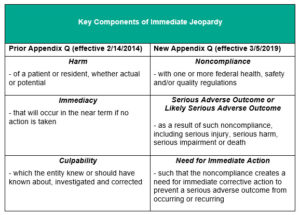
Appendix Q of SOMA (Immediate Jeopardy) Changes
CMS clarifications letter
SOMA appendix Q Section Immediate Jeopardy
https://www.cms.gov/Regulations-and-Guidance/Guidance/Manuals/downloads/som107ap_q_immedjeopardy.pdf
|
LON & Facility Size |
Current Rates |
Proposed Rates |
|
SMALL |
|
|
|
LON 1 |
$144.25 |
$150.31 |
|
LON 5 |
$160.74 |
$167.90 |
|
LON 8 |
$182.82 |
$191.85 |
|
LON 6 |
$223.88 |
$236.59 |
|
LON 9 |
$406.11 |
N/C |
|
MEDIUM |
|
|
|
LON 1 |
$118.04 |
$123.14 |
|
LON 5 |
$134.06 |
$140.24 |
|
LON 8 |
$158.90 |
$166.92 |
|
LON 6 |
$190.24 |
$200.79 |
|
LON 9 |
$385.84 |
N/C |
|
LARGE |
|
|
|
LON 1 |
$112.09 |
$116.30 |
|
LON 5 |
$119.64 |
$124.64 |
|
LON 8 |
$133.22 |
$139.44 |
|
LON 6 |
$179.40 |
$188.96 |
|
LON 9 |
$387.25 |
N/C |
New Vendor for CIMS Coming
July 22nd, 2026
Update Regarding Weekend Offline Period and Access to New Critical Incident Management System
HHSC’s Information Letter No. 2026-21 provides updates about the transition to the new Critical Incident Management System (CIMS) for certain Medicaid providers.
The current CIMS system will be unavailable beginning close of business Friday, July 24, 2026, at 5 p.m. The new system will be available beginning at 8 a.m. on Monday, July 27, 2026. Providers will not have access to either system during that weekend.
The new CIMS supports the same provider workflows and functions as the current system, with improvements to navigation and usability. Requirements for submitting incidents using CIMS are not changing. Providers should continue to follow established program requirements for reporting incidents. Data contained in the current CIMS will be migrated to the new system. Providers will not be required to re-enter organization, location, staff, or person profiles. Incident reports that have been in draft status for more than
Providers can access this letter on the CIMS website and on the following program information letter webpages:
- Deaf Blind with Multiple Disabilities (DBMD)
- Community Living Assistance and Support Services (CLASS)
- Home and Community-Based Services (HCS)
- Local Intellectual and Developmental Disability Authorities (LIDDAs)
- Texas Home Living (TxHmL)
If you have any questions about the transition, please contact: MCS_CIMS@hhs.texas.gov
July 2nd, 2026
NEW CIMS Platform and Training Opportunities
July 2nd, 2026
Information Letter on Transition & Training Opportunities
Texas Health and Human Services has published Information Letter IL 2026-19, regarding the transition to and training for the new Critical Incident Management System (CIMS) for 1915(c) Medicaid Waiver Program Providers.
The letter includes information on the transition to the new CIMS platform and how to prepare for the switch. In addition, they have also added links for providers to register for upcoming training sessions.
Training sessions will be from July 14-20, 2026. PLEASE DON’T MISS OUT ON THESE TRAININGS!
CIMS Provider Foundations: July 14th, 2026 Registration (1-2 pm central)
CIMS Provider Incident Submissions Training: July 16th, 2026 Registration (1-2:30 pm central)
CIMS Provider Administration Training: July 20th, 2026 Registration (1-3 pm central)
July 2nd, 2026
Providers can access this letter on the CIMS website and on the following waiver program information letter webpages:
- Deaf Blind with Multiple Disabilities (DBMD)
- Community Living Assistance and Support Services (CLASS)
- Home and Community-Based Services (HCS)
- Local Intellectual and Developmental Disability Authorities (LIDDAs)
- Texas Home Living (TxHmL)
If you have any questions about the transition or upcoming training, please contact: MCS_CIMS@hhs.texas.gov
June 14th, 2026

March 14th, 2026
CIMS: A new vendor has been procured – Deloitte.
The transition to current vendor will take 6 months with target date for completion August 1, 2026.
HHSC will conduct webinars and ad hoc meetings and publish bulletins and Information Letters to prepare providers for the transition between now and August 1, 2026.
STEPS: 2026-Update
July 21st, 2026
SFY 2025 Financial Compliance Report Now Open in STEPS
HHSC has transitioned to a web-based application to collect information from providers for Medicaid and non-Medicaid financial compliance reports. The new system, the State of Texas Electronic Provider System (STEPS), updates and streamlines financial compliance reporting.
HHSC will begin collecting state fiscal year (SFY) 2025 Financial Compliance Reports (FCR) on July 20, 2026. The due date for the SFY 2025 FCRs is Sept. 18, 2026. Completing the SFY 2025 FCR is voluntary.
To review the full FCR collection schedule and identify which program providers must complete the report in subsequent years, view the PFD Financial Compliance Report and Applicable State Fiscal Year Cost Report Collection Cycle (.xlsx).
FCR Information
For more information about SFY 2025-2029 FCR requirements and reporting, visit the Provider Finance Department (PFD) FCR Information webpage.
HHSC PFD Long-term Services and Support (LTSS) provides the LTSS Report Program Specific Instructions and Resources webpage to help providers complete cost reports and financial compliance reports.
CPC Providers
HHSC will not request an FCR from providers delivering only CPC services because information needed to implement the CMS payment adequacy provisions was already reported in the SFY 2025 CPC cost report. However, providers that also delivered other services subject to payment adequacy reporting requirements may submit an FCR for those services if requested. The CPC section will appear on the FCR for all providers; however, units of service and revenue data will not be prepopulated in that section. Providers will see prepopulated data for any services they are being asked to report.
Requirements for Users and STEPS Access
Primary entity contacts, financial contacts, and cost report preparers must complete the web-based FCR training before they can prepare, act on or certify an FCR. The required training module is available for enrollment in STEPS. The SFY 2025 FCR Training Unit Matrix (.pdf) is available to view.
The STEPS webpage is the central location for major announcements and resources, including:
- System User Guides
- Registration Guides
- Transition materials
- Frequently Asked Questions
Updates regarding STEPS are posted regularly.
- HHSC pre-identified certain users for STEPS access. Follow the instructions on the STEPS webpage under “STEPS Pre-Identified Registration User List.”
- If you were not pre-identified, follow the instructions in the STEPS External IAMOnline User Guide (.pdf) to register.
For questions about STEPS functionality or application issues, contact HHSC using one of the following methods:
- Live Support Line 1-737-86-STEPS (1-737-867-8377)
- Submit a ticket in STEPS
- Email costinformationpfd@hhs.texas.gov
For questions about this notice, contact LTSS staff at (737) 867-7817 or email PFD LTSS.
July 9th, 2026
Financial Compliance Report Notice: Don’t Panic!
Dear _____,
This notification is to inform you that the following report(s) have been assigned to you. The below report(s) is due based on the specified due date(s) listed in the below table. Please ensure all required reports are submitted by the due date to remain in compliance.
Report(s) Due:
| Entity Name | DBA | Report ID | Report Type | TPI | NPI/Resource ID | Status | Due Date |
|---|---|---|---|---|---|---|---|
| FCR | N/A | Not Started | 9/18/2026 |
Next Steps:
Please log in to the STEPS system to complete and/or review your assigned report(s). Follow this link to go to your assigned reports.Note: This is an automated notification. Please do not reply to this email. For questions or assistance, please contact the Service and Support Team..
HHSC’s Financial Compliance Report FAQ’s
The Texas Health and Human Services Commission (HHSC) Provider Finance Department (PFD) has published a Financial Compliance Report Frequently Asked Questions (FAQ) document on the PFD Financial Compliance Report Information webpage. This resource provides information on the Financial Compliance Reporting requirements for Long-term Services and Supports (LTSS) Medicaid and non-Medicaid programs.
If you have any questions about this FAQ, please email the HHSC PFD Long-Term Services and Support team.
June 24th, 2026
STEPS Planned System Outage – June 26 to 28, 2026
The State of Texas Electronic Provider System (STEPS) will be unavailable from Friday, June 26, 2026, at 5 p.m. to Sunday, June 28, 2026, at 9 p.m. CDT due to a planned system update outage.
External users will not have access to STEPS during this time.
Important Dates/Deadlines:
Reference the STEPS Transition Phased Release Plan (.pdf), which includes current enrollment and cost report open and close dates.
Resources:
Additional information about STEPS can be found on the HHSC Provider Finance website, including instructions for submitting a STEPS ticket to request assistance or report any user issues.
March 3rd, 2026
From HHSC Alert March 2nd, 2026:
Multiple Cost Reports Now Open in the State of Texas Electronic Provider System (STEPS)
HHSC has transitioned to a new web-based software application, State of Texas Electronic Provider System (STEPS), to collect information from providers for Medicaid and non-Medicaid cost reports, Supplemental and Directed Payment Program (DPP) enrollments, and legislatively directed reports.
HHSC is implementing a phased release plan for the DPP enrollments, training, cost reports, and non-cost reports. Mandatory cost report training became available on February 2, 2026. Please see the phased release dates below, in addition to important resources and contact information.
Cost Reports Open as of March 2, 2026:
The following cost reports are open as of March 2, 2026:
- 24-Hour Residential Child Care (24RCC) Cost Report
- Single Source Continuum Contractors (SSCC) Cost Report
- Mental Health, Early Childhood Intervention, and Individuals with Developmental Disabilities (MEI) Cost Report
- UC Ambulance (Ambulance Services Supplemental Payment Program) Cost Report
- CPC: Community Living Assistance and Support Services – Case Management Agency (CLASS-CMA), Community Living Assistance and Support Services – Direct Service Agency (CLASS-DSA), Primary Home Care (PHC)
- Day Activity Health Services (DAHS)
- State Supported Living Center (SSLC) Cost Report
Cost Reports Opening No Later Than April 1, 2026:
- Medicaid Administrative Claiming (MAC) – OD25 Quarter
- Mental Health / Individuals with Intellectual Developmental Disability (MHIDD)
- Independent School District (ISD)
- Local Health District (LHD)
- Early Childhood Intervention (ECI)
- School Health and Related Services (SHARS) Cost Report
Cost Reports, Applications, and Enrollments Opening Fall 2026:
- Public Health Provider – Charity Care Program (PHP-CCP) Cost Report
- Disproportionate Share Hospitals and Uncompensated Care (DSH/UC) Application
- Hospital Augmented Reimbursement Program (HARP) Enrollment
Resources:
- The STEPS website is the central location for major announcements and resources, including:
- System User Guides
- Registration Guides
- Transition materials
- Frequently Asked Questions
- STEPS Registration via IAMOnline User Guide
- Certain users were pre-identified by HHSC for STEPS access. Follow the instructions on the STEPS website under the “STEPS Pre-Identified Registration User List”
- If you were not pre-identified by HHSC follow the instructions in the “STEPS Registration via IAMOnline User Guide”.
- Primary Entity Contact (PEC) in the Provider Enrollment and Management System (PEMS)
- The enrollments and Medicaid cost reports will not populate in STEPS unless the PEC’s email address in PEMS matches the email address used to register in STEPS. HHSC posted the PEMS contact lists under the “Medicaid Directed Payment Programs (DPPs) with Primary Enrollment and Management System (PEMS) Primary Contacts Lists” on the STEPS website.
- HHSC cannot update a PEC designation on behalf of a provider in PEMS or in STEPS.
- For additional information, please see Step 5 on page 10 of the STEPS User Guide for instructions on how to update the PEC in PEMS and contact information for TMHP and PEMS.
Providers are responsible for reviewing available guidance and ensuring timely completion of required actions.
Contact Information:
For questions about STEPS functionality or issues within the system, contact HHSC using one of the following:
- Submit a ticket in STEPS
- Email the costinformationpfd@hhs.texas.gov
- Live Support Line 1-737-86-STEPS (78377)
For questions related to PEMS, contact TMHP using one of the following:
- Call the TMHP Contact Center (800) 925-9126, or
- TMHP-CSHCN Services Program Contact Center (800) 568-2413, or
- Email TMHP to request assistance with enrollment maintenance
For program-specific questions, contact the appropriate Provider Finance email box or submit a ticket in STEPS.
- LTSS: pfd-ltss@hhs.texas.gov
- DFPS: pfd-dfpsrates@hhs.texas.gov
- UC Ambulance: PFD_hospitals@hhs.texas.gov
- MEI: MEI@hhs.texas.gov
- SHARS: providerfinanceshars@hhs.texas.gov
- MAC: medicaidadministrativeclaiming@hhs.texas.gov
Feb 28th, 2026
Just a Reminder: STAIRS System Retirement & Cost Report Access Deadline is April 30, 2026
Change to HHSC cost reporting system, from STAIRS to STEPS!
HHSC will be retiring the STAIRS system as part of the transition to the new cost reporting system, State of Texas Electronic Provider System (STEPS), beginning with cost reports collected in 2026.
Important deadline: The final date to access and download historical cost reports from STAIRS is April 30, 2026, at 5 p.m.
After this date, providers will no longer be able to access STAIRS to retrieve prior-year cost reports. STAIRS accounts will be deactivated.
Note: We encourage all providers to start downloading and retaining copies of any historical cost reports you may need as soon as possible. Please don’t wait til the deadline, as it may limit your ability to retrieve this information. Instructions for downloading cost reports from STAIRS are available here.
Providers may submit questions through HHSC’s online portal.
February 11th, 2026
System Remedies Implemented for STEPS & Guidance Issued for Users
(HHSC) is aware that some users of the new State of Texas Electronic Provider System (STEPS) have experienced difficulty viewing all of their associated entities.
The two issues that were resolved successfully were related to:
1. Data for the Primary Entity Contacts (PECs)
2. The inability to access the reporting tool to complete Executive Order 46 (EO 46) reporting that is required each quarter for Medicaid-enrolled hospitals.
The issues were identified to HHSC by external users. HHSC has also worked with providers to identify two additional circumstances that may be impacting a STEPS user’s ability to view their associated entity information.
Below is the Guidance From HHSC:
General User Access
- PECs were not correctly aligned with National Provider Identification (NPIs) as listed in the Provider Enrollment Management System (PEMS). The original data integration from PEMS was using the initial primary contact individual, rather than the most current primary contact individual. The system updates to cure the issue were implemented on Saturday, February 7, 2026.
- In instances where a provider has requested an updated primary contact email address in PEMS alongside other changes to PEMS that are still pending, the PEMS primary contact information is not updated until all matters on the same request are fully resolved. To effectuate an email address update in PEMS while other changes are pending, a request to update only the PEMS contact information must be submitted without any other simultaneous changes to the request. The system will then automatically update within 24 hours, and then STEPS will automatically update as well. For additional information on how to make this type of update, go to Step 5 of the STEPS User Guide (.pdf). This matter can be resolved by users and is not a system defect.
- When viewing PEMS information please ensure that the Approved Only Data dropdown has been selected, as only approved data will be transmitted to STEPS.
Executive Order 46 Access
- HHSC updated the system to provide training materials about EO-46 on Friday, February 6, 2027. After completing the training, users can now access the EO-46 Reporting tool and PECS can assign appropriate financial contacts and/or preparers.
- For EO 46 reporting, STEPS determines the PEC using the primary contact email associated with the practice location in PEMS. Users can view this in PEMS under “practice location information” on the left side panel –> Mailing/Contact Addresses. If PEC information is incorrect, follow guide in bullet number two above.
HHSC continues to work with providers who have submitted tickets to identify any system defects or user experience matters that may be delaying the ability of a provider to complete enrollments or reports. HHSC plans to issue further guidance to resolve issues that users may be experiencing by adding the Frequently Asked Questions to our website. HHSC expresses our sincere appreciation to the providers and enrollment preparers who submitted tickets to HHSC to identify the system issue. We are working through the tickets as quickly as possible, but with this being a system issue affecting a large population, our ticket responses are taking longer than our preferred two-day turnaround. We are working them in the order they were received.
HHSC is also evaluating options to extend enrollment deadlines to ensure that providers have adequate time to complete program enrollments. HHSC will issue further information about this by 5:00 p.m. on Feb. 13, 2026. HHSC encourages all providers to begin the login and enrollment processes as soon as possible to ensure that any barriers to successful program enrollment are identified as early as possible. HHSC is committed to helping all providers who wish to submit an enrollment application to do so.
Additional information about STEPS can be found on our website, including information about how to submit a ticket to request assistance or to report any user issues.
January 31st, 2026
Registration for State of Texas Electronic Provider System (STEPS) through IAMOnline
How to gain access to the State of Texas Electronic Provider System (STEPS) being granted by HHSC’s Provider Finance Department.
If you will be using the STEPS system, you must register for IAMOnline to access STEPS, which goes live on Feb. 2, 2026.
IAMOnline is a State of Texas identity and access management platform that serves as the single-entry point to STEPS and other HHSC systems. IAMOnline will be the entry point every time a user logs in to STEPS.
Certain users were pre-identified by HHSC and pre-populated into the STEPS system via IAMOnline. Be sure if you were not pre-identified to follow these steps
How do I register for STEPS if I was not pre-identified for registration?
To access STEPS, users who were not pre-identified must follow the instructions in the STEPS Registration via IAMOnline External User Guide, beginning on Step 3, page 1. Once you have completed the steps to request access, you will receive a registration email to activate your account. Ensure your firewall allows email from Okta “noreply@okta.com”, and check your spam/junk mail folders, as the link will only be available for seven calendar days. If the link expires, or you do not receive a link within three days of completing the registration steps, call the Enterprise Service Desk to request a new link (see details below under Support and Assistance).
STEPS IAMOnline External User Guide
- The STEPS IAMOnline External User Guide provides step-by-step instructions for setting up an account and accessing it.
-
Users should review the IAMOnline user guide before contacting the Enterprise Service Desk or costinformationpfd@hhs.texas.gov for support.
- The email registration link will expire within seven calendar days. If the link expires, you will need to call the Enterprise Service Desk to request a new email containing the registration link.
How do I check if I was pre-identified for STEPS registration?
- This group includes STAIRS users, prior-directed payment program enrollment participants, and DFPS-contracted providers who submit DFPS cost reports. These users were included in a bulk upload to expedite access to STEPS. If you are part of this group, you will begin on Step 5 of the STEP Registration via IAMOnline External User Guide. To confirm whether you were part of the pre-identified user list, please refer to the STEPS Pre-Identified User List.
Support and Assistance
If you are unable to complete the process after following the guide, contact the Enterprise Service Desk for assistance.
IMPORTANT: Registered users must log in to IAMOnline every 90 days to maintain access; otherwise, the account will be disabled. If this occurs, call the HHSC Enterprise Service Desk to reactivate your account.
- Enterprise Service Desk at (512) 438-4720 or (855) 435-7181 from 7 a.m. to 7 p.m., CST, Monday-Friday.
- Select the Consolidated Helpdesk, Option 1;
- When prompted for an employee number, select “*” if you do not have an employee number; and
- Remain on the line while the automated prompts continue.
- After the prompts conclude, your call will be routed to a live help desk agent, and you will be asked to provide your name and email where the registration link was submitted.
- Reference that you are calling about gaining access to IAMOnline and STEPS, and explain the issue you are experiencing.
- If you did not receive the email, check your spam and junk folders first.
- If you think your organization has blocked the email, ensure you have marked the sender (noreply@okta.com) as safe prior to calling the help desk to request a new email be sent.
Resources
Visit the STEPS Webpage for up-to-date information regarding the system transition.
The STEPS Registration IAMOnline External User Guide contains answers to frequently asked registration questions. Please review this guide before reaching out to costinformationpfd@hhs.texas.gov for support.
January 22nd, 2026
HHSC does address questions related to the STAIRS and STEPS on the STEPS Transition webpage, https://pfd.hhs.texas.gov/transition-state-texas-electronic-provider-system.
It does include information related to the end of STAIRS; however, the team will be asked to evaluate the currently published information to see if any clarifying updates would be helpful based on questions and concerns already received from providers and provider associations. They typically update the documents at the beginning of each month and send out a GovDelivery notice once updates are published.
They will also evaluate notices for the SFY26 reports collected in 2027 once STEPS launches and they have released the SFY25 reports.
HHSC Announces New STEPS Launch Date and New Opening Dates for Directed Payment Program Enrollments and Cost Report Collections
HHSC is transitioning to a new web-based software application to collect information from providers for Medicaid and non-Medicaid cost reports, Supplemental and Directed Payment Program (DPP) enrollments, and legislatively directed reports. The new system, the State of Texas Electronic Provider System (STEPS), will update and simplify the cost reporting and directed payment program enrollment processes.
The planned launch date for STEPS has been moved from January 23, 2026 to February 2, 2026. HHSC is also implementing a phased release plan for STEPS.
The phased release plan will enable STEPS users to gain access to the system and complete required cost report training before HHSC begins collecting the majority of the cost reports.
A general plan for the opening of DPP enrollments, reports, and cost reports is outlined below. Please refer to the STEPS Transition Phased Release Plan (.pdf) for more detailed information, including opening and closing dates for each enrollment and report.
February 2026
HHSC will open the following DPP enrollments, reports, and training modules in February 2026.
- Comprehensive Hospital Increase Reimbursement Program (CHIRP) Enrollment
- Directed Payment Program for Behavioral Health Services (DPP BHS) Enrollment
- Executive Order GA-46 Report
- Medicaid Administrative Claiming (MAC) Early Childhood Intervention (ECI) Report – JS25
- Rural Access to Primary and Preventive Services (RAPPS) Enrollment
- Texas Incentives for Physicians and Professional Services (TIPPS) Enrollment
- Quality Incentive Payment Program (QIPP) Enrollment
- Required Cost Report Training Modules
March 2026
HHSC will open the following cost reports in March 2026.
- 24-Hour Residential Child Care (24RCC) Cost Report
- Single Source Continuum Contractors (SSCC) Cost Report
- Mental Health, Early Childhood Intervention, and Individuals with Developmental Disabilities (MEI) Cost Report
- Ambulance Services Supplemental Payment Program (UC Ambulance) Cost Report
- CPC: Community Living Assistance and Support Services – Case Management Agency (CLASS-CMA); Community Living Assistance and Support Services – Direct Service Agency (CLASS-DSA); Primary Home Care (PHC) Cost Report
- Day Activity Health Services (DAHS) Cost Report
- State Supported Living Center (SSLC) Cost Report
March/April 2026
HHSC will open the following cost reports no later than April 2026.
- Medicaid Administrative Claiming (MAC) – Mental Health/ Individuals with Intellectual Developmental Disability (MHIDD), Independent School District (ISD), Local Health District (LHD) – OD25
- School and Health and Related Services (SHARS) Cost Report
Opening in Fall of 2026
- Public Health Provider – Charity Care Program (PHP-CCP) Cost Report
- Disproportionate Share Hospitals and Uncompensated Care (DSH/UC) Application
- Hospital Augmented Reimbursement Program (HARP) enrollment
STEPS Resources and Updates
The STEPS webpage is the central location for major announcements and resources. Updates regarding STEPS are posted regularly.
Questions?
HHSC encourages providers to submit additional questions not answered in the FAQ and transition guides through the online questions and feedback portal. These questions will not receive a direct response, but they will help guide future updates.
December 7th, 2025
STEPS Replacing STAIRS -December Update
Starting in early 2026, HHSC will transition to a new web-based software application to collect information from providers for Medicaid and non-Medicaid cost reports, Supplemental and Directed Payment Program enrollments, and legislatively directed reports. The new system, the State of Texas Electronic Provider System (STEPS), will update and simplify the reporting and directed payment program enrollment processes. The current system, the State of Texas Automated Information Reporting System (STAIRS), will remain in use until the transition is complete.
STEPS Provider Webinar
The HHSC Provider Finance Department (PFD) will host a webinar about the STEPS system on Dec. 10, 2025, from 10 a.m. to 11:30 a.m. CST.
Register for the webinar here through GoToWebinar.
Webinar ID 641-739-747
STEPS Resources
- STEPS Webpage
The STEPS webpage is the central location for major announcements and resources. Updates regarding STEPS will be posted regularly before the system goes live.
- Frequently Asked Questions (FAQ)
The STEPS webpage includes an FAQ document to address your questions. This document is updated in response to questions received through the online portal referenced below.
- STEPS Transition Guides – Updated Dec. 1
The STEPS webpage includes transition guides that provide more details regarding access to the new STEPS system, training, and other related topics. New guides will be added as information is available.
- PFD Cost Report Webpages
The PFD Cost Report Information and PFD Cost Report Training webpages have been updated with new information about STEPS, cost report cycles, and cost report training requirements.
Questions?
HHSC encourages providers to submit additional questions not answered in the FAQ and transition guides through the online questions and feedback portal. These questions will not receive a direct response, but they will help guide future updates.
October 6th, 2025
October Update
HHSC will switch to a new web-based software application that will be used to collect information from providers for Medicaid and non-Medicaid cost reports, Supplemental and Directed Payment Program enrollments, and legislatively directed reports, starting in early 2026. The new system, State of Texas Electronic Provider System (STEPS), will update and simplify the reporting and directed payment program enrollment processes. The current system, the State of Texas Automated Information Reporting System (STAIRS), will remain in use until the transition is complete.
Resources
- STEPS Webpage
- The STEPS webpage will serve as a central location for major announcements and resources.
- Updates regarding STEPS will be posted regularly before the system goes live.
- Frequently Asked Questions (FAQ)
- The STEPS webpage includes an FAQ document to address your anticipated questions. This document has been updated in response to questions received through the online portal referenced below.
Questions
HHSC encourages providers to submit additional questions not answered in the FAQ through the online questions and feedback portal. These questions will not receive a direct response but will help guide updates to the FAQ.
Packets For Loss of SSI
July 17th, 2026
New Login Process for All Texas Medicaid Providers Through TMHP IAMOnline and Provider MFA Registration for Transition Release 4
July 17th, 2026
Effective Aug. 24, 2026 (TMHP) will add new applications to the TMHP IAMOnline platform.
TMHP IAMOnline manages user authentication and authorization to provide a secure, single-entry point for TMHP applications.
TMHP will transition the following online portal applications to TMHP IAMOnline:
- Long-term Care Online Portal (LTCOP)
- Long-term Care (LTC) Dashboard
- Electronic Visit Verification (EVV) Portal
- Care Forms
Providers that already have IAMOnline access for the State of Texas Electronic Provider System (STEPS) cost report must still activate their TMHP IAMOnline account to access their TMHP applications. Read the full article.
FYI-2025 Fiscal Compliance Report Optional For IDD Waiver Providers
July 15th, 2026
- For IDD waiver providers the SFY 2025 FCR is optional.
- Future reports will NOT be optional.
- HHSC urges providers to complete the SFY 2025 FCR to become familiar with the reports and STEPS.
- The information one submits will NOT be used for any purpose other than providing feedback to HHSC as to adjustments which may need to be made to the reports going forward.
- Read the highlighted section below. One’s PEC in STEPS MUST match one’s PEMS email address.
Date: Wed, Jul 8, 2026, 11:02 PM
Subject: You Have a Report Due!
Dear _____,
This notification is to inform you that the following report(s) have been assigned to you. The below report(s) is due based on the specified due date(s) listed in the below table. Please ensure all required reports are submitted by the due date to remain in compliance.
Report(s) Due:
| Entity Name | DBA | Report ID | Report Type | TPI | NPI/Resource ID | Status | Due Date |
|---|---|---|---|---|---|---|---|
| FCR | N/A | Not Started | 9/18/2026 |
Next Steps:
Please log in to the STEPS system to complete and/or review your assigned report(s). Follow this link to go to your assigned reports.
Note: This is an automated notification. Please do not reply to this email. For questions or assistance, please contact the Service and Support Team..
HCS, TxHmL and PI Quarterly Stakeholder’s Webinar
July 10th, 2026
Don’t Forget To Register!
HCS, TxHmL and PI Provider Webinar with LTCR
July 27, 2026
10–11 a.m.
To request agenda items or for questions about this webinar, email LTCR Policy.
AAIDD: Texas Chapter Annual 50th Anniversary Convention-(August 18th-August 21st, 2026) REGISTRATION NOW OPEN
July 9th, 2026


REGISTRATION IS NOW OPEN!
AAIDD – Texas Chapter 50th Annual Convention
August 18th-August 21st, 2026
OMNI Hotel (Corpus Christi, Texas)
Registration is now open for the 50th Annual Convention of the American Association on Intellectual and Developmental Disabilities (AAIDD) Texas Chapter! Be sure to make your plans early. With high demand for hotel rooms, they expect a sellout. Click here for more information, including registration, sponsorship, and vendor opportunities.
Join The Texas Chapter of AAIDD (American Association on Intellectual & Developmental Disabilities) in celebrating “50 Years of Inclusion: Honoring the Past, Celebrating the Future.”
Please mark your calendars for the 50th Annual AAIDD Texas Chapter Convention in Corpus Christi, Texas! This annual convention is open to all non-members of AAIDD as well as new and current members. We encourage you to become a member, as you will receive a discounted registration rate to attend the convention, and you will have a chance to win some fabulous prizes from “YETI”. Of course, there are many other great reasons to become a member. Please click here for more information on member registration.
Texas Chapter of AAIDD website.
As some of you may know, I (Julie Blacklock) am on the board at AAIDD Texas Chapter. Twogether Consulting has also been a long-time sponsor. AAIDD Texas Chapter is currently putting together this year’s 50th anniversary convention, and we plan for it to be jam-packed with amazing, interesting, and pertinent presenters and breakout sessions. We hope that many of you will be able to attend this year, and we have tried to make the dates for this convention a bit more convenient, as we know that the Fall is a big time for IDD events, conferences, and conventions in Texas and nationwide.
One of the exciting things we plan on having in place this year is our HHSC/TMHP “information tables” with experts from TMHP (Texas Medicaid Health Partnership) and HHSC (Health & Human Services Commission) in areas/departments where HCS/TxHmL and ICF providers, in particular, will have a chance to have their specific questions and concerns answered and or addressed. We have received confirmation that the following departments/units will be coming with representatives and experts concerning: Contracts & Enrollments, Utilization Review, Provider Monitoring, TMHP (Texas Medicaid Health Portal), and Medicaid. LIDDA staff and IDD Bring your DLN #’s, ticket #’s, Level of Need (LON) denial letters, and any other documents pertaining to your questions and any previously reported issues that have not been addressed, for “on-site” assistance. The representatives will be available to registrants to answer questions and provide immediate on-site assistance, August 19th and 20th, from approximately 8:00 am-4:30 pm.
What a great place to have a summer convention, if I do say so myself. Bring your family, spend the weekend at the beach, and enjoy the summer fun just a little bit longer. This convention will bring together individuals with IDD, professionals, advocates, family members, and community members to share experiences and insights for the continuing support and empowerment of individuals with IDD.
There will be a silent auction, a chance to win some cash with our 50/50 raffle, and a chance to win prizes with a drawing for current and new members.
Nominate Someone You Know for one of the AAIDD Tx Chapter Awards: We all know dedicated persons who are serving persons with intellectual and developmental disabilities. Help honor them at our 50th Anniversary Convention by submitting their name for one of our Award Categories! Submission deadline is Friday, July 17, 2026.
Continuing education credits will also be available for the breakout sessions.
For inquiries about the convention, our speakers, and topics please contact Pat Holder at patholder@austin.rr.com. We look forward to seeing you at the Omni Corpus Christi Hotel in Corpus Christi, Texas.
Reserve Your Room Today!

Wake up to spectacular views of Corpus Christi Bay at Omni Corpus Christi Hotel, with each room featuring private balconies overlooking the water or downtown. At our Marina District hotel in Corpus Christi, TX, you’ll find plenty to do. Whether it’s the spa, the pool, dining options or the great outdoors, Omni Corpus Christi offers it all. It’s the ideal backdrop for AAIDD Texas Chapter’s 50th Annual Convention. See you there!
CLICK HERE
to reserve your room
Download the Brochure
Everything you need to know including session descriptions, special events, exhibitors, sponsors and general information, all available in a printable format.
Purpose of AAIDD
Is a nonprofit organization. Their mission is to enhance the quality of services and provide meaningful opportunities and choices for people with IDD and their families by exchanging information and ideas, and by advancing the knowledge and skills of individuals in the field. The Association represents many disciplines (professionals, individuals with IDD and their families, and other interested persons). AAIDD Texas Chapter provides a forum for:
-
Developing the human resources and leadership needed in the field.
-
Promoting quality services that include persons with IDD in the rhythms of the community.
-
Encouraging basic and applied research and its dissemination and application.
-
Influencing progressive public policies.
-
Promoting public awareness and attitudes.
From the AAIDD Texas Chapter President’s Report in April 2026
Attendees can expect a dynamic lineup of presentations, including:
-
A thought-provoking opening session by AAIDD (National Chapter) CEO Margaret Nygren, exploring the evolution of publicly funded supports and what lies ahead
-
Insightful discussions on mental health, trauma-informed care, and family experiences in crisis
-
Practical strategies for supporting independence, transition-age youth, and workplace inclusion
-
Emerging perspectives on sensory processing, peer support roles, and person-centered practices
-
Timely updates on Texas legislation and system-level changes impacting IDD services
From topics like polypharmacy and proactive medical care to the role of music, faith, and outdoor experiences in enriching lives, the program reflects the diversity and depth of our field. Whether you are a clinician, provider, educator, policymaker, or advocate, there will be meaningful opportunities to learn, connect, and grow.
As we reflect on Developmental Disabilities Awareness Month, I encourage each of you to carry its message forward—recommitting to our shared mission of promoting policies and practices that support inclusion, dignity, and opportunity for all.
Thank you for the work you do every day—and for being part of this community.
2026 Convention Committee
Susanne Deiter-Destination Independence LLC
AAIDD Texas Chapter President-Elect and Convention Committee Chair
Carey Amthor–Friends for Life
Toye Babb–Advocate
Linda Bailey–Evergreen Life Services
Julie Blacklock–Twogether Consulting, Ltd.
Margo Childs–Independent
Connie Cisneros–Tropical Texas Behavioral Health
Shelbi Davenport–Better Lives Senior Associate; Practicum Coordinator, Texas A&M
Amber Jones-Integral Care
Ramona Salomons–Nueces Center for MH and IDD
Dion White–Center for Life Resources (AAIDD Sesqui Advocacy Award Winner!)
Cheryl Wilson–Integral Care
Ken Winston–Integral Care
Financial Compliance Report FAQ’s
July 3rd, 2026
The Texas Health and Human Services Commission (HHSC) Provider Finance Department (PFD) has published a Financial Compliance Report Frequently Asked Questions (FAQ) document on the PFD Financial Compliance Report Information webpage. This resource provides information on the Financial Compliance Reporting requirements for Long-term Services and Supports (LTSS) Medicaid and non-Medicaid programs.
If you have any questions about this FAQ, please email the HHSC PFD Long-Term Services and Support team.
PPAT Fall Conference For September 2nd-4th, 2026
Information below is from PPAT for Registration and Info!

PPAT’s 29th Annual Fall Conference
September 2-4, 2026
Session topics
(Subject to change)
-Legislative Panel: Preparing for the 90th Texas Legislative Session and Sunset Review of HHSC
-Navigating Changes to the IDD Reimbursement Process & Cost Reports
-PEMS: Overview of Improvements Coming, Status of OIG Backlog & More
-Review of June, 2026 DOJ Opinion: Impetus and Impact on Olmstead, Section 504 and ADA
-CIMS New Reporting process & Portal
-ISS: Review of Updated Policy Changes including Guidance Letter on Prohibition of Certain Fees
-Benefits of Outdoor and Homesteading Experiences for People with IDD
-ICF/IID and HCS LON Increases: How to Submit a Successful Request
-Updates to NAR and SEMARC Employability Search Status
-Facilitating Difficult Conversations/De-escalating Disputes to Achieve Mutually Beneficial Resolutions
-CAMP (and no, not a summer camp): Improvements to Contract Application & Renewal Processes
-ICF/IID Referrals: Review of Efforts to Improve Referral Process & Address ICF/IID Capacity Challenges
-Medicaid Eligibility
-Updates on HHSC Activities & Initiatives and Opportunity to Share Challenges with and Suggest Resolutions to HHSC
-Focus Group with Colleagues (aka, Provider Support Group): Exchange Ideas & Tips for Operating Efficiently with Peers
-Managing Program Enrollments & Transfers
More to come…
Registration, Exhibitor, and Sponsorship forms attached!
Link to register online: 2026PPATConfRegistration
(Sponsorship, Marketing & Exhibiting forms must be submitted by mail, fax or email to Jaimppat@aol.com. Registration does not need to be separate)
Reserve your room: 2026PPATConferenceRoomReservation
Reservations with the DoubleTree Hotel can also be made by calling the toll-free national reservation center line at 1.800.866.3126, for the special rate of $149.00 Single/Double. Identify yourself with the Private Providers Association of Texas (promotional code CDTPPA). Reservations are subject to space and availability.
All reservations must be guaranteed by credit card or advance deposit. Reservations must be canceled by 12:00 PM and 48 hours before the day of arrival or the first night of the stay will be charged.
Parking:
Covered self-parking for conference attendees is $10/day. Parking based on availability. Valet parking is not available at this location.
Hotel Information:
DoubleTree by Hilton Hotel North, 6505 IH 35 North, Austin, TX 78752
We Look Forward to Seeing You!
New Smoke Alarm Requirements for Home and Community-based Services Providers
June 30th, 2026
HHSC Long-Term Care Regulation (LTCR) has published a new Provider Letter 2026-09 (PDF) highlighting an HCS rule pertaining to smoke alarm requirements.
Specific information on acceptable and unacceptable smoke alarm placement within the HCS home was added. This includes both group homes and host homes.
Providers can access this provider letter on the HCS Information and Provider Letters webpage.
For questions, email LTCRPolicy@hhs.texas.gov.
NAR-SEMARC-Employability Status Check Training Opportunities
June 30th, 2026
In the event you missed the NAR & SEMARC Employability Status Check training on June 29th or June 30th:
- Here are the handouts from the June 29th webinar in the event you were not able to participate and want to review before the webinar you or your staff join.
- NAR & SEMARC Employability Check Training Handout
- HHSC will post an Information Letter on the subject in the very near future – SEMARC becomes active August 3, 2026.
- HHSC will also conduct a session on this matter at the Private Provider’s Association of Texas’s (PPAT’s) annual conference in September (9/2 thru noon on 9/4).
June 14th, 2026
NAR and SEMARC Employability Status Check Training Opportunities
Attend the new Nurse Aide Registry (NAR) and Search Engine for Multi-Agency Reportable Conduct (SEMARC) Employability Status Check webinar training starting the end of June.
If you register and can’t attend, please cancel your registration as soon as possible.
This course looks at the legal basis for conducting the employee searches, specifically the NAR and SEMARC. It includes: how to conduct searches in both operations, as well as how to capture and save those results, how to do bulk searches, and how to run various reports.
NAR and SEMARC Employability Status Check
Monday, June 29
10 a.m. to noon CDT
Register for the June 29 webinar.
NAR and SEMARC Employability Status Check
Tuesday, June 30
1:30–3:30 p.m. CDT
Register for the June 30 webinar.
NAR and SEMARC Employability Status Check
Thursday, July 2
10 a.m. to noon CDT
Register for the July 2 webinar.
NAR and SEMARC Employability Status Check
Wednesday, July 8
2–4 p.m. CDT
Register for the July 8 webinar.
NAR and SEMARC Employability Status Check
Monday, July 13
9:30–11:30 a.m. CDT
Register for the July 13 webinar.
NAR and SEMARC Employability Status Check
Tuesday, July 21
1–3 p.m. CDT
Register for the July 21 webinar.
NAR and SEMARC Employability Status Check
Thursday, August 6
10 a.m. to noon CDT
Register for the August 6 webinar.
For more training opportunities, visit the Joint Training Course Catalog.
HHSC Road Show Trainings
June 25th, 2026
Update: Handouts From The Austin HHSC Roadshow Trainings
June 2nd 2026
Information and Handouts From The Austin HHSC Roadshow Trainings on May 27th and 28th, 2026
- Medication Management
- HCBS Refresher Requirements for Provider-Owned and Controlled Settings
- Intersection of Managed Care and IDD Services
- Reporting of ANE
May 29th, 2026
Registration Open For All HHSC Roadshow Trainings!
Register now to attend any of the following HHSC Roadshow Training stops:
This event is FREE!
Roadshow Stop #2:
June 16-17, 2026 at the El Paso Convention Center
Register for HHSC El Paso Roadshow Training
Roadshow Stop #3:
July 8-9,2026 at the Galveston Island Convention Center
Register for HHSC Galveston Roadshow Training
Roadshow Stop #4:
July 29-30, 2026 at the Hurst Conference Center
Register for HHSC Hurst Roadshow Training
Roadshow Stop #5:
Aug 12-13, 2026 at the San Antonio ESC Region 20
Register for HHSC San Antonio Roadshow Training
Roadshow Trainings
Join us for a two-day comprehensive, in-person training focused on Intellectual and Developmental Disability (IDD) programs.
Technical Assistance Sessions!
Connect with HHSC subject matter experts for real-time technical assistance across program, policy, regulatory, operational, and monitoring staff! Get help with:
- Your specific questions
- Complex scenarios
- Operational challenges
- On-the-spot guidance
Email questions to: hhscroadshowtraining@hhs.texas.gov
May 26th, 2026
Texas HHSC Roadshow Training Update: Across the state of Texas from June-Aug. 2026.
Next stop after Austin is El Paso.
HHSC Roadshow Training Stop #2
El Paso, Texas June 16-17, 2026
- Houston will not be a stop on the HHSC Road Show due to the fact that the FIFA World Cup games are being hosted by Houston and rooms are hard to secure.
- New! Galveston, Texas July 8-9, 2026
- Hurst, Texas, July 29-30, 2026
- San Antonio, Texas August 12-13, 2026
Join us for a two-day comprehensive, in-person training focused on Intellectual and Developmental Disability (IDD) programs, including the consumer-directed services (CDS) option.
Connect with HHSC subject matter experts for real-time technical assistance across program, policy, regulatory, operational, and monitoring staff! Get help with:
- Your specific questions
- Complex scenarios
- Operational challenges
- On-the-spot guidance
HHSC Roadshow Training Registration is coming soon!
Main link for HHSC Roadshow Training Opportunities is: https://www.tmhp.com/news/2026-05-01-hhsc-roadshow-austin-registration-now-open
Email questions to: hhscroadshowtraining@hhs.texas.gov
May 10th, 2026
HHSC Roadshow Training Opportunities Are Open For Registration
Texas Health and Human Services Commission (HHSC) is hosting a roadshow training across the state of Texas from May-Aug. 2026. Our first stop is Austin, May 27-28!
- Join us for a two-day comprehensive, in-person training focused on Intellectual and Developmental Disability (IDD) programs.
- Connect with HHSC subject matter experts for real-time technical assistance across program, policy, regulatory, operational, and monitoring staff! Get help with:
- Your specific questions
- Complex scenarios
- Operational challenges
- On-the-spot guidance
You may register at the link below. Registration is limited to 450 people, so sign up right away!
When you click on this registration link:
HHSC Roadshow Austin Registration May 27-28, 2026
You will see the bus, and if you look in the bottom left corner. Click on “Start now”
Dates: May 27-28, 2026
Location: University of Texas (UT) at Austin Commons Event Center 10100 Burnet Road, Building 137, Austin, TX 78758
GPS address: 2901 Read Granberry Trail, Austin, TX 78758
Parking Information: A parking permit is required. Your permit will be issued once your registration is confirmed.
Main link for HHSC Roadshow Training Opportunities is: https://www.tmhp.com/news/2026-05-01-hhsc-roadshow-austin-registration-now-open
April 30th, 2026
Upcoming HHSC Roadshow Training Opportunities
Save the Date – HHSC Roadshow Trainings Connecting, Learning, Achieving Together!
The Texas Health and Human Services Commission (HHSC) Roadshow will provide comprehensive program trainings to providers serving individuals with Intellectual and Developmental Disabilities (IDD). Sessions are designed to strengthen provider knowledge and support effective service delivery. These trainings will occur in various Texas cities between May and August 2026.
Mark your calendar!
Get ready for in-depth trainings and technical assistance sessions for the HHSC Roadshow Trainings. Registration link will be posted soon!
- First Stop – Austin! May 27-28, 2026 UT Austin Commons Event Center
- Last Stop – San Antonio! August 12-13, 2026 San Antonio Education Service Center Region 20
Stay tuned for more information on HHSC Roadshow Training stops.
For questions regarding the HHSC Roadshow, please email HHSCRoadshowtraining@hhs.texas.gov
Financial Compliance Report & Payment Adequacy Provisions Correction
Login Process “IAMOnline” for All Texas Medicaid Providers Through TMHP: UPDATE
July 10th, 2026
New Login Process for All Texas Medicaid Providers Through TMHP’s IAMOnline and Provider Multi-Factor Authentication Registration for Transition Release 3
Effective Aug. 3, 2026, the Texas Medicaid & Healthcare Partnership (TMHP) will add new applications to the TMHP IAMOnline platform.
TMHP IAMOnline manages user authentication and authorization to provide a secure, single-entry point for TMHP applications.
TMHP will transition the following online portal applications to TMHP IAMOnline:
- Custom Reports
- Medicaid Client Portal (MCP)
- Document Uploads
- Provider Message Dashboard
- My Account
TMHP will continue to notify providers as other online portal applications are transitioned to TMHP IAMOnline. Read the full alert.
June 14th, 2026
Effective June 12, 2026, the Texas Medicaid & Healthcare Partnership (TMHP) will transition to the TMHP IAMOnline platform as the new entry point for accessing applications on tmhp.com. TMHP IAMOnline manages user authentication and authorization to provide a secure, single-entry point for TMHP applications. The applications below are the first applications to be transitioned:
- MedLog
- Provider Enrollment and Management System (PEMS)
- Manage IMD Clients
- Electronic Remittance Advice (ERA)
- Prior authorization (PA) on the Portal
Providers should have already received an activation email on/around June 8, where they will find instructions on how to setup their new password and select their preferred multi-factor authentication method. We encourage providers to review the links provided below for important information regarding the transition.
- News post related to the first deployment tonight -> New Login Process for All Texas Medicaid Providers Through TMHP IAMOnline and Provider MFA Registration for Release 1 Transition | TMHP
- TMHP IAMOnline info on TMHP.com -> Account Management | TMHP
- Provider Training Guide -> How To Access TMHP Applications Using IAMOnline
If any Provider users did not receive it or are experiencing issues, they can contact the TMHP EDI Help Desk at 888-863-3638.
April 28th, 2026
Security Function Set up Help!
- Log in to IAMOnline the way you have currently been doing.
- Obtain your verification by SMS or email
- At the top right of the screen you will see your name under which you will see IAMOnline. Click on the arrow next to IAMOnline to view 3 options in the drop box – Settings, Preferences, and Sign Out
- Select Settings
- Under Security Methods, set up Okta Verify
- IAMOnline will generate a QR code for the app to set it up.
- Download the Okta Verify App to your phone and follow the steps and choose the option for obtaining your credentials from an organization.
April 14th, 2026
IAMOnline and Provider MFA Registration
The Texas Medicaid & Healthcare Partnership (TMHP) will transition to the TMHP IAMOnline platform as the new entry point for accessing applications on tmhp.com. Read the full alert.
TMHP will provide additional details and instructions related to the TMHP IAMOnline transition by April 24, 2026.
Fiscal Year 2025 Financial Compliance Reports Primary Entity Contacts List
June 10th, 2026
HHSC has transitioned to a new web-based software application to collect information from providers for Medicaid and non-Medicaid financial compliance reports. The new system, STEPS, will update and simplify financial compliance reporting.
HHSC will begin collecting fiscal year 2025 Financial Compliance Reports as of July 20th, 2026.
HHSC has published a list of the identified Primary Entity Contacts (PECs) on the HHSC STEPS website for each of the requested Financial Compliance Reports.
The PEC is responsible for assigning Financial Contacts (FCs), assigning Financial Compliance Report Preparers, and certifying the Financial Compliance Report, along with other responsibilities.
HHSC encourages PECs, FCs, and Financial Compliance Report Preparers to acquire STEPS system access as soon as possible.
Updating the Primary Entity Contact (PEC) in PEMS
The Financial Compliance Reports will not populate in STEPS unless the PEC’s email address in PEMS matches the email address used to register in STEPS.
HHSC cannot update a PEC designation on behalf of a provider in PEMS or in STEPS. For instructions on updating the PEC in PEMS, please follow Step 5 on page 10 of the STEPS User Guide.
STEPS Resources and Updates
For questions about STEPS functionality or issues within the application, contact HHSC using one of the following:
- Live Support Line 1-737-86-STEPS (78377)
- Submit a ticket in STEPS
- Email the costinformationpfd@hhs.texas.gov
Can You Have Cameras In HCBS Settings?
May 16th, 2026
The HCBS Settings rule does not allow the use of cameras in a resident’s bedroom or other areas where privacy is expected, unless a state’s waiver application calls for it and has been approved by CMS. Some providers have expressed that they serve some individuals whose guardians “demand” the use of cameras to monitor health status (such as a person with high medical needs or seizures) or to ensure no abuse occurs. It is our understanding that HHSC intends to submit an amendment to its HCS/TxHmL waiver application to allow for the use of cameras in certain situations.
No definitive date for submission of the amendment has been provided by HHSC, nor have they indicated what regulatory staff would do during a survey if a camera was found in someone’s bedroom or other area in which privacy would be expected, even with consent and team approval of this rights restriction. We believe HHSC is working on a provider letter that will address the use of cameras.
“Do You Know About “Adult Services?” In Texas (Link To 05-12-26 Recorded Webinar) Hosted By Consolidated Planning Group
May 13th, 2026

You may contact their panelists here:
- MY POSSIBILITIES – Shelley Crowder scrowder@mptx.org
- REACH, INC. – Jessica Kelley jkelley@reachcils.org
- CHOICE LIVING – Jennifer Scott, EdD admin@choiceliving.org
- THE VILLAGE CENTERS – Eva Aguirre eaguirre@thevillagecenters.org
- 29 ACRES INC. – Allie McDAniel connect@29acres.org
- BRIDGEWOOD FARMS – Randy Doleman randy@bridgewoodfarms.org
- HELPING HANDS – Brian Rouche BRouche@universitysatx.org
Schedule your complimentary virtual consultation with Consolidated Planning Group on this link or by calling 281-690-1177.
Consolidated Planning Group Resources:
- PDF of today’s slides (attached to this email)
- Click this link for the webinar recording!
- Did you know you can listen to these webinars as a podcast?
- Discover their client stories here!
- To explore all our upcoming webinars, click here!
Enjoy their YouTube channel, which is brimming with relevant, meaningful, and captivating webinars on many pressing issues related to our concerns for our special-needs family members. Like and Subscribe to their channel so you know when we have new content!
Serving Texas and across the U.S.
346-901-5033 Direct
National AAIDD Sesqui Advocacy Award Goes To One of Own!
April 21st, 2026

In commemoration of the national chapter of AAIDD’s sesquicentennial, the Board of Directors selected from among nominations from its members to recognize the merit, impact, and contribution of 150 members to the Association and the field.
Only individual members of the AAIDD at the time of their nomination were eligible.
Members for the Sesqui Awards were selected for recognition in the areas of Research, Service, Policy, Practice, and Advocacy, and will be presented with their awards at the 150th annual meeting in Chicago, Illinois, June 22-24, 2026.
Our own Dion White, Center for Life Resources CEO (since 2010), MBA, FAAIDD, has received the Sesqui Award for Advocacy from the American Association on Intellectual and Developmental Disabilities (AAIDD), for all the hard work he does advocating for IDD services. Dion’s incredible commitment to the individuals and families he and his team serve continues to make a huge impact on the lives of those individuals in his community. Dion is also an amazing advocate for individuals across the state during the legislative sessions in Texas. Dion spends countless hours and many days on the road to meet with different state representatives on the needs of the individuals in the programs and the need for more funding in IDD programs in Texas. Dion is also a member of the Texas Council of Community Centers.
IDRC Form Update
April 20th, 2026
IDRC Form Updated
An update to Form 8578 Intellectual Disability or Related Conditions Assessment and Instructions is now available.
Changes include formatting and accessibility updates, and edits to field (72) with the addition of a signature line and licensure information for the attesting APN/PA. This field is applicable for ICF/IID only and has been corrected to match the electronic version in the Long-Term Care Online Portal.
Related Conditions List Changes
G35 – Multiple Sclerosis
Q89.8 – Other specified congenital malformations
CLASS Program Updates
April 20th, 2026
HHSC Published IL 2026-09 Nursing Pre-Assessment Services Billing Requirements
Texas Health and Human Services Commission (HHSC) has published Information Letter (IL) 2026-09. This information letter clarifies the Community Living Assistance and Support Services (CLASS) and Deaf Blind with Multiple Disabilities (DBMD) registered nursing (RN) pre-assessment billing process for services provided prior to enrollment.
The IL may be located on the CLASS Information and Provider Letters webpage and the DBMD Information and Provider Letters webpage. Review the IL for more information.
Questions about this IL may be emailed to CLASSPolicy@hhs.texas.gov or DBMDPolicy@hhs.texas.gov.
April 16th, 2026
IL 2026-08 (Replaces IL 2024-07) EVV Documentation Related to Forms 3625 & 6503
Health and Human Services Commission (HHSC) has published the Information Letter IL 2026-08 (Revised), regarding the changes to Form 3625 Community Living Assistance and Support Services (CLASS) and Community First Choice (CFC) – Documentation of Services Delivered and Form 6503, Deaf Blind with Multiple Disabilities (DBMD) and CFC – Summary of Services Delivered, and Services Documented through Electronic Visit Verification (EVV) System. The revised IL can be found on the CLASS Information and Provider Letters page, and the DBMD Information and Provider Letters page.
This updated Information Letter corrects the subject of the previous version (IL 2024-07) that listed the incorrect form number for DBMD and CFC Summary of Services Delivered. It was listed as Form 6505 but should have been listed as Form 6503.
Review the IL for more information. Questions about this IL may be emailed to CLASSPolicy@hhs.texas.gov or DBMDPolicy@hhs.texas.gov.
June 20th, 2025
HHSC Requests Comments on CLASS Amendment Effective Sept. 1, 2025
HHSC is accepting comments on the amendment of the 1915(c) Community Living Assistance and Support Services Waiver. View the CLASS amendment details.
Through this amendment, HHSC updated the attendant rates and increased the CLASS individual cost limit from $114,736.07 to 210 percent of the annualized cost of care in an Intermediate Care Facilities for Individuals with an Intellectual Disability or Related Condition (ICF/IID) using the unweighted average of the fiscal year 2026 non-state operated small facility daily rates for Level of Needs (LONs) 1, 5, and 8, rounded to the nearest dollar which is estimated to be $149,774 pending finalization of the fiscal year 2026 rates for ICFs/IID.
Comments will be accepted until July 21, 2025.
Email comments to the Texas Medicaid Waivers inbox.
March 20th, 2025
CLASS Form 3621 and Instructions Update
CLASS Form 3621, CLASS or CFC – Individual Plan of Care and Form 3621-T, CLASS/CFC – IPC Service Delivery Transfer Worksheet have been updated and are now available. The effective date for the forms and forms instructions is February 2025. Click here for the new forms.
March 16th, 2025
CLASS and DBMD Quarterly Webinar Recording Available
The March 19th Community Living Assistance and Support Services (CLASS) and Deaf Blind with Multiple Disabilities (DBMD) Quarterly Webinar with HHSC Long Term Services and Supports is available.
Listen to the webinar recording.
Read the CLASS and DBMD Quarterly Webinar (PDF).
October 8th, 2024
CLASS Program Manual Revised
The Community Living Assistance and Support Services (CLASS) Provider Manual revision 24-2 updates Section 2350 and Form 3595. The revision is effective Sept. 1, 2024.
Texas Culture Change Coalition Conference
April 19th, 2026
Texas Culture Change Coalition Conference
The Texas Culture Change Coalition will host their in-person 2026 conference titled “From Vision to Practice: Building Person-Centered Care – Together.”
Where: North Austin Complex
4601 W. Guadalupe St.
Austin, TX 78751
When: June 26, 2026
9 a.m. to 5 p.m.
This year’s conference will focus on affirming the dignity, choice and value of each person while honoring the caregiver who supports them.
Continuing education credit for multiple disciplines will be provided for this event.
For more information, visit the Texas Culture Change Coalition website.
To register for this event, click here.
ICAP Scoring Software Update
April 20th, 2026
March 13th, 2026
Update Concerning ICAP Scoring Software (CompuScore) & Manual
HHSC planned to post an Information Letter detailing changes to the ICAP, how to access the information, including the CompuScore software, and related information. Apparently, the posting of the letter is still planned, but will be a bit delayed, as HHSC is waiting for the University of Minnesota to post the manual on its webpage before sending to Texas providers. Like the software, the manual will be available to providers without cost/charge.
January 15th, 2026
ICAP Scoring Software:
· The University of Minnesota has acquired the publishing rights to the ICAP from Riverside Publishing. The University intends to make ‘massive’ revisions to the ICAP which should be completed in the next 4 years. Currently, the University has made ‘technical’ changes to the instructions which it plans to test before moving forward with other changes. The University will also make the software available to users for free.
· HHSC has drafted step-by-step instructions for downloading and installing the ICAP scoring software.
Please click on the link below for guidance and to download the scoring program.
ICAP_CompuScore_Installation_Guide
NOTE: Twogether Consulting is still happy to continue to score ICAPs for our clients, if requested, for a fee, of course. If you have contracted Twogether Consulting to assist with requesting a Level of Need increase for HCS/TxHmL or ICF, we will still score any ICAP that is part of the process. Just know that providers can now download the software again and score it themselves.
· HHSC IT Helpdesk WILL NOT provide technical support; providers must rely on local IT support.
NOTE: Twogether Consulting continues to provide training in completing the ICAP as well as scoring ICAPs for HCS/TxHmL/ICF and the CLASS program. Feel free to contact us anytime to schedule a live 1-on-1 training in person or via webinar. We also have recorded webinar trainings available, and of course, you are also welcome to join us for any live webinars posted on the website. You can email us at: info@twogetherconsulting.com
· The software works on Windows 10/11 only; it will not run on Mac/Chromebook.
· HHSC WILL NOT accept the “revised ICAP” protocols which are available on the University’s webpage; those will be remanded. In short, providers MUST continue using the current ICAP protocol already in use. Providers can, however, use the scoring software.
· HHSC intends to publish a communication very soon to inform providers about these changes. It will also discuss the changes during a February 18, 2026 webinar for which, at this time, the registration link is not available.
October 27th, 2025
Twogether Consulting Newsletter Library

Subscribe To The Twogether Consulting Mailing List!
2026
2025
April 17th, 2025-correction/addendum
To Read previous newsletter editions from 2025, please click here

If you would like to be on our mailing list for this free publication, please click here to subscribe through Mailchimp for the newsletter subscription or if you prefer, you may click on our website link for newsletter subscription
Extension for Providers With Revalidation
April 18th, 2026

Reminder: HHSC has issued an additional extension for Providers with revalidation due dates beginning April 9th!
Starting April 9, 2026, providers were eligible for an additional revalidation due date extension of 60 calendar days if they met the following criteria:
- The provider’s current revalidation due date is on or before May 31, 2026.
- The provider has an in-flight revalidation application.
For more information and to view the Revalidation Due Date Criteria table, reference the Additional Revalidation Due Date Extension article found on the TMHP Provider Enrollment webpage.
Please be sure to check the Provider Enrollment and Management System (PEMS) for your current revalidation date.
TULIP Users Will Be Deactivated From The Portal If They Don’t Login Q 90 Days
April 16th, 2026
FYI-
Effective April 23, 2026, if an external user does not login into TULIP (Texas Unified Licensure Information Portal) for 90 days, then the external user’s access will be deactivated.
If a deactivated user tries to login to TULIP portal, they will receive a notification saying they have been made inactive and to use the “Click Here” link to reset password in order to reactivate the account. This will send the Password reset email to the user to complete the process.
If you are having technical issues, please contact TULIP Support by phone at 512-438-2584.
Medicaid 101 Training Hosted By My Health My Resources of Tarrant County (Ft. Worth, Tx)
April 16th, 2026
Joint Training From HHSC For Providers

Joint Training Page Available for HCS/TxHmL/ICF/ISS Providers
The HCS and TxHmL programs now have a Joint Training Opportunities page where providers can register for upcoming classes. Class size will be limited to maximize participation, but classes will be offered regularly. Providers should check the page often for updates. There will be recordings of special presentations available for viewing on-demand later.
Joint Provider On-Line Training Opportunities 2026
April & May 2026 LTCR Provider Webinar Training Opportunities & In-Person Training
Home and Community-Based and Texas Home Living Provider (HCS/TxHmL) and Individualized Skills and Socialization Joint Training webinars:
TAC Updates for Individualized Skills and Socialization Providers
Thursday, April 9
2:30–5 p.m.
Register here for the webinar.
Host Home and Companion Care for Home and Community Based Services Providers
Thursday, April 16
10:30–11:30 a.m.
Register here for the webinar.
TAC Updates for Individualized Skills and Socialization Providers
Friday, April 17
1:30–4 p.m.
Register here for the webinar.
Immediate Care Facility (ICF) Joint Training webinars:
Reporting Abuse, Neglect, and Exploitation Changes and Self-Reporting Incidents (ICF)
Wednesday, April 8
1–2:30 p.m.
Register here for the webinar.
Internal Investigations by Providers for Intermediate Care Facilities
Thursday, April 9
11 a.m. to 12:30 p.m.
Register here for the webinar.
Scope and severity for ALF, DAHS, ICF/IID, and PPECC Providers
Thursday, April 16
1:30–2:30 p.m.
Register here for the webinar.
ICF Foundations
Wednesday, April 22
10–11:30 a.m.
Register here for the webinar.
Plan of Removal (POR) During Immediate Jeopardy (IJ) Situations vs Plan of Corrections for Intermediate Care Facilities
Friday, April 24
10 a.m. to noon
Register here for the webinar.
March & April 2026 LTCR Provider Webinar Training Opportunities & In-Person Training
HCS
Webinar:
Host Home and Companion Care for Home and Community-Based Services Providers
Mar 31, 2026 class is full!
ICF
Webinar:
Reporting Abuse, Neglect, Exploitation Changes and Self-Reporting Incidents for Intermediate Care Facilities
Register on GoTo Webinar for Wednesday, April 08, 2026 from 1:00PM-2:30PM
Webinar:
Internal Investigations by Providers for Intermediate Care Facilities
Register on GoTo Webinar for Thursday, April 09, 2026 from 11:00AM-12:30PM
Webinar:
Intermediate Care Facility (ICF) Foundations
Register at GoTo Webinar for, Thursday, March 26, 2026 from 1:00 PM – 2:30 PM
Register at GoTo Webinar for Wednesday, April 22, 2026 from 10:00AM-11:30AM
November 2025 LTCR Provider Webinar & In-Person Training Opportunities
HCS/TxHmL Webinars
Death Notifications and Provider Investigation Reports for HCS/TxHmL Providers
Tuesday, Nov. 25
3–4 p.m.
Register here for the webinar.
HCS/TxHmL In-Person Training
Register here for any of the following HCS and TxHmL Joint Training Opportunities
Writing Acceptable Plans of Correction for HCS and TxHmL Providers
Thursday, Nov. 13
9:30 a.m. to 4 p.m.
Palestine, TX
ISS Webinars
Writing Plans of Correction for Individualized Skills and Socialization Providers
Wednesday, Nov. 19
1:30–3 p.m.
Register here for the webinar.
For more training opportunities, visit the Joint Training Course Catalog.
* Reminder about New Long-Term Care Regulation Training Registration From HHSC
HHSC has announced that registering for Joint Training will be easier and more efficient through our new Learning Management System (LMS), Learning Tree. Long-Term Care Regulation (LTCR) Joint Training began using the LMS for training registration on Sept. 1, 2025.
What is the Learning Tree LMS?
- A user-friendly online platform designed to enhance your learning experience.
- Centralizes course registration and access.
You’ll need an account to register for in-person trainings or virtual webinars.
How do I register for an Account?
Step 1: Create an Account
- Navigate to the Registration Link.
- Fill in the required information:
- First Name, Last Name – Formatted as it would appear on any training certificates.
- Email Address – It’s important to obtain your certificates in your Completed Courses. We recommend using your personal email address. This will also be your username.
- Cell Phone – This is not required.
- Select the correct Affiliation for your account or role.
- Select the Register button to create your account on our system.
Step 2: Create a New Password
After registering for an account, you will be taken to a new screen to reset your password. Passwords created in the Learning Tree LMS must include:
- Minimum of 8 characters
- Maximum of 12 characters
- 1 uppercase letter
- 1 lowercase letter
- 1 number
- 1 special character
Special Characters include: ~!@#$%^&*_-+=’|(){}[]:;”<>,.?/
Step 3: Register for Training
After you reset your password, you’ll be re-directed to your Learner Dashboard.
- Select Register for Course on the left navigational pane.
- Locate the course you are signing up for.
- If you know the name of the training you’re looking for you can also type it in the search bar at the top. Press <Enter> on your keyboard or Find Course to search, and the course should appear.
- Click Register.
- Click Proceed to Checkout.
- Click Confirm.
- Click Go to Dashboard.
Courses are free of charge unless otherwise noted.
September & October 2025 LTCR Provider Webinar Training Opportunities
ICF Webinars:
Hurricane Season – Ready or Not! Preparedness for Intermediate Care Facilities
Tuesday, Sept. 23
10–11:30 a.m.
Register here for the webinar.
(HCS/TxHmL) Webinars:
Plan of Removal for HCS and TxHmL Providers
Thursday, Sept. 25
3:30–5 p.m.
Register here for the webinar.
Hurricane Season – Ready or Not! Preparedness for HCS/TxHmL and Individualized Skills and Socialization Providers
Monday, Sept. 29
1:30–3 p.m.
Register here for the webinar.
Death Notifications and Provider Investigation Reports for HCS/TxHmL Providers
Wednesday, Oct. 8
2–3 p.m.
Register here for the webinar.
HCS/TxHmL Certification Standards: An Overview of Changes
Wednesday, Oct. 29
3–4 p.m.
Register here for the webinar.
LIVE In-Person Training
Writing Acceptable Plans of Correction for HCS and TxHmL In-Person Training
HHSC Long-Term Care Regulation will provide an in-person training event for HCS and TxHmL Providers. This course will cover the necessary components for a Plan of Correction and the Informal Dispute Resolution process along with other related topics. This is an interactive training, and participants will be expected to engage with one another and the instructor during the training. Continuing education credit will not be offered for this training, but a certificate of attendance will be provided to all participants who meet attendance requirements.
Writing Acceptable Plans of Correction for HCS and TxHmL Providers
Thursday, Oct. 2, 2025
9:30 a.m. to 4 p.m.
Brownwood, TX
June & July 2025 LTCR Provider Webinar Training Opportunities
- Tuesday, June 17, 2025
- 10:00 AM – 11:30 AM
- Registration
Regional Offsite Review Process for Critical Incidents Reported into the Critical Incident Management System for HCS/TxHmL
- Thursday, June 19, 2025
- 3:00 PM – 4:00 PM
- Registration
Medication Management for HCS/TxHmL Providers
Wednesday, July 9, 2025
- 1:30 PM – 3:00 PM
- Registration
Hurricane Season – Ready or Not! Preparedness for Intermediate Care Facilities (ICFs)
- Monday, July 14, 2025
- 1:30 PM – 3:00 PM
- Registration
Reporting Abuse, Neglect, Exploitation Changes and Self-Reporting Incidents for Intermediate Care Facilities
- Wednesday, July 23, 2025
- 9:30 AM – 10:30 AM
- Registration
Hurricane Season – Ready or Not! Preparedness for Home and Community-Based Services, Texas Home Living (HCS/TxHmL), and Individualized Skills and Socialization Providers
- Tuesday, July 29, 2025
- 3:30 PM – 5:00 PM
- Registration
Live Training
Writing Acceptable Plans of Correction for HCS and TxHmL Providers (Longview, Tx)
- Wednesday, June 25, 2025
- 9:30 AM – 4:00 PM
- Registration
Writing Acceptable Plans of Correction for HCS and TxHmL Providers (Victoria, Tx)
- Wednesday, July 16, 2025
- 9:30 AM – 4:00 PM
- Registration
April & May 2025 LTCR Provider Webinar Training Opportunities
Webinars
License Types for Individualized Skills and Socialization Providers (course description)
- Wednesday, April 23, 2025
- 1:00 PM – 2:00 PM
- Registration
- Tuesday, May 6, 2025
- 2:00 PM – 3:00 PM
- Registration
Writing Acceptable Plans of Correction for ISS Providers (course description)
- Thursday, April 24, 2025
- 1:30 PM – 3:30 PM
- Registration
Death Notifications and Provider Investigation Reports for HCS/TxHmL Providers (course description)
- Friday, April 25, 2025
- 2:30 PM – 3:30 PM
- Registration
Understanding Reportable Incidents for Individualized Skills and Socialization Providers (course description)
- Tuesday, May 20th, 2025
- 3:30 PM – 4:30 PM
- Registration
Administrative Penalties and Related Processes in HCS & TxHmL Providers (course description)
- Wednesday, May 21, 2025
- 3:00 PM – 4:00 PM
- Registration
Live Trainings
- Writing Acceptable Plans of Correction for HCS and TxHmL Providers (course description)
- Wednesday, May 14, 2025
- 9:30 AM – 4:00 PM
Edison Plaza
350 Pine Street 9th floor
Room: 9036 B
Beaumont, TX 77701
From Awareness to Action: Responding to Abuse, Neglect and Exploitation
Tuesday, May 6
8:30 a.m. to 4:30 p.m.
Amarillo, TX
Register for in-person training
Infection Control – Break the Chain of Infection
Wednesday, May 7
8:30 a.m. to 4:30 p.m.
Amarillo, TX
Register for in-person training.
Web-Based Training
Top 10 Citations for Home and Community-based Services and Texas Home Living Fiscal Year 2023
Long-Term Care Regulation
https://apps.hhs.texas.gov/business/CBT/deficiences/hcs-txhml-2023/
January 2025 LTCR Provider Webinar Training Opportunities
Reporting Abuse, Neglect, Exploitation Changes and Self-Reporting Incidents for Intermediate Care Facilities
Tuesday, Jan. 14
2–3 p.m.
Register here for the webinar.
Regional Offsite Review Process for Critical Incidents Reported into the Critical Incident Management System for HCS/TxHmL
Wednesday, Jan. 15
2–3 p.m.
Register here for the webinar.
Flu and COVID-19: What You Need to Know
Thursday, Jan. 16
1:30–2:30 p.m.
Register here for the webinar.
Individualized Skills and Socialization Survey Process and ANE Overview
Tuesday, Jan. 21
2–3:30 p.m.
Register here for the webinar.
AlertMedia: Be Prepared. Stay Informed.
Friday, Jan. 24
1:30–2:30 p.m.
Register here for the webinar.
These 3 webinars below are not for HCS/TxHmL/ICF specifically, but they do apply to those in Long-Term Care Facilities or Programs
Weight Loss in Older Adults
Thursday, Jan. 23
1:30–3:30 p.m.
Register here for the webinar.
Dehydration: Prevention and Intervention in Long-Term Care Communities
Tuesday, Jan. 28
9:30–11:30 a.m.
Register here for the webinar.
Pressure Injury Prevention
Thursday, Jan. 30
1:30–3:30 p.m.
Register here for the webinar.
Where To Find TMHP Updates: “Guides, Videos, Fixes”, Errors, & More”
Where To Find LTC FFS Claim Processing/Payment Timeline
The Texas Medicaid & Healthcare Partnership (TMHP) has published a Long-Term Care (LTC) Fee-for-Service (FFS) claim processing/payment timeline.
The timeline outlines the process for an LTC FFS claim submitted to TMHP.
To view the timeline, go to the General Information section of the TMHP LTC Reference Material webpage or the 1915(c) Waiver Programs Reference Material webpage.
To view notices about claim and payment processing, such as alerts for known delays (for example, holidays when banks and state offices are closed), sign up for LTC Provider Alerts published by HHSC at https://service.govdelivery.com/accounts/TXHHSC/subscriber/new.
Providers may refer questions to the TMHP LTC Help Desk at 800-626-4117.
https://www.tmhp.com/news?created=2&title=HCS&program_id=56&topic_id=All&category_id=All
Proposed Interagency Reportable Conduct Search Engine
April 13th, 2026
Deadline for Comments on Proposed Rules Due May 4
Texas HHSC is accepting comments from stakeholders on the following proposed rules concerning the Interagency Reportable Conduct Search Engine, which are now posted in the Texas Register.
Proposed rule changes in Texas Administrative Code, Title 26:
- Chapter 550
- Chapter 553
- Chapter 554
- Chapter 555
- Chapter 556
- Chapter 557
- Chapter 559
- Chapter 560
- Chapter 565 (HCS)
- Chapter 566
Read the proposed draft rules here.
Comments can be emailed to the HHS Rules Coordination Office.
Questions can be emailed to HHSC HHS Rules Coordination Office.
Monthly Provider Demonstration Webinars For CIMS
April 13th, 2026
Critical Incident Management System (CIMS) Monthly Provider Demonstrations
FEI Systems will host a monthly provider demonstration webinar on April 14, 2026, from 10–11 a.m.
Monthly provider demonstration webinars are offered to providers with access to the Critical Incident Management System (CIMS). The Texas Health and Human Services Commission encourages providers to take advantage of these live training opportunities.
This applies to:
- Community Living Assistance and Support Services (CLASS) providers.
- Deaf Blind with Multiple Disabilities (DBMD) providers.
- Home and Community-based Services (HCS) providers.
- Texas Home Living (TxHmL) providers.
- Local intellectual and developmental disability authorities (LIDDAs).
Register for the webinars by logging into CIMS and navigating to Help at the top right of dashboard. Click on Help, followed by Training. Choose Register for Provider Demonstrations from the available courses.
Email MCS_CIMS@hhs.texas.gov with any questions or concerns.
HCS Handbook Revision 26-3
April 11th, 2026
The HCS Handbook Has Been Revised
The Home and Community-based Services (HCS) Handbook, revision 26-3, updates the handbook. This revision is effective April 10, 2026. Review the updates linked here.
March 17th, 2026
The HCS Handbook Has Been Revised
The Home and Community-based Services (HCS) Handbook, revision 26-2, updates Appendix X. This revision is effective March 16, 2026. Review the updates linked here.
May 4th, 2025
The HCS Handbook Has Been Revised
The Home and Community-based Services (HCS), Handbook revision 25-1, updates Section 11000.
11000, Maintaining Medicaid Eligibility
Financial Eligibility Guidelines for Texas Home Living and Home and Community-based Services
This revision is effective April 29, 2025. Review the updates linked here.
November 26th, 2024
The HCS Handbook Has Been Revised
The Home and Community-based Services (HCS) Handbook revision 24-1 updates Appendix X.
This revision became effective Oct. 1, 2024. Click this link to see the updates.
Just a Reminder: STAIRS System Retirement & Cost Report Access Deadline is April 30, 2026
March 26th, 2026
Change to HHSC cost reporting system, from STAIRS to STEPS!
HHSC will be retiring the STAIRS system as part of the transition to the new cost reporting system, State of Texas Electronic Provider System (STEPS), beginning with cost reports collected in 2026.
Important deadline: The final date to access and download historical cost reports from STAIRS is April 30, 2026, at 5 p.m.
After this date, providers will no longer be able to access STAIRS to retrieve prior-year cost reports. STAIRS accounts will be deactivated.
Note: We encourage all providers to start downloading and retaining copies of any historical cost reports you may need as soon as possible. Please don’t wait til the deadline, as it may limit your ability to retrieve this information. Instructions for downloading cost reports from STAIRS are available here.
Providers may submit questions through HHSC’s online portal.
In-Person Trainings: Employment First/Employment Services
March 24th, 2026
HHSC is pleased to host free in-person Employment First/Employment Services trainings across the state of Texas from March to November 2026.
What: Employment First/Employment Services Training
Where: Fort Worth, Dallas, Houston, Corpus Christi, San Antonio, San Angelo, Beaumont, El Paso, Longview, and Lubbock
When: Various dates from March to November 2026
Time: 9 a.m. to 4 p.m. CST
Register: Select your session and register now.
Space is limited to 50 seats per event, so register early to reserve your seat.
About the Training
This training is specifically designed for any staff member who has a role in supporting people with disabilities who set employment goals. This includes people with direct, hands-on roles such as:
- Service coordinators,
- Employment specialists,
- Direct care staff,
- Day habilitation staff, and
- Job coaches, supervisors, and others who support people as they pursue competitive and integrated employment.
Training topics include:
- Overview of Employment First and the national movement,
- Providing employment services,
- Family concerns,
- Employment and soft skills,
- Apprenticeship programs, and
- Employer relationships.
April Classes Coming Soon!
March 23rd, 2026
Please look for these April classes to be posted this week:
(These classes will be posted on the website by March 23rd, 2026)
Webinar: “Development Of The Comprehensive Nursing Assessment & NSP” (HCS/TxHmL) –April 13th, 2026 (10 am- 12:30 pm)
Webinar: “Nursing Documentation & Billable Services” (HCS/TxHmL) –April 17th, 2026 (1pm-3:30pm)
Live Training: “Admissions & Post Admission Follow-Up: Best Practices” – April 30th & 31st, 2026 Location: Austin, Tx (2 days)
Texas Medicaid Issue: ID’s and PCN’s Starting with “9”
March 20th, 2026
Long-Term Care
The Texas Medicaid & Healthcare Partnership (TMHP) is working to resolve an issue affecting some newly issued long-term care (LTC) Texas Medicaid IDs that begin with “9.” Read the full alert for LTC.
Prior Authorization and Acute Care
TMHP is aware that some newly issued Texas Medicaid patient control numbers (PCNs) appear as ineligible in certain TMHP systems for Prior Authorization and Acute Care claims submissions. Providers that have a client who has a Medicaid PCN that begins with a “9” should check the Medicaid Client Portal to verify their client’s eligibility. Read the full alert for Prior Authorization and Acute Care.
Free Web-Based Long-Term Care Educational Opportunities: Continuing Education Credit Available
March 20th, 2026
The Texas Health and Human Services Commission and the University of Texas at Austin School of Nursing has a wonderful a collaborative effort to improve long-term care in Texas. This partnership includes updating eight web-based modules delivering best practices education to providers of long-term care in Texas nursing homes.
The Long-Term Care modules are:
-Infection Prevention and Control.
-Reducing Antipsychotic Use in Long-Term Care Facilities.
-Culture Change for Person-Centered Care.
-Quality Improvement.
-Advanced Geriatric Practice.
-Transition to Practice.
-Intellectual and Developmental Disabilities.
-Mental Health with Aging and Severe Mental Illness.
In addition to the 8 web-based courses, they have added 3 recorded webinars:
-Diving into Enhanced Barrier Precautions for Nursing Facilities.
-From Risk to Resilience: Infection Control Risk Assessment for Nursing Homes.
-Integrating the Infection Control Risk Assessment Findings into Your QAPI Process.
Each module and recorded webinar provides education and resources for physicians, nurses, pharmacists, social workers, direct care staff, residents, and their family members. Continuing education credit is available for registered nurses, certified nurse aides, and licensed nursing facility administrators. The information provided will help guide the decision-making process and improve care, using evidence-based best practices. This educational opportunity is provided free of charge.

Continuing education credit is available for: registered nurses, certified nurse aides and licensed nursing facility administrators.
Registration is free.
For more information, visit the Johnson-Turpin Center: Continuing Nursing Education | School of Nursing.
Effective as of Feb. 20th, 2026: Enhancements To LTCOP HCS/TxHmL IPC Revision Submissions
March 20th, 2026
Just a friendly reminder….
On February 20, 2026, the Texas Medicaid & Healthcare Partnership (TMHP) released enhancements to the Long-Term Care Online Portal (LTCOP) to streamline the Revision Individual Plan of Care (IPC) process for the Home and Community-based Services (HCS) and Texas Home Living (TxHmL) programs.
For more information, see the full posting at TMHP.com Now Effective: Enhancements to LTCOP HCS and TxHmL IPC Revision Submissions | TMHP
April is Autism Awareness Month: Checkout This Webinar on Helping Learners Prepare for the Workforce
March 18th, 2026
Save the date for a free webinar on Wednesday, April 29, for Autism Awareness Month.
What: Webinar on Helping Learners Prepare for the Workforce
When: Wednesday, April 29, 2026, 12 to 1:30 p.m. CST
Registration: Registration opens later in March.
About the Webinar
The HHSC Children’s Autism Program is hosting this webinar for Autism Awareness Month. The webinar is presented by Dr. Dorothea Lerman PhD, BCBA-D, LBA-Tx, Director of the University of Houston Clear Lake (UHCL) Center for Autism and Developmental Disabilities.
The webinar will help behavior analysts, caregivers, and other professionals learn assessment and intervention approaches to prepare learners with autism for employment. It will include results of recent Applied Behavior Analysis research at UHCL and additional tips for success.
Please direct any questions to the Children’s Autism Program.
CLASS Handbook Revision 26-1
March 17th, 2026
The CLASS Handbook Has Been Revised
The Community Living Assistance and Support Services (CLASS) Manual, revision 26-1, updates Appendix V.
This revision is effective March 16, 2026. Review the updates linked here.
The TxHmL Handbook Revision 26-2
March 17th, 2026
The TxHML Handbook Has Been Revised
The Texas Home Living (TxHmL) Program Handbook, revision 26-2, updates Appendix VII. This revision is effective March 16, 2026. Review the updates linked here.
November 26th, 2024
The TxHmL Handbook Has Been Revised
Texas Home Living (TxHmL) Program handbook revision 24-1 updates Appendix X.
This revision became effective Oct. 1, 2024. Click this link to see the updates.
EVV (Electronic Visit Verification) Updates

March 16th, 2026
Update to HHSC Electronic Visit Verification Weblink
HHSC EVV homepage is being updated and will be available at a new weblink. The previous link will automatically redirect users to the new web address:
- New EVV weblink: https://www.hhs.texas.gov/providers/long-term-care-providers/long-term-care-provider-resources/electronic-visit-verification-evv
- Old EVV weblink: https://www.hhs.texas.gov/providers/long-term-care-providers/long-term-care-provider-resources/electronic-visit-verification
Email EVV Operations for questions
March 13th, 2026
EVV Policy Handbook Revisions
HHSC revised parts of the Electronic Visit Verification Policy Handbook. These revisions are effective Jan. 30 and are listed in Revision Notice 26-1.
The handbook’s policies include EVV standards and policy requirements for:
- Program providers
- Financial Management Services Agencies
- Consumer Directed Services employers
- Payers, such as HHSC and managed care organizations
Email EVV Operations for questions.
February 1st, 2026
The EVV Policy Handbook Revision
The Electronic Visit Verification (EVV) Policy Handbook, revision 26-1, adds new alternative device compliance policies and makes other miscellaneous changes.
This revision became effective Jan. 30, 2026. Review the updates linked here.
December 22nd, 2025
EVV System Interruptions
EVV Aggregator Visit Files Not Being Processed
HHSC and the Texas Medicaid & Healthcare Partnership (TMHP) are aware of an issue with some EVV nightly files not being processed by the EVV Aggregator. This issue will be resolved by tomorrow, Wed., Dec. 24. These files will automatically be reprocessed.
EVV Visits Being Rejected
HHSC and TMHP are aware of an issue with certain EVV visits being rejected in error by the EVV Aggregator due to LTC Medicaid member eligibility verification issues. Please do not resubmit these visits with eligibility issues until further notice as TMHP is actively working to resolve the rejection issue.
As a reminder, before billing claims, program providers and financial management services agencies (FMSAs) should review their visits in their EVV system or the EVV Portal to ensure they have been accepted by the EVV Aggregator.
EVV Aggregator Authorization Webservice Missing Data
HHSC and TMHP are aware of an issue with the EVV Authorization Web Service not being able to pull back all information for certain LTC Medicaid members.
Program providers and FMSAs should enter the missing information manually to complete the Medicaid Member profile setup, so the electronic visit record can be captured. Program providers and FMSAs can see their authorization data through the MESAV in TexMedConnect.
Once these issues have been resolved, a follow-up GovDelivery will be sent out.
November 15th, 2025
HHAeXchange EVV Mobile App Update
On Nov. 3, some HHAeXchange+ users who have automatic updates enabled received the latest version of the HHAeXchange+ app automatically after signing in. HHAeXchange+ users who do not have automatic updates enabled will need to manually update the HHAeXchange+ app through their mobile device app store.
The update is being released in phases, and some service providers may receive the update sooner than others.
By Dec. 3, all service providers will have access to the latest version of the HHAeXchange+ mobile app.
Phased Rollout:
- General Availability (up to 5% user download allowed) – Nov. 3
- Early Adopters (up to 50% user download allowed) – Nov. 10
- Final Phase Begins (up to 100% user download allowed) – Nov. 17
- In-App Upgrade notifications – Nov. 18 – Dec. 3
- In-App Force Update – Dec. 4
How to Enable Automatic Updates:
Use the following instructions to enable automatic updates for Apple (iOS) and Android applications.
- Apple (iOS):
- Open the Settings app on the device.
- Select App Store.
- Select Automatic Downloads, and toggle App Updates to the on (indicated as a green color).
- Android:
- Open the Play Store app on the device and select the profile picture icon in the top-right.
- Select Manage Apps & Device, then select Manage.
- Locate and select the HHAeXchange+ App.
- Select the ellipsis (three dots) and turn on Enable Auto Update.
Other Resources:
- Email HHAeXchange at TXsupport@hhaexchange.com
- Submit requests through the HHAeXchange Client Support Portal
- Dial 1-833-430-1307
EVV Mobile App: For New Users
How to download:
- iPhone & Android: Open the App Store (iPhone) or Google Play Store (Android), search for “HHAeXchange+”, then tap Get or Install to download the HHAeXchange+ app.
Tips & Tricks:
- Check your account: Make sure you’re signed in with your Apple ID (iPhone) or Google Account (Android) before downloading apps.
- Use the search bar: Type the exact app name (HHAeXchange+) to avoid downloading an incorrect app.
- Update your device and store apps: Keeping your App Store/Play Store and system updated ensures smoother downloads and access to the latest features.
Helpful Reminders:
- If a service provider does not have automatic updates enabled, they’ll need to manually update the app in their app store by Dec. 3.
- Service providers downloading the HHAeXchange+ app for the first time after Nov. 3 will immediately be on the updated version.
November 6th, 2025
EVV Impacts due to Dual Demonstration Pilot Program Discontinued effective Jan. 1
Beginning Jan. 1, 2026, HHSC will discontinue the Dual Demonstration Program with the Medicare-Medicaid Plans (MMPs) in the demonstration counties listed below:
- Bexar County: Molina Healthcare of Texas.
- Dallas County: Molina Healthcare of Texas and Superior Health Plan.
- El Paso County: Molina Healthcare of Texas.
- Harris County: Molina Healthcare of Texas and United Healthcare.
- Hidalgo County: Molina Healthcare of Texas and Superior Health Plan.
HHSC will end the MMP plan codes in the demonstration counties. MMP members will choose a STAR+PLUS managed care organization (MCO) in their service area to continue their services.
**STAR+PLUS MCOs are listed in the table and in Appendix XXIX, STAR+PLUS Plan Codes and Contract Numbers | Texas Health and Human Services
Resources:
- Review: Dual Eligible Integrated Care Demonstration Project | Texas Health and Human Services.
- For more information about the Dual Demonstration Transition, contact Managed_Care_Initiatives@hhs.texas.gov.
October 3rd, 2025
FYI: HHAeXchange Mobile Application Issue Resolved Last Month
HHSC was made aware of an issue that prevented service providers from using the HHAeXchange mobile application to record visits on Saturday, Sept. 20. The issue was resolved at 6:17 p.m. that day.
If service providers were unable to clock in or clock out during the outage, program providers, financial management services agencies and Consumer Directed Services employers responsible for visit maintenance must enter these visits manually into the EVV system within the visit maintenance time frame, which is 95 days after the date of service delivery.
Select the following reason code: Reason Code: No Electronic Clock In or Clock Out Number: 210 Description: J — EVV system down
September 20th, 2025
Updated EVV Policy Handbook and Revision Log
The revised Electronic Visit Verification Policy Handbook was published on Sept. 2, 2025. EVV Operations has published a Revision Log that outlines the specific changes in the revision. The Revision Log allows users to easily identify the specific policies that have changed in each section of the handbook.
The new revision log (PDF) is located on the EVV webpage.
The handbook revision includes updated EVV standards and policy requirements for:
- Program providers, including those approved as a Proprietary System Operator (PSO)
- Financial Management Services Agencies, including those approved as a PSO
- Consumer Directed Services employers
- Payers, such as HHSC and managed care organizations
Email EVV Operations for questions.
March 12th, 2025
The EVV Policy Handbook Revision
The Electronic Visit Verification Policy Handbook (EVV) has been revised. This revision is effective March 12, 2025.
The Electronic Visit Verification Policy Handbook as well as Revision Log has been revised.
These revisions are outlined in the new revision log (PDF) located on the EVV webpage. The Revision Log outlines the specific changes and allows users to identify which policies have been updated in each section of the EVV Policy Handbook.
The handbook’s policies include EVV standards and policy requirements for:
- Program providers
- Proprietary System Operators
- Financial Management Services Agencies
- Consumer Directed Services employers
- Payers, such as HHSC and managed care organizations
Review the revisions here and Email HHSC EVV Operations with questions.
March 08, 2025
EVV System Daylight Savings Time Change
On March 9, the state provided EVV system, HHAeXchange, and EVV proprietary systems, will automatically adjust for Daylight Savings Time.
This means that the actual hours worked and billable time for EVV Visits recorded during the time change will decrease by one hour in the EVV systems.
For manual visits, the actual time should be recorded in the EVV system based on when the service provider started and ended delivery of services.
The EVV system will automatically account for the daylight savings time change.
No action is required from program providers, financial management services agencies, or CDS Employers.
Reminder: Register for HHAeXchange EVV System Training for CDS Employers
HHAeXchange is hosting an EVV system training webinar on Wednesday, Feb. 12, from 11 a.m. – 12 p.m. Central time for Consumer Directed Services (CDS) employers who use HHAeXchange as their EVV system.
Attending the webinar will complete the annual EVV system training requirement for CDS employers.
Agenda
- HHAeXchange System Login
- Managing the HHAeXchange Services Portal
- Walkthrough of the EVV Clock in and Clock Out Methods
- Support Resources
- Q&A Session
Email HHAeXchange with any questions.
January 19th, 2025
EVV Visit Maintenance Unlock Request Updates
Texas HHSC has updated the Electronic Visit Verification (EVV) Visit Maintenance Unlock Request (VMUR) templates, VMUR job aids, and VMUR policy on the EVV webpage.
Policy
HHSC has posted an advanced notice of the revised 9060 VMUR policy that will be added to the EVV Policy Handbook in an upcoming handbook revision. These revisions are outlined in the 9060 Visit Maintenance Unlock Request (PDF) and became effective Nov. 12, 2024. The revisions are also available on the EVV webpage.
Revisions include:
- Standardizing the timeframes for processing a VMUR.
- Clarifying the roles of program providers, financial management services agencies (FMSAs), consumer directed services (CDS) employers, proprietary system operators (PSOs), payers, state provided EVV system vendors, and EVV proprietary system vendors.
Updates to VMUR Templates and VMUR Job Aids
HHSC published EVV VMUR templates for Program Providers and FMSAs (Excel) and for CDS employers (Excel) on the EVV webpage.
These updates include:
- A new option to select a Former EVV System from the drop-down list when submitting a VMUR for legacy visits.
- Adding all approved PSOs in the Current EVV System and Former EVV System drop-down list.
- Removal of the Service Area column.
- Revised instructions tab to reflect these changes.
The VMUR job aids contains information on the VMUR process, including examples of the most common VMURs. The EVV VMUR Job Aid for Program Providers and FMSAs (PDF) and EVV VMUR Job Aid for CDS Employers (PDF) are available on the EVV webpage.
Email questions to your payer, EVV or your managed care organization.
January 14th, 2025
Correction to the EVV PSO Operation Readiness Review Sessions Updates
HHSC published a notice on Dec. 4 about the EVV Proprietary System Operator (PSO) Onboarding Process Overview and Timeline to the TMHP EVV Proprietary Systems webpage.
The correction includes the revised document titles and publications of the EVV PSO Onboarding Paths:
- EVV PSO Onboarding Overview and Timeline Standard Path Process (PDF).
- EVV PSO Onboarding Overview and Timeline Expedited Path Process (PDF).
Standard Path Demonstration note:
Proprietary system vendors onboarding with a program provider or financial management services agencies (FMSA) in a Standard Path onboarding session are strongly encouraged to consider all EVV system functionality that onboarding program providers or FMSAs and future program providers or FMSAs may require to support their EVV-required service delivery when preparing for demonstrations during the Standard Path ORR.
A program provider or FMSA wishing to onboard with a previously approved proprietary system who isn’t approved for EVV functionality that the program provider or FMSA requires, must complete a modified Standard Path ORR with the previously approved proprietary system vendor to get approval to use the new functionality.
Email TMHP EVV PSO with any questions.
December 5th, 2024
Reminder – Compliance Review Grace Period Ends Dec. 31, 2024
The compliance reviews grace period for EVV Usage and EVV Landline Phone Verification reviews for, personal care services and home health care services, will end on Dec. 31, 2024. Beginning Jan. 1, 2025, program providers, financial management service agencies (FMSAs) and Consumer Directed Services (CDS) employers, that do not fully comply with the EVV usage and landline review requirements will be subject to enforcement actions.
October 30th, 2024
Don’t Forget Your Annual EVV Training Requirement!
HHSC has stated the following: Program providers, FMSAs, CDS employers, or any staff who performs EVV system operations (such as visit maintenance) must complete required EVV training initially before using the EVV system, and then annually after that.
Note: Service providers and CDS employees are not required to take clock in and clock out methods training annually after they’re trained initially. However, if a service provider or CDS employee switches the clock in and clock out method they’re using, they may need some refresher training on how to use another method. In addition, if a program provider or FMSA transfers from one EVV system to another, then the program provider is required to train the service provider on the new EVV system’s clock in and clock out method(s), and the CDS employer is required to provide training to the CDS employee on the new EVV system’s clock in and clock out method(s). We will clarify that in the Training Checklist the next time we update it.
The EVV Training Policy is located in the EVV Policy Handbook in sections 4200–4250.
October 2nd, 2024
Compliance Review Grace Period Ends Dec. 31st, 2024!
The compliance reviews grace period for EVV Usage and EVV Landline Phone Verification reviews for, personal care services and home health care services, will end on Dec. 31, 2024.
Beginning January 1, 2025, program providers, financial management service agencies (FMSAs) and Consumer Directed Services (CDS) employers, that do not fully comply with the EVV usage and landline review requirements will be subject to enforcement actions.
Payers conduct EVV compliance reviews to make sure program providers, FMSAs and CDS employers are in compliance with EVV requirements and policies.
Payers will conduct reviews and initiate contract or enforcement action if the program providers, FMSAs or CDS employers do not meet any of the following EVV compliance requirements:
- Usage Reviews
- Meet and maintain the minimum EVV Usage Score of 80%.
- Ensure staff is properly trained and consistently using EVV to record visits.
- Landline Reviews
- Payers will review landline reports generated from the EVV systems to determine compliance with the EVV Landline requirements.
- Program providers and FMSAs must ensure the phone number entered in the EVV system is a valid landline for members and CDS employers who have chosen to use a landline for clocking in and clocking out.
Next Steps
Program Providers, FMSAs, and CDS employers are encouraged to review their EVV Usage Reports monthly to ensure compliance with EVV requirements.
- Program providers and FMSAs can generate EVV Usage reports from the TMHP EVV Portal.
- Option 1 and Option 2 CDS employers can generate EVV Usage reports directly from their EVV system.
- Option 3 CDS employers must request a copy of their EVV Usage report from their FMSA.
Resources
Review section 11000 of the EVV Policy Handbook for more information about EVV Compliance Reviews.
Contact HHSC EVV Operations for questions.
September 12th, 2024
How to bill for HHCS delivered in-home versus out-of-home.
Refer to the EVV Home Health Care Services Bill Codes Table (PDF) on the HHSC EVV webpage to ensure you’re using the appropriate Healthcare Common Procedure Coding System (HCPCS) and Modifiers before submitting the EVV claim.
Billing Combinations for HHCS
HHSC created new Long-Term Care billing combinations to submit claims for EVV and non-EVV service delivery locations.
- HCS and TxHmL Own Home/Family Home (OHFH) should be billed as outlined in the EVV HHCS Service Bill Codes Table – version 2.1 (Excel).
- Out-of-home should use the existing billing combinations with the KX modifier found in the HCS and TxHmL Bill Code Crosswalk (Excel).
- Other Residential Types should use the existing billing combinations with the HQ modifier found in the HCS and TxHmL Bill Code Crosswalk (Excel).
**Services that begin or end in a member’s OHFH setting will require an EVV visit match.
**Services provided out-of-home in the Community or in Other Residential Type settings will not require an EVV visit match.
HHSC has published training resources for program providers and FMSAs to prevent EVV claim mismatches when submitting EVV claims for HCS and TxHmL services:
- Best Practices to Avoid Claim Mismatches for HCS and TxHmL (PDF)
- HCS and TxHmL Best Practices to Avoid EVV Claim Mismatches (Video)
June 19th, 2024
FYI- there are also additional modifiers for EVV-required services (such as TG for Specialized Nursing and UC for CDS Nursing).
Useful EVV tool:
June 7th, 2024
Reminder:
Please Use Appropriate Modifiers To Be Reimbursed Properly For Nursing & Other Specific Therapies That Occur In (OFH) In-Home Services!
Updates LTC HCS and TxHmL Bill Code Crosswalks for EVV Home Health Care Services
Please Note The In-Home Billable Activities for Nursing & Specific Therapies in Own Family Home (OFH) EVV Crosswalk Changes
Electronic Visit Verification (EVV) claims matching for home health care services (HHCS) began Jan. 1, 2024.
EVV claims with dates of service of Jan. 1, 2024, and after that do not have an EVV visit match will be denied.
HHSC created new Long-Term Care billing combinations to submit claims for EVV and non-EVV service delivery locations.
- Existing HHCS billing combinations have new descriptions for EVV services in the member’s own home/family home (OHFH).
- New out-of-home services use the existing billing combinations with the KX modifier.
- New in-home or other residential-type settings use the existing billing combinations with the HQ modifier.
Services that begin or end in a member’s OHFH setting will require an EVV visit match. Services provided out-of-home in the community or in other residential-type settings will not require an EVV visit match.
Home and Community-based Services (HCS) and Texas Home Living (TxHmL) EVV claims require the Texas EVV Attendant ID for in-home EVV services. Reference the document, HCS and TxHmL Best Practices to Avoid EVV Claim Mismatches (PDF) for information related to the Texas EVV Attendant ID.
Agency Services Affected
• Nursing Services provided in the member’s own home/family home (RN; LVN; Specialized RN; Specialized LVN)
• Occupational Therapy provided in the home
• Physical Therapy provided in the home
“Own home/family home” does not include Host Home/Companion Care or Supervised Living/Residential Support Services (3/4-bed home).
CDS (Only Nursing Affected)
Crosswalk changes
Place of Service: 12 (the group home or host home)
HCPCS:
~ T1002 (RN)
~ T1003 (LVN)
Modifier: HQ
Place of Service: 11, ,49, 99, etc. (applies to ALL persons regardless of their place of residence)
HCPCS:
~ T1002 (RN)
~ T1003 (LVN)
Modifier: KX
Place of Service: 12 (OHFH). REQUIRES EVV
HCPCS:
~ T1002 (RN)
~ T1003 (LVN)
Modifier: no modifier
Resources:
- See the new billing combinations in the Long-term Care Bill Code Crosswalks.
- For more information about EVV, visit the HHS EVV webpage.
- For news and updates, visit the Texas Medicaid and Healthcare Partnership website.
- Review FAQs about the EVV HHCS Implementation (PDF), located on the EVV 21st Century Cures Act webpage.
- People who deliver EVV-required services must be registered for EVV GovDelivery to receive EVV updates by email.
For questions about the EVV HHCS bill codes, modifiers or HHCS required to use EVV (PDF), email HHSC EVV Operations.
May 25th, 2024
EVV Proprietary Systems
An Electronic Visit Verification (EVV) proprietary system is an HHSC-approved system that a program provider or financial management services agency (FMSA) may decide to use instead of the state-provided EVV vendor system and:
- Is purchased or developed by a program provider or an FMSA.
- Is used to exchange EVV data with the EVV Aggregator.
- Complies with HHSC EVV Policy as it relates to EVV proprietary systems.
- Complies with HHSC EVV Business Rules for proprietary systems.
- Complies with the requirements of Texas Government Code Section 531.024172 or its successors.
An EVV Proprietary System Operator (PSO) is a program provider or FMSA that is approved to operate an EVV proprietary system.
Refer to the EVV Policy Handbook, including Section 5000, for more information.
EVV PSO Onboarding Process
Step 1: Submit a Request Form
Program providers and FMSAs must complete, sign, and submit the EVV Proprietary System Request Form located in the EVV Portal to start the PSO onboarding process.
Note: EVV Portal access is required to submit a request form. Refer to the Accessing the EVV Portal for Program Providers and FMSAs job aid for more information. Request forms that are emailed to HHSC or TMHP will not be accepted.
When the request form is successfully submitted, program providers and FMSAs will receive a confirmation number (Request Form ID) and a confirmation date and time (Request Form Submission Date and Time).
Note: The submission of a request form does not guarantee an assignment to a PSO Operational Readiness Review (ORR) session. TMHP will review the submitted request forms and PSO ORR session requirements and notify program providers and FMSAs of their assignment status.
EVV ORR Sessions
The following PSO Onboarding Process Overview and Timeline documents outline the steps and required timeframes for a program provider or FMSA to onboard their proprietary system in the Texas EVV operating environment managed by HHSC and TMHP.
PSO Onboarding Standard Process Overview and Timeline
PSO Onboarding Expedited Process Overview and Timeline
Here is the high-level schedule for the 2024 PSO Onboarding:
| Session | Planning Meeting Date | ORR Start Date | Session Approval Date |
|---|---|---|---|
| 2024-1: Expedited | Feb. 5, 2024 | Feb. 19, 2024 | Mar. 8, 2024 |
| 2024-2: Expedited | Apr. 29, 2024 | May 6, 2024 | Jun. 3, 2024 |
| 2024-3: Standard | May 20, 2024 | Jun. 3, 2024 | Jul. 18, 2024 |
| 2024-4: Expedited | Aug. 12, 2024 | Aug. 19, 2024 | Sept. 24, 2024 |
| 2024-5: Standard | Sept. 2, 2024 | Sept. 16, 2024 | Oct. 30, 2024 |
Note: Please note that TMHP has a limited number of slots based on the available capacity and the schedule is subject to change.
A program provider or FMSA must have a developed and compliant proprietary system that meets all HHSC requirements by the ORR begin date.
Visit the PSO Business Rules to learn more about the compliance standards for proprietary systems in the Texas Medicaid EVV Program.
TMHP Contacts
800-626-4117
(Option 4)
TMHP Contact Center:
May 2nd, 2024
January 7th, 2024
Clarification Landline Vs. Mobile
EVV Program providers and financial management services agencies (FMSAs) must enter and maintain correct information in the EVV system for their service providers or Consumer Directed Services (CDS) employees.
Program providers and FMSAs must not enter an unallowable landline phone type into the EVV system as the member’s home phone landline.
An unallowable landline phone type is a cellular phone or cellular-enabled device, such as a tablet or a smart watch. A phone used to clock in or clock out through the landline method must be a landline phone, and not a cellular phone or device. Cellular phones, tablets, smart watches, and laptops come under “mobile devices” and should be entered as such..
TMHP Published EVV Known Issues and Resolutions, Vol. 2
Texas Medicaid & Healthcare Partnership (TMHP) published a table that highlights the most frequently occurring issues Electronic Visit Verification (EVV) users have experienced with the HHAeXchange system. The table also features a resolution for the issues that were identified.
For more information, refer to EVV Known Issues and Resolutions, Volume 2, on TMHP’s EVV webpage.
Resources
January 1st, 2024
HHSC has revised the Electronic Visit Verification (EVV) rules in Texas Administrative Code (TAC), Title 1, Chapter 354, Subchapter O. The new TAC rules are effective Jan. 1, 2024.
The new EVV TAC rules:
- Add the home health care services required by the 21st Century Cures Act, 1903(l) of the Social Security Act (42 U.S.C. §1396b(l)).
- Add the current policies regarding training, visit maintenance, and requests by program providers and FMSAs to become Proprietary System Operators (PSOs).
- Add definitions related to the addition of the new TAC rules.
- Reorganize the structure of the existing EVV-required personal care services list for clarity.
December 31st, 2023
HHSC Electronic Visit Verification (EVV) is reaching out to you with time-sensitive information. Also noted in the TMHP news webpage:
- Program Providers and FMSAs Should Have Download Visit Data by Dec. 22, 2023.
- EVV Known Issues and Resolutions, Vol. 2.
- HHSC will require EVV for Medicaid Home Health Care Services (HHCS) beginning Jan. 1, 2024.
- Effective January 1, 2024, and after, when an HHCS EVV claim is submitted without a matching EVV visit transaction, the EVV claim will be denied.
- A list of HHCS services that fall under this requirement is found in the 21st Century Cures Act webpage.
December 6th, 2023
Discontinuation of EVV Free Text Reviews
Effective Aug. 1, 2023, the Texas Health and Human Services Commission (HHSC) and managed care organizations (MCO) will no longer conduct EVV compliance reviews for required free text.
HHSC no longer requires the documentation of any missing clock in and clock out in the free text field for dates of service on and after Aug. 1. The EVV system now requires missing time not electronically captured to be entered in the Bill Time In and Bill Time Out fields.
New reason codes effective Oct. 1, 2023 (PDF), require program providers, financial management services agencies (FMSAs) and Consumer Directed Services (CDS) employers to enter free text only when using the following two reason codes:
- Reason Code 210I — Emergency
- Reason Code 600 — Other
Email questions to HHSC EVV Operations.
November 11th, 2023
Prepare for EVV Cures Act Home Health Care Services Implementation
HHSC will require Electronic Visit Verification (EVV) for Medicaid home health care services (HHCS) beginning Jan. 1, 2024, as listed in the Home Health Care Services required to use EVV (PDF). The 21st Century Cures Act is the federal law that requires states to implement EVV.
HHCS Claims for EVV Required Services Must be Submitted to TMHP Starting Dec. 1
- Program providers and financial management services agencies (FMSAs) must submit all HHCS EVV claims to Texas Medicaid & Healthcare Partnership (TMHP) using TexMedConnect, or through Electronic Data Interchange (EDI) using a Compass 21 (C21) Submitter ID starting with dates of service on or after Dec. 1, 2023.
- Managed care organizations (MCOs) will reject any HHCS managed care claims with EVV services and dates of service on or after Dec. 1, 2023, back to the program provider and FMSA, directing them to submit the claim to TMHP for EVV claims matching.
Register for TexMedConnect
- To access TexMedConnect through the TMHP website you must already have an account. If you don’t have an account, set one up using the information provided in the TMHP Website Security Provider Training Manual.
- Program providers and FMSAs that need help setting up C21 or CMS Submitter IDs should contact the EDI Help Desk at 888-863-3638, Option 4, or visit the TexMedConnect webpage for additional information.
Request EVV Portal Access
- To access the EVV Portal, program providers and FMSAs must have a TMHP User Account.
- Program providers and FMSA staff must contact their TMHP Provider Administrator to request EVV Portal access.
- For full instructions, review the EVV Portal job aids on the EVV Learning Management System (LMS).
Complete Onboarding and EVV Portal Training by Dec. 31
Program providers and FMSAs must complete the following before Dec. 31, to avoid impacts to EVV claims payment:
- Onboard with the state-funded EVV vendor system, HHAeXchange by submitting the HHAeXchange Provider Onboarding Form.
- Complete the TMHP Learning Management System (LMS) to complete annual EVV Portal training requirements.
Visit the TMHP EVV Training webpage for more information.
EVV Home Health Care Services Practice Period: Oct. 1 – Dec. 31
The practice period allows program providers and FMSAs, to practice using the EVV system, using the EVV Portal and submitting EVV claims before the Jan. 1, 2024, implementation date. EVV claims will be paid by the payers (HHSC or MCO) even if the EVV visit transactions do not match the EVV claims.
- Consumer Directed Services (CDS) employers can practice using the EVV system selected by their FMSA.
- Service providers and CDS employees can practice clocking in and clocking out using their program provider’s or FMSA’s selected EVV system, and the visit data will be transmitted to the EVV Aggregator.
EVV Claims Matching with Denials
Effective Jan. 1, 2024, and after, when an HHCS EVV claim is submitted without a matching EVV visit transaction, the EVV claim will be denied. This applies to all program providers and FMSAs required to use an EVV system. Program providers and FMSAs will be able to view EVV claim match results in the EVV Portal.
Resources:
- For questions about HHAeXchange onboarding, technical help with using the HHAeXchange Portal or issues related to data, contact HHAeXchange:
Email: TXsupport@hhaexchange.com
Phone: 833-430-1307 - Review FAQs about the EVV HHCS Implementation (PDF), found on the EVV 21st Century Cures Act webpage.
- For specific HHCS billing codes combinations, that require the use of EVV, refer to the EVV HHCS Service Bill Codes table in Excel or PDF formats.
- For more information about EVV, visit the HHS EVV webpage.
October 16th, 2023
IMPORTANT NOTICE: EVV Data Access & Conversion
For program providers transitioning to the new state-funded EVV vendor, HHAeXchange:
All visits in the EVV Aggregator will continue to be available and accessible for program providers. One year of historically accepted visits will be available in HHAeXchange as part of data conversion. This will be based on the data available in the EVV Aggregator.
For visit dates within the 95-day visit maintenance window, program providers should refer to the EVV Portal and perform visit maintenance in their legacy vendor system.
*If you rely on specific fields from EVV systems, DataLogic/Vesta and FirstData/AuthentiCare, this data may not be available after they are migrated to HHAeXchange.
Data Conversion
The following data will be transferred from your current EVV systems (AuthentiCare or Vesta) and uploaded to the new HHAeXchange system:
- Five years of profile data
- Direct service provider information
- Member information
- CDS employer information
- Service authorization information
- One year of accepted visit information (from the EVV Aggregator)
Data Availability
EVV visit data for dates of service Sept. 1, 2019, to present is available in the EVV Portal. Program providers or FMSAs needing access to data prior to Sept. 1, 2019, can email HHSC EVV Operations.
Program providers and FMSAs are encouraged to download and archive data in your current EVV systems that is not being converted as outlined above. For program providers and FMSAs that use the EVV systems or the paid for versions of AuthentiCare or Vesta to store or maintain non-EVV visit data, you should take steps now to maintain your non-EVV visit data. Access to the state provided AuthentiCare and Vesta systems will end on Dec. 22, 2023.
Once the data has been reviewed, users should contact HHAeXchange for any issues or concerns with their data.
Email HHAeXchange or call 833-430-1307.
August 20th, 2023
EVV Alternative Device Policy For New State EVV Vendor
HHSC has updated the alternative device policy notice posted on July 17.
In addition to allocating free alternative devices to 7.5% of the program providers or Financial Management Services Agencies (FMSAs) census (rounded to the nearest whole number), HHSC is allowing the purchase of additional alternative devices for qualifying members.
This policy applies to program providers and FMSAs who will use the new State EVV vendor, HHAeXchange.
Additional information will be forthcoming about the processes for providers and FMSAs to order alternative devices.
August 19th, 2023
Hurry Before It’s Too Late! EVV Onboard with HHAeXchange by Aug. 31
Begin the onboarding process with the new Electronic Visit Verification (EVV) vendor HHAeXchange.
Current Users
Program providers and financial management services agencies (FMSAs) who are transitioning to HHAeXchange, and are not in the proprietary system onboarding process, must submit the HHAeXchange Provider Onboarding Form by Aug. 31.
Application programming interfaces (APIs) can be used to exchange data between third-party software systems, such as payroll systems, electronic health records systems, and the HHAeXchange Portal (the new EVV vendor system).
Program provider and financial management services agencies, who want to integrate their third-party software systems with HHAeXchange, can refer to the specifications listed in the HHAeXchange Web Service API Guide (PDF).
APIs available to integrate with HHAeXchange include:
- Service Provider (Create, Update, Search, Get)
- Member (Create, Update, Search, Get)
- Schedule (Create, Update, Search, Get)
- Visit (Search, Get)
- Authorization (Create, Update)
To begin the integration process, submit a ticket through the HHAeXchange Client Support Portal.
Contact HHAeXchange for provider onboarding form questions.
June 13, 2023
Next Steps and Timeline for Transition to New Electronic Visit Verification State Vendor System
HHSC has posted the next steps and timeline to transition to the new, single and state-funded Electronic Visit Verification vendor system, the HHAeXchange Portal.
As stated in the EVV notice posted on May 5, users of the current EVV vendor systems (DataLogic/Vesta or First Data/AuthentiCare) must transition to HHAeXchange or receive approval as an EVV Proprietary System Operator by Oct. 1, 2023.
The following topics are listed in the notice, “Next Steps and Timeline for Transition to HHAeXchange” (PDF):
- EVV requirement
- Transition to HHAeXchange by Oct. 1, 2023
- Proprietary systems
- HHAeXchange Information Sessions
- HHAeXchange Provider Onboarding Form
- EVV Policy updates
- HHAeXchange System Training
- Access to the HHAeXchange Portal
- Contact information and other resources
*Training begins in August and access to the portal begins in September of 2023 for HHAeXchange.
HHSC has created a brief version of the notice that was posted on May 5 about the transition and changes related to the new, single and state-funded Electronic Visit Verification vendor system, HHAeXchange.
Program providers and financial management services agencies may provide the brief notice to their members, services providers and Consumer Directed Services employers. The brief notice is available in English (PDF) and Spanish (PDF).
HHSC will continue to post communications and resources throughout the transition.
June 10th, 2023
Registration Available for HHSC EVV Policy Training Webinars for Program Providers, FMSAs and CDS Employers
HHSC is hosting Electronic Visit Verification policy training webinars for program providers, financial management services agencies and Consumer Directed Services employers to complete the EVV policy training requirement. EVV policy training provides training on the EVV Policy Handbook.
Webinar agendas are included in the registration links below.
Webinar Registration
- Annual EVV Policy Training Webinars: For program providers, FMSAs and CDS employers using EVV for personal care services (PDF).
- Initial EVV Policy Training Webinars: For program providers, FMSAs and CDS employers new to EVV due to the EVV Cures Act Home Health Care Services implementation (PDF).
Program providers, FMSAs and CDS employers can also complete the EVV policy training requirement on the HHS Learning Portal.
The EVV Required Training Checklists (PDF) will help track completed EVV trainings.
Register for EVV GovDelivery to receive EVV notices by email, such as training updates and future webinar registrations.
June 2nd, 2023
EVV Resources Updates
HHSC has updated three Electronic Visit Verification resources that are located on the EVV webpage:
- EVV Training Requirements Checklists
- Getting Started with EVV
- Program and Service Requirements for Schedules
EVV Training Requirements Checklists
The EVV Required Training Checklists (PDF) is a resource for those required to use EVV due to all previous and upcoming EVV implementations (personal care services and home health care services). This resource was updated with the following:
- Aligns with EVV Policy Handbook revisions
- Lists training course names
- Describes required trainings
- Defines EVV Portal users, EVV system users and billing staff
- Includes link to sign up for GovDelivery
- Has interactive (fillable form) features to help document completed trainings
Getting Started with EVV
Getting Started with EVV is a guide that lists steps and resources to start using EVV. HHSC has created a single-page guide for each of the following stakeholders:
- Program providers (PDF)
- Financial management services agencies (PDF)
- Consumer Directed Services employers (PDF)
- Service providers (PDF)
- Consumer Directed Services employees (PDF)
Program and Service Requirements for Schedules
The document, Program and Service Requirements for Schedules (PDF), is a resource that describes requirements related to using schedules in the EVV system. HHSC added managed care organization programs to the document.
Email EVV Operations for questions.
May 13th, 2023
Reminder: EVV Claims Matching for HCS and TxHmL Will Begin for Dates of Service Starting May 1, 2023
This is a reminder that Electronic Visit Verification claims matching for Home and Community-based Services and Texas Home Living will begin on May 1, 2023. EVV claims with dates of service of May 1, 2023, and after that do not have an EVV visit match will deny.
For more information about billing updates for HCS and TxHmL, including resources to help avoid future payment denials or recoupments, reference the notice located on the EVV web page, “EVV Claims Matching for HCS and TxHmL Will Begin for Dates of Service Starting May 1, 2023”.
Email EVV Operations for questions.
April 3rd, 2023
Session 4 ORR Schedules Added to TMHP EVV Proprietary Systems Web Page
HHSC created the Session 4 Operational Readiness Review, which is a special abbreviated Electronic Visit Verification Proprietary System Operator onboarding path that supports additional PSO ORRs. This additional path allows program providers and financial management services agencies to onboard with a previously approved proprietary system or a proprietary system that is participating in the Session 3 Standard Path ORR.
The Texas Medicaid and Healthcare Partnership has updated the EVV ORR section of the EVV Proprietary Systems web page to include ORR schedules, requirements and information about the Session 4 ORR.
Email the TMHP EVV PSO inbox for questions.
January 12th, 2023
Electronic Visit Verification (EVV) for Individualized Skills and Socialization (ISS) IL-2023-03 alert letter
Electronic Visit Verification (EVV) for Individualized Skills and Socialization
Program providers must ensure EVV is used when delivering in-home individualized skills and socialization in an own home/family home (OHFH) setting. For dates of services on and after March 1, 2023,
HHSC will deny or recoup a claim for in-home individualized skills and socialization in the own home/family home setting without a matching EVV visit record. For more information about EVV claims matching, refer to the EVV notice, “EVV Claims Matching for HCS and TxHmL Starts March 1, 2023”.
Program providers must input the Texas EVV Attendant ID for in-home EVV individualized skills and socialization OHFH claims.
Email TMHP EVV Operations for questions or refer to the document, HCS and TxHmL Best Practices to Avoid EVV Claim Mismatches (PDF), for more information to help avoid EVV claim mismatches.
to the LTC Billing Crosswalk for more information about Staff ID requirements.
By January 13, 2023, HHSC will update the EVV Personal Care Services Bill Codes Table, located on the HHSC EVV web page, to include the specific Individualized Skills and Socialization billing codes which require EVV. Sign up for EVV GovDelivery to receive updates by email.
For EVV-related contact information, reference the EVV Contact Information Guide for Program Providers and FMSAs (PDF).
To read more, please click on link below, for Information Letter 2023-03 related to ISS automatic service authorizations and EVV
January 2nd, 2023
EVV Vendor Systems Will Display Individualized Skills and Socialization Services Starting 1/1/2023 Before New Authorizations Are Available
This notice is for Home and Community-based Services program providers, Texas Home Living program providers and financial management services agencies required to use Electronic Visit Verification.
As shared in the EVV notice published on Oct. 26, Individualized Skills and Socialization bill codes will replace day habilitation bill codes; therefore, the EVV vendor systems will display 1/1/23 as the effective date for these new services; however, HHSC has extended the date when the new authorizations for Individualized Skills and Socialization services will be available, which is the week of 1/9/23.
Program providers and FMSAs required to use EVV must continue to use EVV.
HHSC will continue posting related updates.
As a reminder, EVV claims matching for HCS and TxHmL starts March 1, 2023. EVV Operations will be posting the updated bill codes, including helpful information to avoid future payment denials or recoupments, following the publication of other HHSC materials.
For other EVV questions, email the EVV Operations inbox.
For questions about Individualized Skills and Socialization services, email the Long-Term Services and Supports Policy inbox.
December 17th, 2022
EVV Training Updates
This notice from HHSC lists Electronic Visit Verification training updates for program providers, financial management services agencies and Consumer Directed Services employers required to use EVV.
Resources from the following training webinars are now available in the HHS Learning Portal by selecting EVV Policy Training – Webinar Recordings FY23:
- Español – EVV Compliance for CDS Employers (PDF) – Aug. 25 non-required training webinar
- Annual EVV Policy Training for Program Providers and FMSAs – Sept. 30 and Oct. 27 webinars
If new to EVV and need to complete the EVV policy training requirement, complete one of the applicable computer-based training courses located in the HHS Learning Portal:
- EVV Policy Training for Program Providers and FMSAs FY23
- Initial EVV Policy Training for CDS Employers FY23
An account is required to access the training webinar resources and CBTs, including to obtain a certificate of completion. Note that a “non-required training” does not include a completion certificate because it is considered optional training. Reference the EVV HHS Learning Portal Guide (PDF) for instructions.
For more information on EVV training requirements, reference section 4200 from the EVV Policy Handbook.
Sign up for GovDelivery to receive EVV updates, such as training updates, by email.
Email EVV Operations for questions.
2023 EVV Operational Readiness Review Session & Business Rules for Proprietary Systems Version 3.0
EVV Operations has posted the following notice: Notice of 2023 EVV Operational Readiness Review Sessions and EVV Business Rules for Proprietary Systems Version 3.0 (PDF).
This notice is to inform program providers and financial management services agencies about the publication of the 2023 Operational Readiness Review Sessions, as well as the new EVV Business Rules for Proprietary Systems Version 3.0.
EVV Guidance on Program and Service Requirements for Schedules
HHSC has published the document, Program and Service Requirements for Schedules (PDF), under the Resources section on the Electronic Visit Verification web page. This document describes HHSC requirements related to using schedules in the EVV system.
Email HHSC EVV Operations for questions.
December 1st, 2022
Reminder for STAR+PLUS, STAR Kids and STAR Health: New EVV Bill Codes and Modifier Combinations Effective Dec. 1
As a reminder, starting Dec. 1, new Electronic Visit Verification personal care services Healthcare Common Procedure Coding System and modifier combinations will be effective for:
- STAR+PLUS
- STAR Kids
- STAR Health
Refer to HHSC’s Oct. 31 notice for more information.
Contact your managed care organization for questions about these updates. Refer to the last page of the EVV contact guide (PDF) for MCO contact information.
December 1st, 2022
HCS and TxHmL Updates
The effective dates were updated for HCS and TxHmL services.
Refer to the bill codes table’s revision history dated Dec. 1, 2022, for more information.
For questions, email EVV Operations.
October 16th, 2022
Potential Electronic Visit Verification Changes Coming in 2023
The purpose of this notice is to inform stakeholders that HHSC’s contract for the current Electronic Visit Verification vendor systems (AuthentiCare and Vesta EVV) is scheduled to expire on Aug. 31, 2023.
On April 26, 2022, HHSC posted a competitive solicitation on the Electronic State Business Daily for EVV System Management Services. Contractor responsibilities will include:
- Providing and managing a single EVV vendor system
- Review and approval of provider-operated EVV proprietary systems If you have an outside vendor (proprietary vendor), these will be reviewed as well.
- Coordinating EVV system integration with the EVV aggregator
- Providing operational and technical support for the functions listed above
Notification of contract award is anticipated in March 2023.
HHSC, at its sole discretion, may publish updates about the anticipated award date to the Procurement Forecast on the HHS Procurement Opportunities web page. Respondents are responsible for periodically checking the ESBD and the HHSC Procurement Forecast web page for updates.
HHSC must maintain the confidentiality and integrity of the procurement process; therefore, no additional information is available at this time. HHSC will provide more information in future announcements.
Email questions about this solicitation to Andrick Reese.
September 25th, 2022
EVV Updates for HCS and TxHmL Program Providers and FMSAs
HHSC and the Texas Medicaid and Healthcare Partnership posted helpful information for Home and Community-based Services program providers, Texas Home Living program providers and financial management services agencies required to use Electronic Visit Verification.
HHSC Notice
This notice is to help program providers and FMSAs that are receiving EVV mismatches for Day Habilitation services.
Refer to the Sept. 15 notice for information on billing requirements, such as which Day Habilitation bill codes to use.
TMHP Notice
This notice provides information about EVV requirements for In-Home Day Habilitation and about EVV claims matching starting Nov. 1 for HCS and TxHmL.
Refer to the Sept. 19 notice for more information and resources.
Email EVV Operations for questions.
September 25th, 2022
EVV Claims Matching Refresher for HCS and TxHmL
Electronic Visit Verification claims matching for Home and Community-based Services and Texas Home Living will begin for dates of service starting Nov. 1.
To help prepare, the Texas Medicaid and Healthcare Partnership will host a refresher webinar on Oct. 13, for:
- HCS program providers
- TxHmL program providers
- Financial management services agencies
Refer to TMHP’s Sept. 15 notice for more information and to registerl
Click here for more information
September 18th, 2022
EVV Compliance Job Aids Updated
The Electronic Visit Verification Compliance Job Aids have been updated. They are in the compliance section on the EVV web page.
The job aids were simplified and provide updated information about the following EVV Compliance standards:
- EVV Usage Scores and reviews
- Required free text reviews
- Landline phone verification reviews
August 31st, 2022
Annual EVV Policy Webinars for Program Providers & FMSAs
July 28th, 2022
EVV Portal and Training Updates
Texas Medicaid and Healthcare Partnership updated the Electronic Visit Verification Portal and related training materials on July 14.
Refer to the EVV Portal and Training Updates notice on TMHP’s EVV webpage for more information.
July 5th, 2022
EVV Claims for HCS and TxHmL Will Deny for Dates of Service Starting Sept. 1
HHSC has extended the start date when Electronic Visit Verification claims for Home and Community-based Services and Texas Home Living will deny for no matching EVV visit. This will begin for the dates of service of Sept. 1, 2022, and after.
The extension gives HCS and TxHmL program providers and financial management services agencies more time to improve their claims matching. Texas Medicaid and Healthcare Partnership will provide more outreach and training on this topic. Trainings will be announced at a future date.
Refer to the HCS and TxHmL Best Practices to Avoid EVV Claim Mismatches (PDF) for technical guidance.
HCS and TxHmL EVV claims must continue to be submitted through the Client Assignment and Registration System or TMHP.
- Submit EVV claims to CARE for dates of service before May 1, 2022.
- Submit EVV claims to TMHP for dates of service of May 1, 2022, and after.
Program providers, FMSAs and Consumer Directed Services employers must continue to use EVV during this period. However, HCS and TxHmL claims will not be denied for an EVV mismatch. HCS and TxHmL claims during this period are still subject to HHSC provider fiscal compliance reviews conducted by HHSC Provider Fiscal Compliance..
Email EVV Operations for questions.
July 1st, 2022
EVV Claims for HCS and TxHmL Will Deny for Mismatched Visits Starting July 1
Starting July 1, Electronic Visit Verification claims for Home and Community-based Services and Texas Home Living must have a matching EVV Visit, or claims will deny.
Refer to the June 20 notice for more information and resources.
Email EVV Operations for questions.
June 12th, 2022
EVV Portal and Training Updates
Texas Medicaid and Healthcare Partnership updated the Electronic Visit Verification Portal and related training materials on June 9.
There are also two new visit rejection codes related to EVV system transfers.
Refer to the EVV Portal and Training Updates notice on TMHP’s EVV webpage for more information.
June 6th, 2022
EVV Policy Handbook Revision and Training Updates
The Electronic Visit Verification Policy Handbook has been revised.
Revisions include:
- Adding new sections for the Consumer Directed Services option.
- Updating Schedules policy.
- Updating Visit Maintenance Reduction Features policy.
These revisions are effective June 1 and are outlined in the new revision log (PDF), located on the EVV webpage.
The handbook’s policies include EVV standards and policy requirements for:
- Program providers
- Financial Management Services Agencies
- Consumer Directed Services employers
- Payers, such as HHSC and managed care organizations
Computer-based training on the HHS Learning Portal were updated to include the policy revisions.
- EVV Policy Training for Program Providers and FMSAs CBT
- Initial EVV Policy Training for CDS Employers CBT
- Note: The updates to the Spanish CBT will publish in June.
Email HHSC EVV Operations for questions about this notice.
May 30th, 2022
EVV Claims Matching for HCS and TxHmL Will Resume July 1
Electronic Visit Verification claims matching will resume for all Home and Community-based Services and Texas Home Living billing code combinations with dates of service of July 1, 2022 or after.
HHSC will post another notice with more information and resources to avoid EVV claims mismatches before July 1, 2022.
Email EVV Operations for questions about this notice.
May 8th, 2022
EVV Portal and Training Updates
Texas Medicaid and Healthcare Partnership updated the Electronic Visit Verification Portal and related training materials on April 29.
Refer to the EVV Portal and Training Updates notice on TMHP’s EVV webpage for more information.
Email TMHP EVV Operations with questions
March 7th, 2022
EVV Notice for HCS/TxHmL Program Providers
The migration of Home and Community-based Services (HCS) and Texas Home Living (TxHmL) forms and claims entry to Texas Medicaid & Healthcare Partnership (TMHP) has been moved from March 1, 2022, to May 1, 2022. The postponement allows more time for program providers to set up the necessary TMHP accounts and take relevant training courses. HCS and TxHmL program providers must continue to use the Client Assignment and Registration (CARE) system to submit claims using existing billing code combinations for service groups 12 and 15 for dates of service prior to May 1, 2022.
HHSC is aware that some program providers updated authorizations in the EVV systems to reflect the new billing code combinations for service groups 21 and 22 that were scheduled to take effect March 1. To avoid the re-entry of authorizations, HHSC and TMHP will take the following actions:
- By March 4, the EVV Aggregator will accept billing code combinations for service groups 12, 15, 21 and 22 on EVV visits for dates of service through April 30, 2022, to prevent visit rejections.
- For dates of service on or after May 1, 2022, the EVV Aggregator will only accept billing code combinations for service groups 21 and 22.
- Turn on the EVV07 claims matching bypass for all HCS and TxHmL billing code combinations to avoid claim denials through May 31, 2022.
- Claims matching for all HCS and TxHmL billing code combinations will resume June 1, 2022.
- Publish an updated EVV Service Bill Codes Table to reflect these changes.
HCS and TxHmL claims will not be denied for an EVV mismatch. HCS and TxHmL claims during this period are still subject to HHSC provider fiscal compliance reviews conducted by HHSC Provider Fiscal Compliance.
**For visits that have been rejected by the aggregator due to incorrect billing code combinations, program providers must re-export the visit and ensure it is accepted in the EVV aggregator prior to submitting claims.
Please refer to HHSC’s ‘Continue Submitting Claims and Forms Using CARE System Until May 1, 2022’ notice for more information.
For technical questions related to the EVV Aggregator, contact TMHP. For other general EVV inquiries, contact HHSC EVV Operations.
March 3rd, 2022
EVV Policy Handbook Revisions Now Available
HHSC revised sections and appendices of the Electronic Visit Verification Policy Handbook.
The handbook includes EVV standards and policy requirements for:
- Program providers.
- Financial Management Services Agencies.
- Consumer Directed Services employers.
- Payers, such as HHSC and managed care organizations.
The revisions are effective March 1 and are briefly described in the 22-2 notice. For more information about the policy changes, refer to the new revision log (PDF) located on the EVV webpage.
Email HHSC EVV Operations with questions.
February 28th, 2022
EVV Portal and Training Updates
Texas Medicaid and Healthcare Partnership updated the Electronic Visit Verification Portal and related training materials on Feb. 28.
For more information, refer to the EVV Portal and Training Updates article on TMHP’s EVV webpage.
For questions, email TMHP EVV Operations.
January 8th, 2022
EVV Policy Handbook Revisions – Jan. 7th, 2022
HHSC revised parts of the Electronic Visit Verification Policy Handbook. These revisions are effective Jan. 7 and are listed in Revision Notice 22-1.
The handbook’s policies include EVV standards and policy requirements for:
- Program providers.
- Financial Management Services Agencies.
- Consumer Directed Services employers.
- Payers, such as HHSC and managed care organizations.
For questions, email HHSC EVV Operations.
November 21st, 2021
EVV Portal and Training Updates for November 2021
Texas Medicaid and Healthcare Partnership made improvements to the EVV Portal and related training materials on Nov. 11.
For more information, access the November 2021 EVV Portal and Training Updates article on TMHP’s EVV webpage.
FYI- When you click on the link above for updates from HHSC, please be sure to scroll to the bottom and click on “accept” as this is a disclaimer page. You must do this 1st. I have received some comments that some providers get confused when they see this page on the EVV website first pop up and they think they are on the wrong page, or there is a problem with the website page, etc…
Email TMHP with questions about these updates.
November 18th, 2021
Revised EVV Policy Handbook Now Available
The Electronic Visit Verification Policy Handbook was revised.
The handbook’s policies are effective Nov. 1, 2021 and include EVV standards and policy requirements for:
- Program providers
- Financial Management Services Agencies
- Consumer Directed Services employers
- Payers such as HHSC and managed care organizations
The handbook replaces policies previously on the HHSC EVV webpage. See EVV Policy Handbook Revisions – November 2021 (PDF) for differences between previously published policies and the revised handbook.
The following computer-based training courses on the EVV Training page of the HHS Learning Portal now reflects the revised EVV Policy Handbook:
- Initial EVV Policy Training for CDS Employers
- EVV Policy Training for Program Providers and FMSAs
Use the applicable checklist within EVV Training Requirements Checklist (PDF) for EVV training requirements and completion options.
Email questions to HHSC EVV Operations.
November 17th, 2021
EVV Visit Maintenance Unlock Request Updates
HHSC published EVV Visit Maintenance Unlock Request spreadsheet updates.
These updates let the user request corrections to data element(s) on an EVV visit transaction(s) after the visit maintenance time frame has expired.
Program providers, Financial Management Services Agencies and Consumer Directed Services employers must use the request spreadsheets found on the EVV webpage.
The updates to the program provider and FMSA Request (Excel) include:
- New fields
- Added drop-down lists to applicable fields
- Updated and simplified field headers
- Revised instructions to:
- Reflect EVV policy updates
- List detailed steps and notes to complete the Request
The new Request for Consumer Directed Services employers (Excel) include:
- A new request spreadsheet for CDS employers who selected Option 1 on Form 1722, Employer’s Selection for EVV Responsibilities, to complete visit maintenance. This includes:
- Drop-down lists for applicable fields
- Sections for CDS employers and payers to complete
- Instructions reflect:
- EVV policy updates
- Detailed steps and notes to complete the request
Review the instructions on the spreadsheets for more information.
Email questions to your payer, either HHSC or a managed care organization
July 4th, 2021
EVV Visit Maintenance Policy Now Available
The Electronic Visit Verification Visit Maintenance Policy (PDF) is now available on the HHSC EVV webpage. The policy is effective July 1, 2021 and:
- Requires the program provider, Financial Management Services Agency or Consumer Directed Services employer to ensure each EVV visit transaction is complete, accurate and validated.
- Incorporates the Visit Maintenance: Last Visit Maintenance Date Policy.
- Incorporates the Visit Maintenance Unlock Request Policy.
- Includes the new visit maintenance time frame of 95 calendar days. (previously 60 calendar days) from the date of service delivery.
Email questions to HHSC EVV Operations at EVV@hhs.texas.gov.
July 4th, 2021
HHSC EVV Webpage Updates Now Available
The Texas Health and Human Services Commission updated and archived web sections and content, updated and added additional information related to the 21st Century Cures Act (Section 12006) and added new resources for the following Electronic Visit Verification webpages:
- EVV Home page,
- EVV Consumer Directed Services Option,
- EVV Cures Act,
- EVV Training and
- EVV Proprietary Systems.
Email questions to HHSC EVV Operations at EVV@hhs.texas.gov.
July 3rd, 2021
Revised EVV Visit Transaction Rejection Guide Now Available
The Electronic Visit Verification Visit Transaction Rejection Guide (PDF) was revised and is now available.
The guide provides step-by-step instructions for program providers and Financial Management Services Agencies to identify and correct issues that result in transaction rejections in the EVV system.
The guide is published on TMHP’s EVV Training webpage.
April 17th, 2021
EVV Policy Training for CDS Employers Now Available in Spanish
The computer-based training course, Initial EVV Policy Training for CDS Employers, is available in Spanish on the HHS Learning Portal.
To translate the HHS Learning Portal to Spanish, select Español from the drop-down menu in the upper left-hand corner of the webpage.
The policy training is tailored to the selection on Form 1722, Employer Selection for Electronic Visit Verification Responsibilities.
Registrants are not required to complete the Form 1722 Pre-Course Survey.
Follow the instructions throughout the course to complete and receive certification.
Email the HHSC EVV Mailbox for questions about EVV policy training.
March 16th, 2021
HHSC Publishes EVV Requirements of Signatures on Enrollment Documentation (IL 2021-13)
HHSC has published IL 2021-13, EVV Notification Requirement (PDF), replacing IL 2020-01.
The letter addresses revisions on instructing LIDDAs on the requirements of signatures on enrollment documentation.
It also addresses new activity requirements for HCS, TxHmL, CDS program providers and LIDDA service coordinators.
For questions, email HCS Policy or CDS.
March 10th, 2021
Temporary EVV Policies for the Feb. 2021 Severe Winter Weather
In response to the recent severe winter weather, HHSC issued Temporary EVV Policies for Severe Winter Weather (PDF).
The flexibilities are for dates of service from Feb. 10, 2021 through Feb. 24, 2021.
The flexibilities are for program providers, financial management services agencies and consumer directed services employers required to use EVV.
Email questions to the HHSC EVV Mailbox.
February 7th, 2021
EVV Refresher Training on Feb. 19
The Texas Health and Human Services Commission and Texas Medicaid & Healthcare Partnership are hosting an Electronic Visit Verification webinar.
This training is a refresher and covers topics for Home and Community-based Services program providers, Texas Home Living program providers and financial management services agencies who submit EVV claims for HCS and TxHmL EVV-required services.
The training is not required and is not a substitute for annual EVV training requirements.
Certificates of completion will not be issued.
Attendees will have the opportunity to submit questions throughout the training.
Both HHSC and TMHP will conduct a live question and answer session.
The registration link is below and provides details, such as agenda topics.
HCS/TxHmL EVV Refresher Training – Claims Submission/Claims Matching Policies & Best Practices to Avoid EVV Claim Mismatches
Friday Feb. 19
10 a.m. – Noon
Register for the webinar.
Reminder: Entering Schedules for EVV-Required Services
The Electronic Visit Verification system allows Home and Community-based Services, Texas Home Living program providers, CDS Employers and Financial Management Services Agencies to enter schedules for EVV-required services. This is not an HHSC requirement. Program Providers, FMSAs and CDS employers can choose to enter a schedule into the EVV system.
EVV is only required for the following services:
- Community First Choice Personal Assistance Services/Habilitation
- In-Home Day Habilitation in own home or family home settings
- In-Home Respite in own home or family home settings
Email hcspolicy@hhsc.state.tx.us or txhml@hhsc.state.tx.us with questions.
January 24th, 2021
EVV Portal and Training Updates for January
On Jan. 14, Texas Medicaid & Healthcare Partnership made improvements to the Electronic Visit Verification Portal by updating the EVV Reason Code Usage and Free Text Report and updated the related training materials.
Read the TMHP article EVV Portal Improvements and Training Updates for details.
Email TMHP with questions about these updates.
January 24th, 2021
HCS & TxHmL Best Practices to Avoid EVV Claim Mismatches for CFC PAS/HAB Services
HHSC has published Best Practices to Avoid Electronic Visit Verification Claim Mismatches for Home and Community-based Services and Texas Home Living (PDF) program providers and financial management services agencies.
The best practices help HCS and TxHmL providers avoid claim denials related to EVV.
The best practices are linked above and on the HHS EVV Training webpage in the Best Practices section.
Email questions about EVV policy to HHSC EVV.
January 18th, 2021
EVV Compliance Oversight Reviews Delayed for EVV Usage and Misuse of EVV Reason Codes
HHSC told managed care organizations to delay compliance oversight reviews for EVV Usage and Misuse of EVV Reason Codes. Evaluation of visit data collected during the grace period ensures the compliance measures continue to align with current EVV policy.
EVV Usage and Misuse of EVV Reason Codes reviews for the compliance grace period ended on Aug. 31, 2020 for:
- EVV visits with Sept. 1, 2019 to Aug. 31, 2020 dates of service.
- Program providers required to use EVV by state law before the Cures Act Implementation identified on pages 3 and 4 of the Programs and Services Required to Use EVV (PDF) document.
Next Steps
- HHSC will notify program providers 90 calendar days before reviews begin for EVV Usage and Misuse of EVV Reason Codes for EVV visits with dates of service on and after Sept. 1, 2020.
- HHSC and MCOs will continue reviews for EVV Landline Phone Verification and Required Free Text.
- Program providers can use the EVV Usage Report, and EVV Reason Code Usage and Free Text Report in the EVV Portal to track these compliance measures.
Program providers can contact their payer or email HHSC EVV with their questions or concerns.
January 10th, 2021

EVV Notification Requirement for HCS/TxHmL Program Providers
HHSC has published IL 2021-01 Electronic Visit Verification Notification Requirement (PDF).
The letter informs HCS and TxHmL program providers they are now required to use the EVV system for CFC PAS/HAB, in-home respite, and day habilitation provided in the home of an individual who has a residential location of “own/family home.”
Texas Government Code, §531.024172(c), requires that HHSC inform an individual who receives a service requiring the use of EVV that the individual is required to comply with the EVV system. HHSC has developed a form for providers to comply with this statute.
The Electronic Visit Verification Responsibilities and Additional Information form is included with the IL 2021-01 (PDF).
January 4th, 2021

EVV for HCS and TxHmL providers has gone live since January 1, 2021 (includes CDS and FMSA’s)
Resources for providers, including escalation processes, regarding EVV questions & concerns:
- HHSC EVV Operations and TMHP have developed two Contact Guides:
- To assist program providers and FMSAs identify and correct EVV visit transaction rejections, TMHP created the EVV Visit Transaction Rejection Guide (PDF).
- Email HHSC EVV Operations, Electronic_Visit_Verification@hhsc.state.tx.us, regarding:
- EVV Policy and Compliance Questions
- General EVV Inquiries and Complaints
- Good idea to CC your provider association, if you are a member (PPAT, PACSTX..)
- Email TMHP, EVV@tmhp.com, regarding TMHP issues and EVV vendor complaints/issues.
- Copy Evan Wilkerson on urgent TMHP or EVV vendor issues.
December 20th, 2020
Cures Act EVV:
Preparing for Jan. 1, 2021 Implementation
HHSC will require Electronic Visit Verification for all Medicaid personal care services beginning on Jan. 1, 2021. This requirement is mandated by the federal 21st Century Cures Act. If HHSC does not comply, Texas will lose federal funding for Medicaid services.
Beginning Jan. 1, 2021:
- Document all delivery visits for an EVV-required service in the EVV system. EVV-required services on the Programs, Services, and Service Delivery Options Required to Use EVV (PDF) document.
- An EVV-required service claim will be paid only if:
- The EVV visit transaction that supports the claim is accepted into the EVV Portal before claim submission.
- The claim receives an “EVV01 – EVV Match” result code in the EVV Portal after the claims matching process is performed.
Program providers and financial management services agencies must complete the following before Jan. 1, 2021, to avoid impacts to EVV claims payment:
- EVV system onboarding. This includes system setup and training.
- If an EVV vendor system is selected from the state vendor pool, the EVV vendor provides the training. Refer to the TMHP EVV Vendors webpage for more information about EVV vendors and their contact information.
- If an EVV proprietary system is selected, the program provider or FMSA handles system training.
- EVV training requirements outlined in the Cures Act EVV: Training Requirements Checklists (PDF).
- Document all visits for EVV-required services in the EVV system.
CDS employers must complete the following before Jan. 1, 2021, to avoid delays in payment to their CDS employees:
- Form 1722, Employers Selection for Electronic Visit Verification Responsibilities. Submit the signed form to their FMSA, which is the company that helps with CDS employee payroll.
- EVV system onboarding. CDS employers can contact their FMSA to complete onboarding and schedule training.
- EVV training requirements outlined in the Cures Act EVV: Training Requirements Checklists (PDF).
- Employees must start documenting all visits for EVV-required services in the EVV system.
HHSC is providing the following support to program providers, FMSAs, and CDS employers. This is to reduce impacts to claims payment and payment to CDS employees as they adjust to the new EVV requirements.
- If a visit is not captured through an electronic verification method, enter the visit manually into the EVV system and confirm acceptance into the EVV Portal to avoid claim denials. Instructions for manually entering a visit are posted in the following locations:
- DataLogic/Vesta EVV system.
- First Data/AuthentiCare EVV system in the “Custom Links” section.
- HHSC has published Best Practices to Avoid EVV Claim Mismatches (PDF) to help program providers and FMSAs ensure a claim is not denied for reasons related to EVV.
- HHSC has issued the 90 Day Visit Maintenance Temporary Policy (PDF). extending the time to complete visit maintenance for dates of service between Jan. 1, 2021 and March 31, 2021.
- An EVV compliance grace period will be applied for one year to all Cures Act EVV Expansion services with dates of service between Jan. 1, 2021 and Dec. 31, 2021 for the compliance measures listed in EVV Compliance Oversight Reviews Policy (PDF).
The EVV Contact Information Guides provide points of contact for EVV-related questions and issues:
- CDS Employer EVV Contact Information Guide (PDF)
- Program Provider and FMSA Contact Information Guide (PDF)
Visit the HHS EVV website for more information.
November 28, 2020
HCS and TxHmL CARE Service Authorization instructions for EVV
HCS and TxHmL are required to manually enter each individual’s service authorization in the EVV Vendor System.
Providers can find instructions here on how to find their service authorizations in CARE.
If additional assistance is needed after the service authorization is obtained, program providers can contact their EVV vendor for further instructions.
Existing EVV Users: Temporary EVV Policies for COVID-19 to End Dec. 31
HHSC is extending the Temporary EVV Policies for COVID-19 (PDF) through Dec. 31, 2020 for program providers currently required to use Electronic Visit Verification. HHSC will end the temporary policies after Dec. 31, 2020.
Program providers submitting EVV claims for dates of service on and after Jan. 1, 2021:
- Must ensure a matching EVV visit transaction is accepted in the EVV Portal before billing the claim, or the claim will be denied.
- Will no longer receive an EVV07 match code in the EVV Portal.
- Will no longer have 180 days to complete visit maintenance.
Reminder: HHSC extended the practice period for the Cures Act Expansion. Claims for EVV services included in the Cures Act Expansion, will be denied without a matching EVV visit transaction for dates of service on and after Jan. 1, 2021.
Best Practices for Temporary EVV Policies for COVID-19
Program providers should continue to follow the Best Practices for Temporary EVV Policies for COVID-19 (PDF) to avoid recoupments for claims submitted between March 21, 2020 and Dec. 31, 2020.
Contact your payer for questions or email HHSC EVV.
| HCS and TxHmL Program Providers Required to Select an EVV Vendor | ||||||||
| 11/18/2020 | ||||||||
|


Deadline Approaching Soon!!
Remember everyone: Effective Dec. 1, HHSC will require HCS and TxHmL program providers to use EVV for the following services:
- Community First Choice Personal Assistance Services/Habilitation (CFC PAS/HAB)
- In-Home Respite
- In-Home Day Habilitation (Own Home or Family Home only)
HCS and TxHmL program providers are required to select an EVV vendor and complete EVV training to meet the Dec.1 deadlines. The requirement to select an EVV vendor and complete training applies to all contracted HCS and TxHmL program providers.
Beginning Dec. 1, 2020, service claims for CFC PAS/HAB will be denied by the claims adjudication system and not paid by HHSC if the program provider has not onboarded with an EVV vendor.
Click here to read IL 20-07 (PDF) for more information about selecting an EVV vendor and completing training to be EVV-compliant by the Dec. 1 deadline.
Contact EVV if you have questions about EVV requirements.
Oct. 11th, 2020

EVV Revised Policies Effective Oct. 1
HHSC has revised the following electronic visit verification policies, effective Oct. 1. The information is for program providers and financial management services agencies. It is on the Policy section of the HHS EVV webpage.
The policy:
- Includes additional EVV claims match result codes
- Identifies exceptions to the claims matching process
Claims Submission Policy (PDF)
- The policy includes detailed information about the requirement to submit claims for EVV-required services to the appropriate HHSC claims management system.
- The EVV Billing Policy has been incorporated into the policy.
Email HHSC EVV with your questions.

Oct. 11th, 2020
Updated EVV Service Bill Codes Table Effective Oct. 1
The EVV Service Bill Codes Table is updated effective Oct. 1. The table is on the HHS EVV webpage in the Service Bill Codes Table section. See:
- Below for the major updates
- The Revision History in the table for a complete list of the changes
Program providers and FMSAs can refer to the table for the list of EVV-relevant services and bill code information to avoid EVV visit transaction rejections and EVV claim mismatches.
Units Matching
The updated table shows that during the EVV claims matching process for dates of service on and after Oct. 1, billable units on the EVV visit transaction will be matched to billed units on the claim for:
- EVV-relevant services delivered through the service responsibility option in Managed Care and fee-for-service Long-Term Care programs.
- Community First Choice Personal Assistance Services/Habilitation in the Community Living Assistance and Support Services program (Service Group 2, Service Code 10CFC T2026).
Home and Community-based Services and Texas Home Living Programs
- The table clarifies the EVV Requirements for In-Home Day Habilitation in the HCS Program when In-Home Day Habilitation and In-Home Respite services are provided in a member’s own home or family home setting.
- The “Claims Place of Service” column in the “CARE LTC FFS” tab only includes place of service code 12 (Home Location) because EVV is only required to capture services that need an in-home visit.

HHSC is issuing this guidance from CMS to Home and Community-based Services program providers. It clarifies electronic visit verification requirements for in-home day habilitation.
All service events occurring on or after Dec. 1, 2020, for an EVV-required service, must be captured in the EVV system and accepted into the EVV Aggregator.
EVV is not required for In-Home Day Habilitation provided to someone in a:
- Three or four-person home
- Host home
- Companion care residential setting
EVV is only required for the following services:
- Community First Choice Personal Assistance Services/Habilitation
- In-Home Day Habilitation in own home or family home settings
- In-Home Respite in own home or family home settings
See IL 20-07 Electronic Visit Verification in the HCS and TxHmL Program (PDF) for information about EVV requirements.
Additional Guidance on Day Habilitation Services
Program providers billing claims for In-Home Day Habilitation services requiring EVV will continue to use the current claims procedure code, T2020. The EVV Service Bill Codes Table lists this code on the HHS EVV website.
HHSC is developing separate bill codes for Out-of-Home Day Habilitation and will provide guidance before implementing the new codes.
Email hcspolicy@hhsc.state.tx.us with questions.
No EVV For In-Home DH: 3 & 4-bed Homes or Host Homes
August 20th, 2020
HHSC just informed the three IDD associations that it received clarification from CMS that EVV will not be required for in-home day habilitation delivered in a three- or four-bed home or host home. HHSC will send notice regarding this to all affected stakeholders. This does however mean that In-Home DH provided in an individual’s “Own Family Home” will still require staff to utilize EVV.
CURES Act EVV Training is Underway for HCS/TxHmL Providers
Program providers and FMSAs affected by the Cures Act EVV expansion must complete EVV policy and EVV Portal training before Dec. 1, 2020, and then annually. See the EVV Required Training Checklist (PDF) for more information.
To meet the training requirement, program providers and FMSAs attending these webinars must:
- Register for Session 1.
- Register for Session 2.
- Attend both sessions from start to finish.
To register, click the links below:
FMSAs
- Session 1 – June 2, 2020 – 8:30 a.m. to 12:30 p.m.
- Session 2 – June 3, 2020 – 8:30 a.m. to 12:30 p.m.
HCS/TxHmL
Additional Training Opportunities
Program providers and FMSAs can also meet training requirements by completing computer-based training online in the HHSC Learning Portal and TMHP Learning Management System. HHSC and TMHP are planning additional live training events this fall and will provide more information when available.
Email TMHP for questions about registration or the EVV Portal.
Email questions about EVV training requirements.
For more Cures Act information, visit the HHS EVV Cures Act webpage.
If you miss the EVV training dates, you may take them on the HHSC learning portal:
https://learningportal.dfps.state.tx.us/
Please go to HHSC’s page on Electronic Visit Verification for the latest information/ updates to EVV. Please see Training & Joint Training pages from HHSC as well!
https://hhs.texas.gov/doing-business-hhs/provider-portals/long-term-care-providers/resources/electronic-visit-verification
Updated Timeline for Cures Act EVV Expansion
The updated timeline for expanding the Cures Act EVV requirement to all Medicaid personal care services is now available on the HHS Cures Act EVV website.
The timeline includes new information and resources about the EVV Practice Period beginning July 1, completing training requirements, and more.
This information is for Cures Act program providers and FMSAs (PDF) required to use Electronic Visit Verification by Jan. 1, 2021.
-
-
Providers currently required to use EVV must continue to use EVV under state law and HHSC policy. See the Programs and Services Currently Required to Use Electronic Visit Verification (PDF)
For questions about EVV vendors, email evv@TMHP.com
-
New EVV Proprietary System Onboarding Documents Available
TMHP has posted new information about the EVV proprietary system onboarding process on the TMHP EVV Proprietary Systems webpage.
The documents located in the Onboarding section provide an overview of the approval process that a program provider or FMSA must complete before using their own EVV proprietary system. For more information, refer to the article on the TMHP EVV website (PDF).
Resources
- Contact: Electronic_Visit_Verification@hhsc.state.tx.us
- Website: HHSC EVV Cures Act

Trainings Available:
EVV Policy Training (Provided by your payer)
- The HHSC EVV Policy computer-based training (CBT).
- The MCO Policy training. Contact your MCO for EVV Policy training opportunities.
EVV Aggregator and EVV Portal Training (Provided by TMHP)
There will also be instructor-led trainings (EVV Roadshow) in October. Find the schedule and register on the HHS Learning Portal.
Additional training resources are available on the HHSC EVV website and the TMHP EVV Provider Training webpage.
For questions about this alert, email Electronic_Visit_Verification@hhsc.state.tx.us.
Online, interactive EVV training courses are available
in the HHS Learning Portal and TMHP Learning Management System. Completing these courses help program providers meet EVV training requirements.
The HHS Learning Portal includes training about HHSC EVV Policy.
The TMHP Learning Management System includes training about:
- EVV Vendor Selection
- EVV Portal
- EVV Portal Standard Reports and Search Tools
- EVV Claims Submission and Billing
Employment Readiness Updates
March 13th, 2026
Employment Readiness Service
HHSC has indicated that one must first exhaust all TWC services before accessing Employment Readiness. This has been challenged by IDD Coordination & SRAC Workgroup members during a recent meeting, noting that providers are experiencing enough challenges, particularly concerning the inadequate reimbursement rate, in being able to offer this service without having to first exhaust TWC services for which there is no comparable parallel. HHSC agreed to revisit its comments and report back to the IDD Coordination Workgroup and to IDD SRAC.
May 17th, 2025
New Employment Readiness Assessment Tool
On January 1, 2025, the Health and Human Services Commission (HHSC), implemented the new employment readiness benefit available to individuals enrolled in the Home and Community-based Services (HCS), Texas Home Living (TxHmL), or Deaf Blind with Multiple Disabilities (DBMD) waiver programs for individuals with intellectual or developmental disabilities. HHSC is required to assess all settings where employment readiness is provided for compliance with federal Home and Community-Based Services (HCBS) Settings requirements at 42 CFR 441.301(c)(4) before employment readiness can be provided in the setting.
All settings not previously assessed for compliance with the HCBS Settings Rule must conduct a self-assessment using the Employment Readiness Self-Assessment tool and submit it to Medicaid_HCBS@hhs.texas.gov for review and approval before providing employment readiness.
This tool is now available to providers at Employment Readiness Provider Self-Assessment Tool: HCBS Settings Rule Compliance. See Information Letters 2025-05 and 2025-01 for more details.
March 30th, 2025
Additional Information on HCBS Settings Rule Compliance for Employment Readiness Providers
HHSC has published Information Letter 2025-05 with additional information concerning Employment Readiness (ER). This letter provides information for financial management services agencies (FMSAs), local intellectual and developmental disability authorities (LIDDAs), and providers of Deaf Blind with Multiple Disabilities (DBMD), Home and Community-based Services (HCS) and Texas Home Living (TxHmL) services regarding the steps to ensure compliance with the HCBS settings rules for settings where employment readiness services are provided.
An on-site visit is required to beassessed for compliance with HCBS settings compliance rules, before providing ER services.
Current Individualized Skills and Socialization Providers In 2023, HHSC’s Contract Administration and Provider Monitoring (CAPM) staff conducted on-site visits to individualized skills and socialization provider settings to assess for compliance with HCBS Settings requirements (IL 2023-28). Providers previously assessed by CAPM staff for compliance with the HCBS Settings requirements do not need to be reassessed before the provider delivers employment readiness services in the same setting. Appropriate evidence of compliance is an email from HHSC confirming compliance. Providers who have been assessed but did not receive confirmation of compliance may reach out by email to Medicaid_HCBS@hhs.texas.gov using the subject heading: “Employment Readiness Request for Confirmation of Settings Compliance.”
If the provider of ER has not already had CAPM staff conduct an on-site visit, then they will have to complete a “self-assessment”, submit it, and then have an on-site visit to check for HCBS settings compliance.
First the ER provider must complete the self-assessment prior to the on-site visit and submit the self-assessment along with policies and other requested documents. The provider should conduct a self-assessment using the HHSC-developed assessment tool. The tool can be obtained by emailing Medicaid_HCBS@hhs.texas.gov using the subject heading “Request for Employment Readiness Self-Assessment.”
March 20th, 2025
Employment Readiness Q&A with Examples Document
HHSC has published the Employment Readiness Questions & Answers with Examples Document for Local Intellectual and Developmental Disability Authorities (LIDDAs), Deaf Blind with Multiple Disabilities (DBMD), Home and Community-based Services (HCS) and Texas Home Living (TxHmL) Programs. The document provides answers to questions about employment readiness and examples of scenarios that differentiate between employment readiness, individualized skills and socialization and employment assistance services.
January 14th, 2025
HHSC Publishes Information on Implementation of Employment Readiness
Note: The previous publication had a broken link. Please find the correct link below.
HHSC has published Information Letter 2025-01 Implementation of Employment Readiness. This letter provides a description of employment readiness and guidance related to the implementation of the new service.
***Don’t forget, the IPC form for TxHmL and HCS have been updated to include Employment Readiness Link to TxHmL form 8582 and Link to HCS form 3608 IPC
December 1st, 2024
New Service: Employment Readiness is available in the following waiver programs: HCS, TxHmL, and DBMB
As required by House Bill 4169 (88th Legislature, Regular Session, 2023), the Health and Human Services Commission (HHSC) is adding a new service similar to prevocational services to the Home and Community-based Services (HCS), Texas Home Living (TxHmL), and Deaf Blind with Multiple Disabilities (DBMD) waivers. The new service, employment readiness, will be available on Jan. 1, 2025.
Employment Readiness and Provider Fiscal Compliance Review Process Webinar
HHSC will host a webinar on Dec. 11 from 10 a.m. to noon for the Home and Community-based Services (HCS), Texas Home Living (TxHmL), and Deaf Blind with Multiple Disabilities (DBMD) program providers, local intellectual and developmental disability authorities, financial management service agencies and other interested parties.
The webinar will provide information on the new:
- Employment readiness service coming to the HCS, TxHmL and DBMD Programs on Jan. 1, 2025.
- Provider fiscal compliance review process in the HCS and TxHmL Programs, effective on Jan. 1, 2025.
Email questions about the webinar to your program policy:
What’s Employment Readiness?
Employment readiness provides assistance that prepares an individual for employment in the community. It helps an individual develop basic habilitative skills or achieve generalized vocational goals. Employment readiness activities cannot be directed at developing skills related to a specific type of employment.
Employment First Initiatives Webinar (March 18th, 2026)
March 13th, 2026
Employment First Initiatives Webinar
Texas Health and Human Services Commission (HHSC) is committed to Employment First, the philosophy that employment in the general workforce should be the first and preferred option for people with disabilities. Simply put, real jobs, real wages, earning minimum wage or better.
This Employment First principle includes several initiatives, such as statewide employment services training and proof-of-concept projects.
You’re invited to a free webinar to learn more about HHSC’s Employment First initiatives.
What: Webinar on Employment First Initiatives
When: Wednesday, March 18th, 2026, 9:30 to 11 a.m. CST
Register Now: Register for the webinar.
About the Webinar
Employment First initiatives aim to help waiver providers, local intellectual and developmental disability authorities (LIDDAs), community partners, families, and friends support people with disabilities in the workforce. In this webinar, we will share the positions, projects, and programs we’ve created to ensure meaningful and competitive employment in Texas.
To learn more, visit the Employment First webpage.
Texas Sunset Advisory Commission: Info On HHSC
March 13th, 2026

Historical Information:
The Sunset Advisory Commission was established by the Texas Legislature in 1977 to improve government efficiency, effectiveness, and accountability. It serves as a periodic review mechanism to evaluate the continued need for state agencies and, when necessary, to reform or abolish agencies that are outdated, redundant, or inefficient.
The Sunset Advisory Commission is named after the “sunset” clause in legislation, which sets an automatic expiration or termination date for state agencies. The commission reviews agencies every 12 years to decide if their “sun has set” (if they are still needed), recommending whether to continue, consolidate, or abolish them.
- Origin: The concept originated in Colorado in 1976 and was adopted by Texas in 1977 to combat inefficiency and redundant government agencies.
- The “Sunset” Concept: It implies a metaphorical sunset—the end of an agency’s life—unless the Legislature passes a bill to continue it.
The previous Sunset Advisory Commission Final Report for DADS (Department of Aging and Disabilities) was last completed in 2015, before the transfer of functions of DADS and DARS to HHSC (Health & Human Services Commission). The previous self-evaluation of DADS was completed in 2013.
New Information:
Sunset Documents for 2026-2027 Review Cycle, 90th Legislative Session: Self-Evaluation Report For HHSC 2025
Link to the main page on HHSC Sunset Commission Reviews
Important Note: Sunset staff reports are updated throughout the process to compile all input, recommendations, and action into one document. Only the most recent version is posted to the website.
From the website:
- The Sunset Staff Report contains statutory and management recommendations following the staff’s evaluation of the agency.
- The Sunset Staff Report with Commission Decisions, issued after the decision meeting, adds the final decisions of the Sunset Commission, which form the basis of the agency’s Sunset bill.
- The Sunset Staff Report with Final Results summarizes the ultimate results of the agency’s Sunset review following the legislative session.
For a list of all agencies currently under review by the Sunset Advisory Commission, see the link below:
CIMS Update: Revised PL 2024-22 For Records Request Checklist
March 12th, 2026
Telehealth Info Update for CLASS/DBMD/HCS/TxHmL: IL 2026-01
March 12th, 2026
Concerning IL 2026-01:
HHSC has said that at this time, there is no intent to require documentation by the provider that the individual or guardian is informed every time telehealth is used, that:
All persons who use, receive or deliver telehealth services must inform the individual receiving the service that “The individual may stop the service or turn off the audio-visual equipment at any point during a session.”
Nor is it required that authorization is received every time the service is used.
Currently, Regulatory is not monitoring compliance with the Information Letter (IL). HHSC stated monitoring is not happening and that, at this time, there is no rule requiring delivery of the statement prior to each tele-health service or training to evidence all affected are aware of the expectations provided in the IL.
February 2nd, 2026
Information Letter No. 2026-01 Published: Telehealth Guidance CLASS/DBMD/HCS/TxHmL
HHSC has published IL No. 2026-01 on January 14, 2026. This letter provides guidance to CLASS, DBMD, HCS, and TxHmL providers regarding certain services that can be delivered using videoconferencing or synchronous audio-visual technology to ensure the rights, health, safety, and welfare of a person receiving services are maintained.
In addition to current requirements, a program provider must ensure staff members or service providers who deliver services using synchronous audio-visual technology or videoconferencing comply with requirements to protect the rights, health, safety, and welfare of a person receiving services through videoconferencing or synchronous audio-visual modality.
New Requirements: In addition to current requirements, a program provider must ensure staff members or service providers who deliver services using synchronous audio-visual technology or videoconferencing comply with the following requirements to protect the rights, health, safety, and welfare of a person receiving services through videoconferencing or synchronous audio-visual modality.
Required Notifications Before Service Delivery Before initiating any session where services are delivered through synchronous audio-visual technology or videoconferencing: The staff member or service provider must inform the person or their legally authorized representative that the person has the right to disable or seek assistance in disabling any real-time synchronous audio-visual or videoconferencing technology, and at any point during the session, the person may choose to terminate the use of such technology or request assistance from a third party to do so.
Emergency Response Protocol: If the staff member or service provider observes or becomes aware of an emergency during the delivery of service using synchronous audio-visual technology or videoconferencing, the staff member or service provider will immediately contact appropriate emergency services (911 or local emergency dispatch).
Sunset Advisory Commission Survey For HHSC
March 10th, 2026
Stakeholder feedback and input wanted. Providers if you have not completed this survey yet, we urge you to do so! The deadline is March 20th, 2026, so you still have time.
HHSC is undergoing review by the Sunset Commission, which will determine if the agency should be abolished or remain in operation, but with changes. Determination will be made by the 90th Texas Legislature.
HHSC New Organizational Realignment Outline
March 8th, 2026
Effective April 1st, 2026, New Organizational Realignment for HHSC
Per HHSC from the website page
“As part of this effort, HHSC is bringing similar programs together under two divisions. Behavioral Health, Disability and Aging Services will better support the coordination of care for people with complex needs. Family Resources and Eligibility Services will streamline how eligible clients and families access services and programs. In addition, Regulatory Services will be elevated as a direct report to the executive commissioner.
The Office of Strategic Integration will focus on system priorities and connect work happening across the agency by bringing together data, planning and major initiatives. It will help ensure projects and priorities are coordinated across divisions, supporting shared goals.
For Texans, this change is about strengthening the client experience and creating a more connected health and human services system.
Other operational changes are being implemented to strengthen our internal administrative processes. ”
TMHP Useful Articles On Their Website
March 12th, 2026
TMHP has asked the provider associations to make sure providers are in the loop when it comes to changes related to Medicaid, and other state healthcare programs, so Twogether Consulting is trying to help spread the word!
Below is a selection of articles that have been posted to tmhp.com that they think contain useful information.
TMHP believes it is best practice to consistently check www.tmhp.com for the most TMHP-related policy and procedure updates, and if you have any specific questions related to any of the below articles, you may contact the TMHP Contact Center at 800-925-9126, and press the appropriate option for assistance.
- Updated User Guides and Videos for HCS and TxHmL Waiver Programs Now Available
- CMS Has Approved State Plan Amendment for SHARS Audiology Services
- Clarification on Reimbursement Limitations for Texas Health Steps Dental Preventive Services Update to “Texas Health Steps Therapeutic Dental Services” in 2026 HCPCS Special Bulletin
HCS/TxHmL Interest List Slot Release Plan
February 16th, 2026
Assistance With Medicaid Renewal & Eligibility Issues
February 15th, 2026
(AES) Operations: Medicaid Update
Rachel Patton –Associate Commissioner of AES Operations
June 7th, 2024
Reposted From February 22, 2024
What Can Providers Do When They Need Assistance With Medicaid Renewal & Eligibility Issues?
HHSC is constantly evaluating ways to be more efficient and improve the quality of the application review process, it was suggested that in addition to referring cases to Ms. Perez’s office (Gracie Perez, Access & Eligibility Services) at HHSC, providers needing emergency assistance are urged to contact the Regional Director in their area.
See list of the Regional Directors.
In addition to the list of Regional Directors, HHSC provided the information on a PowerPoint on the end of continuous Medicaid coverage or Medicaid Unwinding.
Actions You Can Take Now
-Download Ambassador Toolkit from https://www.hhs.texas.gov/services/health/coronavirus-covid-19/end-continuous-medicaid-coverage-ambassador-toolkit
-Visit www.hhs.texas.gov/update
-Email: update@hhs.texas.gov – Stakeholder Engagement Email
Join the Ambassador Program email list- Ambassador Program Contact List
DAHS Provider Manual Revision
February 14th, 2026
The Day Activity and Health Services (DAHS) Provider Manual Revision 26-1 aligns Health and Human Services Commission policy related to its Office of Inspector General. This revision is effective Feb. 10, 2026. Review the updates linked here.
The changes specifically relate to “Fraud Referral”. OIG will be ramping up their investigations of possible fraud as some of you may know. These changes align policy with Health and Human Services Commission (HHSC) policy related to the HHSC Office of Inspector General (OIG).
LTCOP HCS/ TxHmL IPC Revision Submission Updates As of Feb. 20th, 2026
February 13th, 2026
Coming Soon!
On February 20, 2026, the Texas Medicaid & Healthcare Partnership (TMHP) will update the Long-Term Care Online Portal (LTCOP) to streamline the Revision Individual Plan of Care (IPC) process for the Home and Community-based Services (HCS) and Texas Home Living (TxHmL) programs.
This enhancement combines Revision IPC forms with Individual Movement Tracking (IMT)-Individual Update forms in some scenarios, enabling users to submit required updates through a single form.
Additional Changes to Revision IPC Forms
TMHP will also update Revision IPC forms to include:
- County field filtering: Only counties served by the program provider or Consumer Directed Services (CDS) agency will be displayed.
- Automatic address population:
- When a location code is active as of the Revision IPC effective date, the LTCOP will populate the associated address automatically.
- If a location code is inactive, the system will display an instructional error message.
- Own home/family home (OHFH) addresses will remain user-editable.
Corrections that are made to both existing and newly submitted Revision IPCs will follow these updated rules.
TMHP will update user training materials to reflect these changes.
For more information, call the TMHP LTC Help Desk at 800-626-4117.
See the full posting at TMHP.com Coming Soon: LTCOP HCS and TxHmL IPC Revision Submission Updates | TMHP
The New HHSC Learning Tree Portal For On-Line Joint Provider Training Opportunities
Joint Provider On-Line Training Opportunities 2026
Cost Reporting Update!

February 2nd, 2026
State Fiscal Year 2025 Cost Report Training Information From HHSC
HHSC announces the publication of Information Letter (IL) 2026-02 regarding the state fiscal year 2025 Cost Report trainings for Long-term Services and Supports (LTSS) Medicaid and Non-Medicaid cost reports.
With the transition to the State of Texas Electronic Provider System (STEPS), HHSC is transitioning from hosting webinars to providing new web-based cost report training within STEPS, which is now available as of today, February 2, 2026.
For: Community Living Assistance and Support Services (CLASS), Case Management Agency and Direct Services Agency, Day Activity and Health Services (DAHS), Primary Home Care (PHC), Department of Family and Protective Services (DFPS) 24-Hour Residential Child Care Program and Single Source Continuum Contractors, State Supported Living Center (SSLC’s), STAR+PLUS Long-Term Services and Supports (LTSS), Home and Community-Based Services (HCS/HCBS) and Non-HCBS Providers
In accordance with Title 1 of the Texas Administrative Code (TAC), Part 15, Chapter 355, Subchapter A, Section 355.102, the Texas Health and Human Services Commission (HHSC) is “responsible for providing cost report training, general and/or specific cost report instructions, and technical assistance to providers.”
Important Note: Training Requirements for Users and STEPS Access Primary entity contacts, financial contacts, and cost report preparers will be required to complete the required web-based training module for the applicable cost reports before they are allowed to prepare, take action on, or certify the applicable cost report. The required web-based training modules are available within STEPS. Individuals can access published guides on the Transition to the State of Texas Electronic Provider System webpage, so they may view information and instructions on how to gain access to the new STEPS system
The HHSC Provider Finance Department website is updated periodically with new information and features. We encourage individuals to visit the HHSC Provider Finance Department (PFD) website.
Review the IL for more information. If you have any questions, contact PFD-LTSS@hhs.texas.gov or (737) 867-7817.
December 30th, 2023
This notice applies to ICF/IID, HCS, TxHmL, CLASS and DBMD providers.
HHSC Notice:
The Texas Health and Human Services Commission (HHSC) has published Information Letter (IL) 2023-44 regarding the 2023 Cost Report and 2023 or 2024 Accountability Report Training Information.
Information on cost and accountability report training can be found on the Provider Finance web page.
Email PFD LTSS or call (737) 867-7817 with any questions.
LTCR In-Person Provider Trainings (HCS/TxHmL)
February 2nd, 2026
FEBRUARY SCHEDULE
If you register for a class and can’t attend, please cancel your registration as soon as possible.
HCS/TXHML
Register here for any of the following Home and Community Support Services Agencies Joint Training Opportunities.
Writing Acceptable Plans of Correction for HCS and TxHmL Providers
Tuesday, Feb. 24
9:30 a.m. to 4 p.m.
Arlington, TX
Writing Acceptable Plans of Correction for HCS and TxHmL Providers
Thursday, Feb. 26
9:30 a.m. to 4 p.m.
Midland, TX
LTC Provider Bulletin Now Available
February 1st, 2026

The February 2026 Long-Term Care (LTC) Provider Bulletin has been published on the LTC homepage on TMHP.com.
Visit the TMHP LTC homepage regularly for news, reminders, training opportunities, and other important program updates.
For questions, see the Provider Resources section of the bulletin.
November 10th, 2025
The November 2025 Long-Term Care (LTC) Provider Bulletin has been published on the LTC homepage on TMHP.com.
Visit the TMHP LTC homepage regularly for news, reminders, training opportunities, and other important program updates.
May 5th, 2025
The May 2025 Long-Term Care (LTC) Provider Bulletin has been published on the LTC homepage on TMHP.com.
Visit the TMHP LTC homepage regularly for news, reminders, training opportunities, and other important program updates.
February 15, 2025
The February 2025 Long-Term Care (LTC) Provider Bulletin has been published on the LTC homepage on TMHP.com.
Clarification of HH/CC & RSS/SL On-Site Inspections In Ch 565 of HCS TAC
January 30th, 2026
As of January 29th, 2026, I received clarification from HCS/TxHmL policy that the HCS provider no longer has to specifically provide the SC with a copy of the on-site inspection results within 5 days of inspection, according to Ch 565 TAC. This does apply to both RSS/SL (Group Homes) and HH/CC homes on-site inspections. Basically, my understanding is that there is no timeline, other than upon request. So you must maintain the inspection report or completed form in the individual’s records and provide if requested by HHSC, LIDDA, CMS or other appropriate authority.
Below is the response I received:
“Thank you for attending the HCS/TxHmL IDD/PI Webinar on Jan. 27th, 2026, and for your inquiry. The slide and discussion you are referring to were related to an inquiry submitted directly to HHSC and pertained specifically to HH/CC; we were providing the response from HHSC to that particular inquiry. Per 26 TAC 565.25, before any program services are provided in the residence, the program provider must conduct on-site inspections, including a residence in which supervised living and residential support is provided as described in 26 TAC 565.25(a)(1), which states the following:
(a) Before providing services to an individual in a residence in which supervised living or residential support is provided, and annually thereafter, the program provider must:
(1) conduct an on-site inspection to ensure that, based on the individual’s needs, the environment is safe, accessible, and suited for the individual’s abilities, and complies with applicable federal, state, and local regulations for the community in which the individual lives;
All rules you mentioned in your email pertain to all HCS and CFC services, including maintaining records and documentation that may be requested by an agency described in 26 TAC 565.25(d).”
Note From Twogether Consulting: Just to clarify, a provider does have to make available the documentation upon request per 26 TAC 565.25(d):
(d) The program provider must make available all records, reports, and other information related to the delivery of HCS Program and CFC services as requested by the Texas Health and Human Services Commission (HHSC), other authorized agencies, or the Centers for Medicare and Medicaid and deliver such items, as requested, to a specified location or delivered electronically if available.
The rule does not provide specific deadlines to provide on-site inspection documentation; however, the program provider must maintain all documentation and have them readily available.
January 27th, 2026
During the HCS, TxHmL & PI Provider Webinar with LTCR on January 27th, 2026, there was a clarification concerning the on-site inspection that is required for all HH/CC homes initially, and quarterly thereafter, completed by the HCS provider. There was no clarification for RSS and SL home on-site inspections.
We were told during the session that the provider did not need to send a copy or evidence of completing a host home inspection to the service coordinator within 5 days of inspection for HH/CC on-site inspections. There was no mention of RSS or SL on-site inspections.
It was stated that the HCS provider does not need to send SC’s the results of the on-site inspection according to the Ch 565 of the TAC, concerning HH/CC inspections, but must be maintained in the individual’s record and made available upon request by HHSC, CMS, the LIDDA, and other authorized agencies. They mentioned TAC Ch 565.25 b and d, but not 565.25 (a) which refers to RSS and SL on-site inspections.
Below is the TAC: I do not see any wording that would indicate otherwise for RSS or SL on-site inspections, but please check the HCS policy to confirm whether this applies to all on-site inspections or just those for HH/CC homes.
(a) Before providing services to an individual in a residence in which supervised living or residential support is provided, and annually thereafter, the program provider must:
(2) complete any action identified in the on-site inspection for a residence in which supervised living or residential support will be provided:
(b) Before providing services to an individual in a residence in which host home/companion care is provided and quarterly thereafter, the program provider must:
(2) require proof of completion of any action identified in the on-site inspection for a residence in which host home/companion care will be provided to ensure that the residence meets the needs of the individual:
Clarification Concerning Assessment For Risk For Restraints: HCS Vs. TxHmL
January 26th, 2027
During the HCS/TxHmL PI Quarterly Webinar with LTCR on January 26th, 2027 the following clarification was made concerning Assessment For Risk For Restraints:
Only pertains to HCS this rule 565.33 (a) in which all individuals should have an assessment for risk for restraints completed initially within 30 days of receiving services, with the physician’s involvement, and annually and revised, if necessary, thereafter updated by the physician, RN or LVN.
TxHmL does not require the provider to complete a risk for restraints assessment for those individuals without behavior plans.
HCS TAC 565.33 (a)
(a) Within 30 calendar days of receiving services from a program provider and annually thereafter, a program provider must:
(1) with the involvement of a physician, identify:
(C) other factors that must be taken into account if the use of restraint is considered, including the individual’s:
TB Guidance Provider Letter 2026-02
January 22nd, 2026
HHSC LTCR Publishes Provider Letter 2026-02 Recommendations for Tuberculosis (TB) Screening
LTCR has published PL 2026-02 regarding recommendations for tuberculosis (TB) screening.
This provider letter provides guidance to Assisted Living Facility (ALF), Day Activity and Health Services (DAHS), DAHS with Individualized Skills and Socialization, and DAHS with Individualized Skills and Socialization Only facilities. This means this applies to the Licensed ISS program that our HCS/TxHmL and DBMD individuals attend.
The letter provides recommendations for TB screening policies and procedures based on Centers for Disease Control (CDC) and Department of State Health Services (DSHS) guidelines.
DAHS with ISS Only providers are not required to screen all employees for TB within two weeks of hire, or provide annual TB education for staff. DAHS with ISS only provider are expected to develop infection control policies and ensure policy and procedures are compliant with additional guidance from HHSC. They recommend you follow CDC guidance. Please read the letter carefully.
“DAHS with Individualized Skills and Socialization Only facilities are required by Texas Administrative Code (TAC) Title 26, Part 1, Chapter 559, Section 559.227(n), to create and enforce written policies and procedures for infection control, including spread of disease to ensure staff compliance with state law, the Occupational Safety and Health Administration (OSHA), and CDC.”
The CDC and DSHS recommend that employees and volunteers receive the following TB screening upon hire:
1. IGRA or TST;
2. Baseline risk assessment; and
3. TB signs and symptoms screening assessment.
For questions contact LTCRPolicy@hhs.texas.gov.
HCS and TxHmL Quarterly Webinar Scheduled for February 18th, 2026
January 23rd, 2026
Program providers and other interested stakeholders can now register for the upcoming HCS and TxHmL quarterly webinar.
HCS and TxHmL Quarterly Webinar
HHSC will be providing ongoing opportunities for HCS and TxHmL providers and FMSAs to hear about recent program updates.
February 18, 2026
10 a.m. – 12:00 p.m.
Topics discussed will include:
- HCS/ TxHmL – 9/1/2025 Rate Change and IPC updates
- UR– Reductions and Denials, LON Increase Process
- PES – ICAP Scoring and Updates – Review and Clarification
- EVV– Electronic Visit Verification Updates
- PFD – Attendant Reimbursement Rate/Average Wage
- TMHP – Form Sequencing Enhancement
Register here for the webinar.
Email questions to:
Winter Weather Emergency Resources & Considerations: Update
January 25th, 2026
As we are in the midst of extreme winter weather across the state, and we may be in for some more of the same right behind this freeze, please see the information from HHSC below:
Long-Term Care Facility Winter and Extreme Freezing Weather Preparedness
HHSC reminds long-term care facilities and agencies to review and update emergency plans for freezing temperatures and snow. Emergency plans for extreme weather should include the provider’s plan to address:
- Power loss.
- Water and food needs.
- Medical and pharmaceutical supplies.
- Communication to families and staff.
- Staffing shortages.
- Sheltering in place and evacuation, as applicable.
Providers must follow emergency preparedness rules and their own internal emergency preparedness policies and procedures.
Facilities with generators should perform any maintenance or needed testing while the weather is mild. This will ensure the equipment functions in case of extreme cold or power loss.
It’s important to review building integrity and identify any areas that may need repair, reinforcement, or weatherproofing. Multi-story buildings should review any other needed measures should evacuation be required and have a plan in place for how to move residents around or out of the building if there’s a loss of power.
Preparing for disaster is the most important step in protecting the Texans we serve and reducing the risk for loss of life.
Email questions to LTCRpolicy@hhs.texas.gov.
October 31st, 2025
Now Is The Time To Start Prepping For Winter Weather Emergencies
It finally feels like fall weather in Texas, and before you know it, winter will be upon us. As IDD providers, you all know that you can’t wait til the last minute.
For winter weather preparation, IDD providers should focus on creating an emergency kit with supplies like food, water, medication, and batteries, and ensuring a backup heat and power source. It is crucial to make a plan for both individuals and staff, including communication and transportation, and to ensure all necessary equipment, medication, and clothing are available for each individual.
- Emergency kit: Assemble a kit with non-perishable food, water, medications, first-aid supplies, and extra warm clothing for each individual.
- Medication and medical supplies: Refill all necessary prescriptions in advance and have an emergency supply of medical items.
- Backup power: Have a backup power source, such as a generator, and ensure batteries for medical equipment and flashlights are fully charged and extra batteries are on hand.
- Backup heat: Plan for an alternative heat source if the primary one fails, such as a fireplace or a space heater, and have the necessary safety equipment, like a fire extinguisher.
- Home insulation: Seal windows and doors to prevent cold air from entering.
- Plumbing: Winterize pipes to prevent them from freezing and bursting.
- Communication plan: Create a plan for how to communicate during an outage, including having a battery-powered radio to receive weather alerts.
- Charging devices: Keep all mobile phones and other essential devices charged and have a plan for charging them if power is lost.
- Transportation: Plan for accessible transportation options in case of evacuation or an emergency.
- Vehicle preparedness: Ensure vehicles are winter-ready with proper fluid levels, good tires, and a winter storm kit in the car.
- Assistive devices: Tune up and prepare assistive technology devices, making sure they have their own emergency kits and model information.
- Service animals: Prepare service animals with necessary gear like coats and boots for extreme cold.
- Stay informed: Sign up for local alerts and warnings and stay informed about the weather forecast.
- Dress in layers: Advise individuals to dress in layers and wear waterproof, insulated boots, and a hat to stay warm.
- Know the risks: Be aware of the signs of cold-related illnesses like hypothermia and frostbite.
- Community resources: Connect with community groups or organizations like religious communities or food banks that may host clothing drives.
- Emergency committee: Create a winter weather emergency committee to oversee preparation and response efforts.
- Staffing: Plan for staff coverage and ensure there are enough people to care for individuals in the event of transportation issues.
December 30th, 2024

HHSC reminds long-term care facilities and agencies to review and update emergency plans for freezing temperatures and snow. Emergency plans for extreme weather should include the provider’s plan to address:
- Power loss.
- Water and food needs.
- Medical and pharmaceutical supplies.
- Communication to families and staff.
- Staffing shortages.
- Sheltering in place and evacuation, as applicable.
Providers must follow emergency preparedness rules and their own internal emergency preparedness policies and procedures.
Facilities with generators should perform any maintenance or needed testing while the weather is mild. This will ensure the equipment functions in case of extreme cold or power loss.
It’s important to review building integrity and identify any areas that may need repair, reinforcement, or weatherproofing. Multi-story buildings should review any other needed measures should evacuation be required and have a plan in place for how to move residents around or out of the building if there’s a loss of power.
Preparing for disaster is the most important step in protecting the Texans we serve and reducing the risk for loss of life.
Email questions to LTCRpolicy@hhs.texas.gov.
December 22nd, 2023
LTC Provider Resources During an Emergency
Long-term care providers impacted by the current severe weather event should be implementing emergency management plans. LTC providers in need of resources or assistance during an emergency, such as the current severe weather, are reminded that you can:
- Contact your LTCR regional office regarding events that are affecting residents (such as no heat, evacuation, frozen fire sprinkler systems, etc.). They can initiate an emergency request.
- Contact your local emergency management or Regional Advisory Council, who can initiate a STAR request.
- Contact your local power company if you are having power issues. Nursing facilities, assisted living facilities, and inpatient hospices should inform the power company that you are an LTC provider, as those providers are prioritized for service restoration per the Public Utility Commission rules.
- Contact your Texas Department of Emergency Management District Contacts if you are having challenges getting generator fuel.
If you need guidance or assistance in relocating residents, work with your LTCR Regional Director. All requests to exceed licensed capacity must be approved by the Director of Survey Operations. If your facility is projected to exceed its licensed capacity because it is accepting residents who have been evacuated from another facility, email Renee Blanch-Haley and include State Capacity Increase Request in the subject line.
Please refer to Provider Letter 2018-19 (PDF) as applicable and to your program’s rules for additional important information regarding emergency preparedness. If you have any questions, contact your LTCR regional office, email LTCR Policy Rules and Training or call 512-438-3161.
Provider Investigations Update (HCS/TxHmL)
January 15th, 2025
HHSC received funding for 69 new positions to assist with these investigations, specifically to address the backlog of open cases. All newly employed persons are in various stages of training with some already having completed their training.
The goal is to have all investigations for ‘pending intakes’ over 30 days completed by this fall. This may result in some providers receiving an increase in communications from PI.
Note: The number of pending intake cases over 30 days was not specified.
Additional Note: Twogether Consulting has already heard from several providers that they are being bombarded with requests for documents pertaining to some open cases as old as 3 years, which has also been a bit overwhelming to go back and dig up documents that may have already been “thinned or purged” and put in storage somewhere else. In addition, I have heard complaints that since some of the cases are so old that it is hard to get accurate information when PI is interviewing persons who may have already forgotten these details of events that are this old, or witnesses are no longer present at the facility (employees, individuals, etc…) Please remember to voice some of these concerns with your provider associations so that they may try to intervene on your behalf.
IPC Renewals Submissions, Transfers, How To Submit IPC into LTCOP
December 31st, 2025
Now Effective: LTCOP HCS and TxHmL Transfer Form Submission Sequencing Enhancements
On December 18, 2025, the Texas Medicaid & Healthcare Partnership (TMHP) released enhancements to the Long-Term Care Online Portal (LTCOP) that are designed to streamline the transfer process for the Home and Community-based Services (HCS) and Texas Home Living (TxHmL) waiver programs. These updates are now in effect for use by providers and local intellectual and developmental disability authorities (LIDDAs).
- A TMHP enhancement for HCS and TxHmL is scheduled to deploy 12/18:
- When a transfer includes a change in residence address or county, the receiving provider will no longer need to submit a separate IMT individual update – the system will auto-generate the required update.
- LIDDA users will only see counties in their catchment area, reducing data entry errors.
- If a location code is inactive, the system will flag it.
A future enhancement will apply the same logic to revision IPCs when only the residential type changes (same contract number), so a separate individual update form will not be required in those
For more information, see the full posting at TMHP.com Now Effective: LTCOP HCS and TxHmL Transfer Form Submission Sequencing Enhancements | TMHP
December 14th, 2025
LTCOP HCS and TxHmL Transfer Form Submission Sequencing Enhancements
On Dec. 18, 2025, the Texas Medicaid & Healthcare Partnership (TMHP) will update the Long-Term Care Online Portal (LTCOP) to improve form sequencing requirements and transfer processing for the HCS & TxHmL programs. These updates will help HCS and TxHmL waiver program providers and local intellectual and developmental disability authorities (LIDDAs) to submit forms accurately and reduce manual processing needs.
Hopefully, this should make transfers occur in a much more timely fashion with fewer errors in the transfer process and accountability for transfer steps by appropriate parties.
For more information, see the full posting at TMHP.com
Coming Soon: LTCOP HCS and TxHmL Transfer Form Submission Sequencing Enhancements | TMHP
Timely Submission of IPC Renewals
HHSC reminds HCS and TxHmL providers and local intellectual and developmental disability authorities (LIDDAs) to submit individual plan of care (IPC) renewals for individuals enrolled in the HCS and TxHmL waiver programs as early as program rules allow.
For HCS, renewal IPCs must be submitted at least 30, but no more than 60, calendar days before the current IPC end date.
TxHmL program providers and LIDDAs are encouraged to use the same timeframe for the submission of TxHmL renewal IPCs. Failure to do so can result in delays in processing and service authorization approval.
Important note for individuals transferring:
For a transfer involving two LIDDAs, the individual movement local authority reassignment form must be submitted and processed (status Processed/Complete or PCS Processed/Complete) prior to submission of the transfer IPC.
Guidance on HCS and TxHmL IPC submissions:
Note: There have been no changes in who is responsible for submitting IPCs since the migration of the HCS and TxHmL forms and claims from the legacy HHS Client Assignment and Registration system to the TMHP Long-Term Care Online Portal.
- For information on how to submit forms in the LTCOP portal, refer to Long-Term Care (LTC) Online Portal User Guides for Home and Community-based Services (HCS) and Texas Home Living (TxHmL) Waiver Programs: TMHP Learning (exceedlms.com).
Questions:
For policy questions, email your program policy inbox: HCS Policy or TxHmL Policy.
For issues encountered while submitting the IPC on the TMHP Long-Term Care Online Portal, please contact TMHP at 800-626-4117.
IDD and PI Quarterly Webinar with HHSC LTCR (HCS & TxHmL Providers)
December 30th, 2025
January 27th, Register for HCS, TxHmL and PI Quarterly Webinar
HHSC Long-term Care Regulation will host a webinar for HCS, TxHmL and PI providers regarding the latest information from LTCR.
Jan. 27, 2026
10–11 a.m.
Email LTCR Policy to request agenda items or for questions related to this webinar.
October 5th, 2025
October 29th, IDD and PI Quarterly Webinar with HHSC LTCR
HHSC Long-Term Care Regulation (LTCR) will host a webinar on the latest information from LTCR for providers for the following programs: HCS, TxHmL, ISS, PI, and ICF.
Date: Oct. 29, 2025
Time: 2–3 p.m.
If it is difficult to register for the webinar using Internet Explorer, try using another browser, such as Google Chrome or Microsoft Edge.
For questions or to request an agenda, email LTCR Policy using “IDD and PI Quarterly Webinar” for the subject line.
Future Webinar Dates
Jan. 28, 2026
April 29, 2026
July 28th, 2025
July 30th, IDD and PI Quarterly Webinar with HHSC LTCR
HHSC Long-term Care Regulation will host a webinar for HCS, TxHmL, Individualized Skills and Socialization, PI and ICF/IID providers regarding the latest information from LTCR.
July 30, 2025
2-3 p.m.
Email LTCR Policy to request agenda items or ask any questions related to this webinar.
Future Webinar Dates
Oct. 29, 2025
Jan. 28, 2026
May 16th, 2025
April 30 IDD and PI Quarterly Webinar with HHSC LTCR Recording Available
The April 30 recording of the Intellectual and Developmental Disability (IDD) Programs and Provider Investigations (PI) Quarterly Webinar with Long-term Care Regulation is available.
Listen to the IDD and PI Quarterly Webinar recording.
Read the IDD and PI Quarterly Webinar (PDF).
Email LTCR Policy for the transcript.
Future Webinar Dates
July 30, 2025
Oct. 29, 2025
For a deeper dive into the mechanisms and clinical significance of mesenchymal stem cells, see details in this comprehensive article on differentiation pathways, key markers, and their therapeutic relevance.
February 12th, 2025
IDD and PI Quarterly Webinar with HHSC LTCR Recording Available
The Jan. 30 recording of the Intellectual and Developmental Disability Programs (IDD) and Provider Investigations (PI) quarterly webinar with Long-term Care Regulation (LTCR) is available.
Listen to the webinar recording.
November 13th, 2024
IDD and PI Quarterly Webinar with HHSC LTCR Recording Available
The Oct. 31 recording of the Intellectual and Developmental Disability Programs (IDD) and Provider Investigations (PI) quarterly webinar with Long-term Care Regulation (LTCR) is available.
Listen to the webinar recording.
Read the IDD and PI Quarterly Webinar (PDF).
Email LTCR Policy for the transcript.
October 30th, 2024
IDD and PI Quarterly Webinar with HHSC LTCR
HHSC Long-term Care Regulation will host a webinar for Individualized Skills and Socialization, HCS and TxHmL providers regarding the latest information from LTCR.
Those using Internet Explorer may have difficulties registering for the webinar. If so, try using another browser, such as Google Chrome or Microsoft Edge.
IDD/PI Quarterly Webinar
Oct. 31, 2024
3:30–4:30 p.m.
Register for the webinar.
Direct Care Careers Online Portal From HHSC: New Enhancements- Update
December 24th, 2025
New Renewal Requirements for the Direct Care Careers Platform
Direct Care Careers (DCC) is a free online platform to connect people seeking work as personal care attendants with employers delivering home and community-based services.
To ensure DCC candidates have access to current and active opportunities, all job posts on the DCC platform now require renewal every 90 days. We encourage employers to review their active job posts regularly to ensure the quality, accuracy, and relevance of postings for DCC candidates.
New Renewal Process Features
- Automatic Reminders: Employers will receive reminders to renew their postings at 60, 75, and 90 days from the original posting date.
- Action Required to Renew: Employers must renew job posts before the 90-day period ends to remain visible to candidates.
- Unpublished After 90 Days: If a job post is not renewed within 90 days, the platform will unpublish it. It will no longer be visible to candidates.
- Where to Find Unpublished Job Posts: You can find unpublished job posts under My Job Posts, Closed Jobs. You can revise and renew them at any time.
Thank you for helping us maintain a high-quality experience for DCC users.
If you need help with the renewal process, please contact the DCC Help Desk or use the live chat by clicking “Chat with us” on the DCC website.
For general inquiries or questions about becoming a DCC Employer, contact the HHSC Office of Disability Services Coordination.
May 28th, 2024
Direct Care Careers Enhancements
HHSC launched Direct Care Careers August 2023, an optional, online portal that will connect potential employees with employers delivering home and community-based services through the state plan and HCBS authorities (1915(c), 1915(i), 1915(j), and 1115). To provide the best user experience possible, HHSC is excited to announce the following enhancements and improvements to the platform.
All Users (Employers and Candidates)
- New options added to filter jobs.
- New drop-down menu options for easier site navigation.
Candidates
- Direct message employers to express interest in a job post.
- Save prospective job posts and view later.
Employers
- Select and download multiple resumes to view or print.
- Resumes can be viewed in selected language.
- Direct message candidates to express interest or invite to interview.
- Create a screened candidate list for job posts.
- View all candidates and refer prospects to job posts.
CDS Employers
- Create and use job templates.
Email questions to HHSCOfficeofDisabilityServicesCoordination@hhs.texas.gov.
Texas Flu Pre-Book Webinar-Jan 9th, 2026: Get Ready For Flu Season!
December 22nd, 2025
Texas Flu Pre-Book Webinar January 9th, 2026
Join the Texas Department of State Health Services (DSHS) for the Texas Vaccines for Children (TVFC) 2026–2027 Influenza Pre-Book Webinar.
Register for the following date:
January 9, 2026, from 11:00 a.m. to 12:30 p.m.
Registration Link:
https://attendee.gotowebinar.com/register/2301876423463217497
After registering, you will receive a confirmation email containing information about joining the webinar.
Topics the webinar will cover include:
- Available flu vaccines for the 2026–2027 season
- Tips for completing your flu pre-book
- How to place a flu pre-book in VAOS
- TVFC Flu Dashboards and reporting tips
The webinar will include a live Q&A session where subject matter experts will answer questions in real time.
October 20th, 2024

From HHSC:
LTC Providers Encouraged to Get Ready for Flu Season
CDC recommends everyone (six months and older) be vaccinated against the flu by the end of October to avoid peak flu season. Long-term care providers should review their program requirements for guidance related to vaccinations and infection control.
Some of the CDC’s recommendations for vaccinating residents in congregate health care settings are:
- The CDC recommends that LTC facilities offer the flu vaccine to all residents and health care staff throughout the flu season.
- People 65 years and older are at higher risk of developing serious flu complications compared with young, healthy adults.
- CDC and ACIP preferentially recommend the use of higher-dose flu vaccines for people 65 years and older.
Adhere to standard precautions. They’re the foundation for preventing the transmission of infectious agents in all health care settings.
Implement droplet precautions for those with suspected or confirmed flu. Do this for seven days after illness onset or until 24 hours after the fever and respiratory symptoms resolve, whichever is longer, while the person is in a long-term care facility.
In compliance with TAC Title 25, Part 1, Chapter 97, report all outbreaks to the local health department, regardless of the provider type. Contact information for your local health department is on the DSHS website.
As a reminder, flu vaccines may be safely coadministered with other vaccines. In addition to getting a flu shot, people 65 years and older should take the same everyday preventive actions CDC recommends for everyone, including avoiding people who are sick, covering coughs, washing hands often, and staying up-to-date with all recommended vaccines.
For more information, visit the following links:
ICF/IID UPL Supplemental Payment Program FFY 2026 Enrollment Update
December 14th, 2025
ICF/IID UPL Supplemental Payment Program: Enrollment Portal Update
HHSC has updated the location of the enrollment portal for the federal fiscal year (FFY) 2026 Intermediate Care Facilities for Individuals with an Intellectual Disability or Related Conditions (ICF/IID) Upper Payment Limit (UPL) supplemental payment program.
Enrollment for the FFY 2026 program year opened on Dec. 1, 2025, and will remain open until 11:59 p.m. Dec. 31, 2025. Enrollment instructions can be downloaded from the portal.
To log in and enroll, enter your email address on the portal’s landing page, and a login code will be sent to you via email. If you do not receive a response email within a few minutes, reach out to Provider Finance Long-Term Services and Support for assistance.
December 7th, 2025
ICF/IID UPL Supplemental Payment Program
Enrollment for the federal fiscal year (FFY) 2026 Intermediate Care Facilities for Individuals with an Intellectual Disability or Related Conditions (ICF/IID) Upper Payment Limit (UPL) supplemental payment program opened on Dec. 1, 2025. The enrollment portal will remain open until 11:59 p.m. Dec. 31, 2025. Instructions are available for download in the portal.
Per Title 1 Texas Administrative Code, Section 355.458, non-state government-owned ICF/IID providers are eligible for this supplemental payment program. The eligibility list for FFY 2026 can be found on the ICF/IID UPL Supplemental Payment Program Website.
Questions regarding eligibility, enrollment, or the program calendar should be directed to Provider Finance Long-Term Services and Support.
April 12th, 2025
HHSC is providing notification of the Intergovernmental Transfer (IGT) call for the Intermediate Care Facilities Upper Payment Limit (ICF UPL) 2Qtr2025 payment.
The federal fiscal year 2025 ICF UPL Quarterly Payments file was updated on April 15, 2025, and can be found on the Intermediate Care Facilities for Individuals with an Intellectual Disability or Related Conditions (ICF/IID) UPL Supplemental Payment Program website. IGT amounts due are in Column J, under the “2nd Quarter Maximum IGT” heading.
Below are the pertinent dates associated with the 2025 ICF UPL 2nd Qtr. 2025 Payment:
- May 7, 2025: Last date to schedule transfer in TexNet.
- May 8, 2025: IGT Settlement Date.
- May 28, 2025: Payments expected to be released by the Comptroller.
Select the ICF UPL bucket in TexNet when you enter your IGT. Funds should be transferred through TexNet using the TexNet instructions. After transferring funds, send a screenshot or PDF copy of the confirmation or trace sheet from TexNet to the Provider Finance Department Payments Team.
Form 8578 (Intellectual Disability or Related Conditions) IDRC Assessment Update- Effective Nov. 14, 2025
December 4th, 2025
Very Important: IDRC Form Updated
Form used for: HCS/TxHml/ICF/CLASS/DBMD
Form 8578 Intellectual Disability or Related Conditions Assessment and Instructions Update:
An update to Form 8578 Intellectual Disability or Related Conditions Assessment and Instructions is now available.
The effective date for the form and form instructions is the date of publication, Nov. 14, 2025.
National Influenza Vaccination Week 2025-Digital Toolkit
December 3rd, 2025
The Texas Department of State Health Services (DSHS) Immunization Section has announced the release of the National Influenza Vaccination Week (NIVW) 2025 Digital Toolkit.
NIVW takes place each December and highlights the importance of flu vaccination during influenza season. This week-long observance reinforces that it is not too late for Texans to receive a flu vaccine and protect themselves, their families, and their communities.
The NIVW 2025 Digital Toolkit provides communication materials to support your outreach efforts from December 1–5, 2025, including:
- Key flu vaccination messages
- Daily themes and talking points
- Social media copy
- Printable posters and flyers
- Fact sheets and educational resources
We encourage you to share these resources through your websites, social media platforms, newsletters, clinics, schools, and community channels throughout NIVW and the flu season.
You may access the complete toolkit on the DSHS website at Order Publications | Texas DSHS.
If you have questions or need additional support, please contact the Immunization Section at immunization.info@dshs.texas.gov.
Dates Twogether Consulting Will Be Closed During The Holiday Season
November 18th, 2025
Holiday Season Availability:
Twogether Consulting will be closed from November 25th, 2025-November 30th, 2025.
We will be closed from December 17th, 2025-January 4th, 2026.
You may email of course, and we will be checking it periodically, but we will not be taking on any new client projects or assignments these days, as no one will be available in the office. If you already have scheduled dates and projects with us during that time, we will still be providing those services. We do have other consultants that may be available during those times to refer out to, so please email us at info@twogetherconsulting.com or my regular email address for those of you who already have it.
Tips Concerning Survey Expectations For HCS Providers
November 16th, 2025
HCS providers have been contacting Twogether Consulting about certain requirements and/or changes in what surveyors are asking for this year from HCS providers. Below are a few things you should make sure you have completed and/or corrected prior to your survey. I will try to update this as we receive feedback from providers, provider associations, and even HHSC staff.
Here are some areas surveyors are focusing on:
-
- Smoke detectors: must be in working order and have working batteries, and they need to have appropriate placement inside each bedroom and “immediately” outside of the bedrooms
- (This last part is subject to interpretation, but to be safe we would recommend you have a smoke detector just outside of each bedroom, even if they are in the same hallway)
- This goes for Host Homes and Group Homes
- In some cases, surveyors have asked providers for their “smoke detector” policy, but I am assuming this is due to the fact that batteries were not being replaced regularly..
- We advise making this part of a regular inspection process of the home or scheduling your direct care staff in the home to inspect 1 x a month/qtr, or perhaps if you have maintenance staff or residential/house managers, this might be a part of their responsibilities.
- (This last part is subject to interpretation, but to be safe we would recommend you have a smoke detector just outside of each bedroom, even if they are in the same hallway)
- Emergency evacuation plans, policies, and training
- Provider must have a current and appropriately updated ER/EVAC Plan. Review and revise at least annually
- ER/EVAC policy and procedures
- Evidence of training on ER/EVAC plans to staff
- Posting of exit routes/egresses
- Fire drills:
- Must be completed quarterly for both Group Home and Host Home
- Group Homes: (1 per shift, per qtr/Q 90 days)
- Host Homes: (quarterly). At least 2 of which must be overnight/when individuals are asleep.
- Documentation: For each drill, the facility must maintain a record that includes the date, time, and the name of the staff member who conducted the drill. Copies must be maintained in the home.
- Reporting: Providers must complete and maintain the HHSC Fire Drill Report form (4719) for each drill. Please be sure you are using this form.
- Availability: Records must be provided to HHSC surveyors upon request
- Staff training:
- New staff must participate in a fire drill within 90 days of being hired.
- Staff must participate in a fire drill at least once per year.
- The provider must ensure staff can explain the emergency plan for the residence.
- If a staff member does not follow the emergency plan during a drill, they must receive additional training
- Must be completed quarterly for both Group Home and Host Home
- Registering with the new emergency communication tool-AlertMedia ( This also applies to providers of ICF/IID,TxHmL, HCSSAs and DAHS which includes ISS)
- Matresses
- In the Group Home or Host Home
- Must have a mattress cover
- mattress must not be on the floor (needs to be on bed frame)
- Any modification (a reason for not having the mattress cover or having an individual sleeping on a matress on the floor) must be discussed with SPT, approved by SPT, and written into the PDP
- Adaptive Aids
- Are the individuals’ AA’s in the home of the individual requiring them?
- Are AA’s in working order?
- Has the individual and/or all appropriate staff received training on the AA?
- Is there evidence of this training with signatures and inservice sheet or material for any staff trained?
- Have they been replaced if the equipment is broken/not working anymore and did you document when that was replaced?
- Ensuring that Group Homes have working equipment for taking vitals signs (blood pressure devices, digital thermometer or other device for temps, pulse oximeters for SAO2’s, etc.. specifically for persons with these “special needs” requiring for them to have regular vitals taken (blood pressure, temperature, oxygen saturation levels, etc.
- If you do have someone in the home requiring regular vital checks it might be a good idea to have staff check the equipment regularly (monthly/quarterly) to ensure the items are in the home, working and have working batteries is necessary
- Smoke detectors: must be in working order and have working batteries, and they need to have appropriate placement inside each bedroom and “immediately” outside of the bedrooms
Note: Enforcement and Survey are 2 different departments. Enforcement applies the administrative penalties based on scope and severity of the violation.
In addition, please be sure to appeal any violations you do not agree with, including the severity (critical vs non-critical), immediately upon receiving your final report. You only have 10 days from receiving your final report/ statement of deficiencies to request an informal dispute resolution (IDR). If you need help with your IDR or Plans of Correction (POC’s), please contact us at: info@twogetherconsulting.com. We have resources, contractors, and other consultants who can help you.
IDD-PASRR Handbook: Revision 25-1
November 16th, 2025
The IDD Preadmission Screening and Resident Review (IDD-PASRR) Handbook, revision 25-1, updates the handbook.
This revision is effective Nov. 12, 2025. Review the updates linked here.
CLASS and DBMD Quarterly Webinar on December 17th, 2025
November 16th, 2025
HHSC will be providing ongoing opportunities for CLASS and DBMD providers and FMSAs to hear about recent program updates.
CLASS and DBMD Quarterly Webinar
December 17, 2025
10 a.m. – 11:30 a.m.
Topics discussed will include:
- CLASS – Training Module Updates, Adding AA to an IPC
- DBMD – Region 1 Update, SPT meetings
- PES – Submission standards for ID/RCs, IPC Pre and Enrollment Packets
- Fair Hearings – The appeals process with a loss of financial eligibility
- HCS – Crisis Diversion and NF Diversion process
- EVV – Updates
- CAPM – New PM webpage and monitoring documentation
Register here for the webinar.
Run a test of your computer’s connectivity if you have never attended a webinar from your computer. You can run this test at any time before the date of the webinar. Perform this test early to allow time to address any technical issues.
Email questions to:
CLASSPolicy@hhs.texas.gov and DBMDPolicy@hhs.texas.gov
February 28th, 2025
HHSC will be providing ongoing opportunities for CLASS and DBMD providers and FMSAs to hear about recent program updates.
CLASS and DBMD Quarterly Webinar
March 19, 2025 10–11:30 a.m.
Topics to be discussed will include:
- CLASS/DBMD — Upcoming form updates, June webinar.
- UR/PES — UR/PES responsibility changes.
- EVV — EVV updates.
- Fair Hearing — Fair hearings information.
Email CLASSPolicy@hhs.texas.gov and DBMDPolicy@hhs.texas.gov with any questions.
Medical Care Advisory Committee: Concerning Rider 23
November 15th, 2025
HHSC Cross-Agency Employment Conference : Info For Those Who Could Not Attend
November 14th, 2025
If you were unable to attend the virtual conference, copies of the handouts can be found below
Cross-Agency Employment Conference 2024 Program Handout
HHSC was not able to able to record the event nor did they allow time for Q&A.
Questions, however, may be submitted to: employment_services_virtual_conference@hhs.texas.gov
Recordings of Previous DAHS and ISS Webinar with LTCR
November 11th, 2025
A recording of the October 30 DAHS and Individualized Skills and Socialization provider webinar with HHSC Long-term Care Regulation is now available. The presentation (PDF) is also available.
Listen to the webinar recording.
Email LTCR Policy for a transcript.
May 4th, 2025
A recording of the April 24 DAHS and Individualized Skills and Socialization provider webinar with HHSC Long-term Care Regulation is now available. The presentation (PDF) is also available.
Listen to the webinar recording.
Email LTCR Policy for a transcript.
IL 2025-25 Now Published- HHSC Rider 23
November 10th, 2025
HHSC Rider 23 from the 2026-2027 General Appropriations Act, Senate Bill 1, 89th Texas Legislature
HHSC has published the Information Letter IL 2025-25 regarding the Rider 23: Texas Administrative Code Rule Amendments, Personal Attendant Base Wage Discontinuation, Rate Enhancement Discontinuation, Established Average Hourly Wage Assumed in Methodology, and Established Direct Care Wage and Benefits Expense Ratio, effective September 1, 2025. Review the IL for more information.
More information about the attendant programs and payment rates is available on the HHSC Provider Finance Department (PFD) webpage.
If you have questions, contact the HHSC PFD, Long-term Services and Supports (LTSS), Center for Information and Training at PFD-LTSS@hhs.texas.gov or (737) 867-7817.
IDD and PI Quarterly Webinar-LTCR Recording Available – October 29
November 7th, 2025
The October 29th recording of the IDD Programs and Provider Investigations Quarterly Webinar with Long-term Care Regulation is now available.
Listen to the webinar recording.
Read the IDD and PI Quarterly Webinar PDF
Where To Find Medicaid Eligibility Information for LTC Providers: TexMedConnect
October 28th, 2025
Medicaid Eligibility Reports – SSI Medicaid
HHSC has been working on enhancements to improve awareness and visibility of the Medicaid recertification date to increase timely submission. HHSC announced that be making changes to the current training video on this subject and will release info about this in the near future.
Current video on this topic (updated 7 months ago) is available at: https://www.youtube.com/playlist?list=PLIe60BLvrbESNOLho-L03v4Vf-GH4TNv1
March 25th, 2025
Video About Medicaid Eligibility Reports on the LTCOP Dashboard Now Available on YouTube
An educational video focused on Medicaid eligibility reports on the Long-Term Care Online Portal (LTCOP) Dashboard has been added to the Texas Medicaid & Healthcare Partnership’s HCS and TxHmL YouTube Playlist. Read the full alert.
November 14th, 2024
Eligibility Information Available for Long-Term Care Providers and LIDDAs
LTC providers and LIDDAs that are seeking eligibility information can pull Medicaid Eligibility and Service Authorization Verification (MESAV) using any of the following field combinations through TexMedConnect.
This service can be accessed 24 hours a day, 7 days a week
. • Medicaid/Client No. and Last Name
• Medicaid/Client No. and Date of Birth
• Medicaid/Client No. and Social Security Number
• Social Security Number and Last Name
• Social Security Number and Date of Birth (DOB)
• Last Name, First Name, and DOB
MESAV can provide the Medicaid eligibility Program Type, Coverage Code, and Medicaid Recertification Due Date to help providers ensure appropriate and continued Medicaid eligibility for long-term care services.
Upcoming Webinars Presented By Consolidated Planning Group
October 28th, 2025
Click On The Webinar Name Below To Register For Upcoming Webinars From Consolidated Planning Group
November 4, 2025
12:00p – 1:00p
Webinar
November 6, 2025
12:00p – 1:00p
Webinar
November 11, 2025
12:00p – 1:00p
Webinar
November 12, 2025
12:00p – 1:00p
Webinar
November 13, 2025
12:00p – 1:00p
Webinar
November 18, 2025
12:00p – 1:00p
Webinar
November 18, 2025
6:30p – 7:30p
Webinar

The Team at Consolidated Planning Group
SNAPS Status Update: Beginning Nov. 1st, 2025
October 28th, 2025
November SNAP Benefits & Information Resources
OIG Audits & Inspections: Update
October 28th, 2025
OIG Beginning Auditing of Cost Reports
Link to OIG FY 2026 Audit Work Plan:
OIG Response To Inquiries:
-We will look at the cost reports for this audit. Since many cost report preparers are external to the entity providing the cost report and one cost report preparer might be used for multiple entities, we wanted to gain an understanding of how the contracts with cost report preparers are written.
-After reviewing the contracts, we will determine next steps. For the audit we will probably engage both the entity submitting the cost report and the preparer. Those entities selected will receive more information about the scope and objective(s) of the audit. More information will be requested after that to support the expenses and to ask specific preparation questions as needed.
–We take multiple factors into account when determining which entities to look at, including how much is reported in the cost reports, are some outliers, can we gain efficiencies in any way, like the same preparer did multiple cost reports. If we decide to narrow our scope to a specific line item in the cost reports, we might look at more providers than we would if we focus on the cost report as a whole.
–Once we are farther along in the process and have determined our preliminary scope and objective(s), I will be happy to have further discussions about which entities we determined to include in the audit
October 5th, 2025

What triggers an OIG audit or investigation?
The Texas Health and Human Services (HHS) Office of Inspector General (OIG) is charged with preventing fraud, waste and abuse in health and human services programs to protect taxpayer dollars and program clients. To achieve this, OIG conducts audits, inspections, and investigations to ensure that Medicaid funds are used appropriately and efficiently. Another important fact is that TMHP (Texas Medicaid Health Portal), HHSC, and OIG are all part of the enrollment and revalidation process for HCS/TxHmL.
Some of you may be familiar, for example, with the “site visit” conducted by CMS for TMHP, for all new applications submitted for enrollment to PEMS (Program Enrollment Management Services). The OIG reviews these site visit reports and enrollments into TMHP. Some common deficiencies in this area are:
Incomplete Items-such as criminal hx checks, license checks, and managing employees or subcontractor checks.
Tips: Double-check disclosures before submitting the application or revalidation. OIG also recommends that you start the revalidation process early, it can be a very long process. During Revalidation, you may expect site visit to verify if the provider is actually at that location. This would be for re-enrollment or revalidation, as far as my understanding, and that this is not the same as the federal OIG site visit. This is the state OIG visit to verify your program is actually at that location.
Audits: To mitigate their own risks, providers should be aware of some of the issues that could lead to OIG scrutiny. Some of the common HCS/TxHmL errors seen:
–LIDDAS-lack sufficient progress notes
–Missing progress notes, service delivery logs
–False Documentation
-Facility did not have records to support telehealth-consents and records for what they are billing that meets billing requirements for what is billable
–Telemedicine must have written permission and include observation, diagnoses, training and testing
–Medication Administration: Billing For services not rendered
–Quality of Care-billing for expensive services but giving low end service/care
–Misappropriation of Funds
Some new areas that OIG has noted they are concentrating on that come under their purview are:
-Solicitation (Can’t do anything to influence the individual’s choice of provider). OIG is hitting hard in this area now and in the next year!
-Also Reviewing Cost Reports in some cases as well now. Due to complaints and due ot risk assessments they have completed concerning cost reports.
Common Triggers:
Billing errors
High Dollar Claims
Unusual Payment Patterns
Inappropriate Documentation (missing documentation for service billed, missing appropriate dates, times, signatures for each service entry of billable services, etc…)
Billing For Services Not Defined As Billable in The “Billing Requirements”
A note about common triggers
**It’s important to note that being flagged for an OIG data review does not automatically indicate wrongdoing. These flags may simply reflect billing or service patterns that differ from peers and may warrant a closer look. Tip from OIG: If you self-disclose during an audit, you may get to keep some or all of the money or at least avoid additional fees being charged.
Report waste, fraud, and abuse of HHSC programs to: ReportTexasFraud.com
For questions, please email: Jeremy.fuchs@hhs.gov
Rider 56: Appropriate Care Settings for Individuals with Severe and Persistent Mental Illness and Co-Occurring Conditions Study
October 27th, 2025
(a) For the purposes of developing the study and proposal:
(1) An individual must meet the following eligibility criteria to qualify for the pilot program:
(A) Have a diagnosis of severe and persistent mental illness and may have a cooccurring condition, such as a traumatic brain injury or intellectual and developmental disability; and
(B) Spent three or more of the past five years in a psychiatric hospital; or
(C) Have been incarcerated more than three times and experienced two psychiatric crises in the previous three years; and or,
(D) Have been admitted to hospital emergency rooms more than three times with psychiatric crises.
(2) The proposed location of the pilot program shall not be classified as an Institution of Mental Disease under federal Medicaid regulations and shall be designed to ensure compliance with federal funding requirements.
(b) The study and proposal shall:
(1) Assess the existing unmet needs in the service continuum for the target population;
(2) Assess the need for nursing-level care and other specialized services for the target population;
(3) Identify opportunities to modify or expand eligibility criteria for existing programs and services;
(4) Scalable options for implementing the program at residential care facilities and nursing facilities;
(5) Evaluate whether vacated buildings on state hospital campuses or other state facilities could be rehabilitated and used to provide intensive residential services for the target population; and
(6) Evaluate statutory changes and funding needed to establish the pilot program to serve the target population, including the estimated cost to provide intensive residential services for the eligible population and the estimated cost to rehabilitate vacated buildings on state facility campuses to serve as the location of the pilot program.
No later than October 15, 2026, HHSC shall submit findings and recommendations from the study to the Senate Finance Committee, the House Appropriations Committee, the Legislative Budget Board, the Office of the Governor, and permanent standing committees in the House of Representatives and the Senate with jurisdiction over health and human services.